

Bra Cup Sizes Explained in a Practical Way
From years of helping people choose bras, I’ve learned that bra cup confusion usually starts when bra sizes, bra sizing, and bra size are mixed up. The general idea is simple: cup sizing comes from two measurements—the underbust measurement around the ribcage, where the bra underband sits, and the measurement taken at the fullest part of the bust. The band, or band size, is the number like 34 or 36, while the cup, shown by a cup letter or cup letters, is a letter such as AA, A, B, C, D, DD, E, F, FF, G, or GG. Each cup represents the difference in inch between those measurements, describing breast volume, not overall size. As a general rule, a sizing chart shows this clearly using steps from 0 through 10, and it’s important to remember this is an approximate starting point, not a fixed truth.
If you want to skip the guesswork, you can calculate your correct bra size using our International Bra Size Converter, which works across different sizing systems.
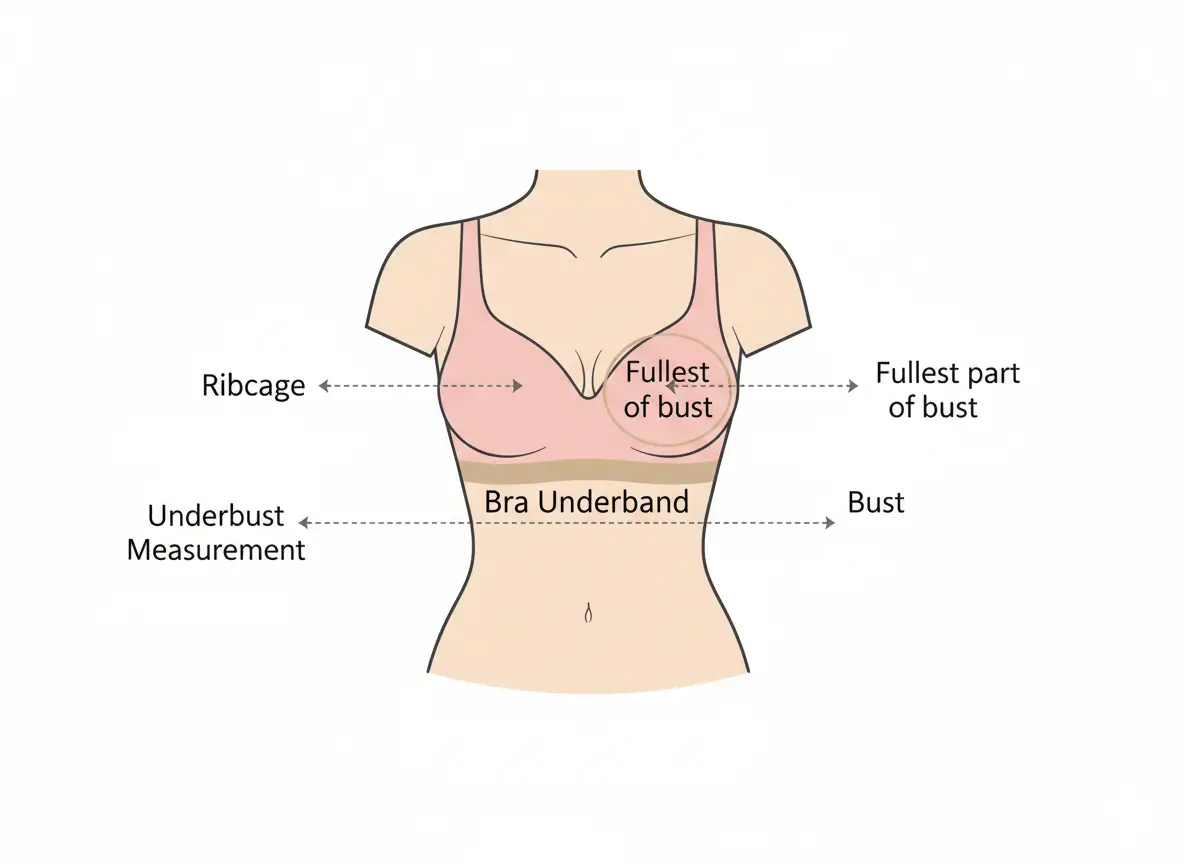
In real life, many factors affect fit, including shape, breasts, style, and personal preference, so I always recommend actually finding what works on your body. Whether you’re looking at an existing best-fitting bra, using a fitting guide, or working out your perfect size or perfect size bra, this method helps you find the right size and feel confident. I’ve seen clients starting from scratch or whose body has changed size considerably, and in those cases it helps to check out a measure bra size guide if you want to know more. There are two ways to approach it—math or trying on—and both help turn sizing mysteries into something uncovered, giving you everything you need to know to make a smart choice.
How Bra Cup Sizes Really Work
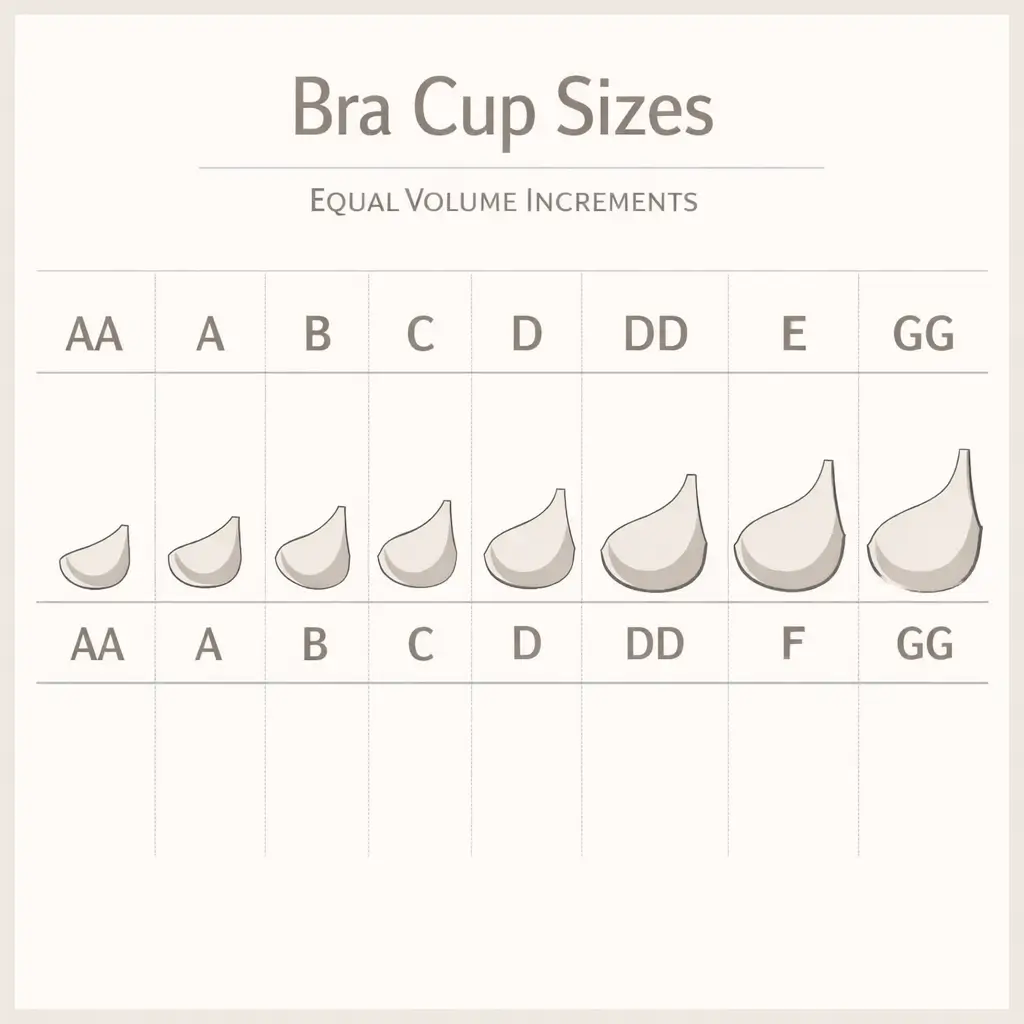
In alphabet order, each letter signals a larger cup volume, starting from AA, the smallest, and moving through cup sizes that use single letters and double letters like DD and FF. Over time, cups increase equally, but there is no one size rule, and brands may add doubles, half sizes, or a double letter system that is widely used. I’ve seen many people surprised that cup size lettering is generally used as a scale, not a promise, which is important to note when using a set method or trying to compare international size charts. In UK bra sizing and UK sizing, this approach tends to suit full bust brands, while the US and each country’s system may differ from usual sizing, especially if you are usually wearing DD+ from specialist brands.
If this still feels confusing, this guide on what bra sizes really mean explains band and cup sizing in simple terms.
Many people get stuck at DD, so understanding the difference between D and DD bras helps clear up common sizing myths.
Checking Fit Across Brands
If you’re already currently wearing a G cup or exploring FF cup sizing, always check the tag on your favourite bra, then look at your favourite UK brand or any brands you see and include in your wardrobe. I often drop this help tip in every guide I write: the chart below usually shows how letters like A, B, C, D, E, F, FF, GG, H, HH, I, J, JJ, K, L, LL, and M are handled, but a minority of labels skip steps. Don’t assume your size stays the same—brand’s size chart details can change, and other brands may not match ours, so always compare before you buy.
This UK cup size conversion guide explains how extended cup sizes compare across different brands.
If you mostly shop British brands, this UK bra size guide breaks down English sizing clearly.
Understanding Bra Band Sizes in Real Life
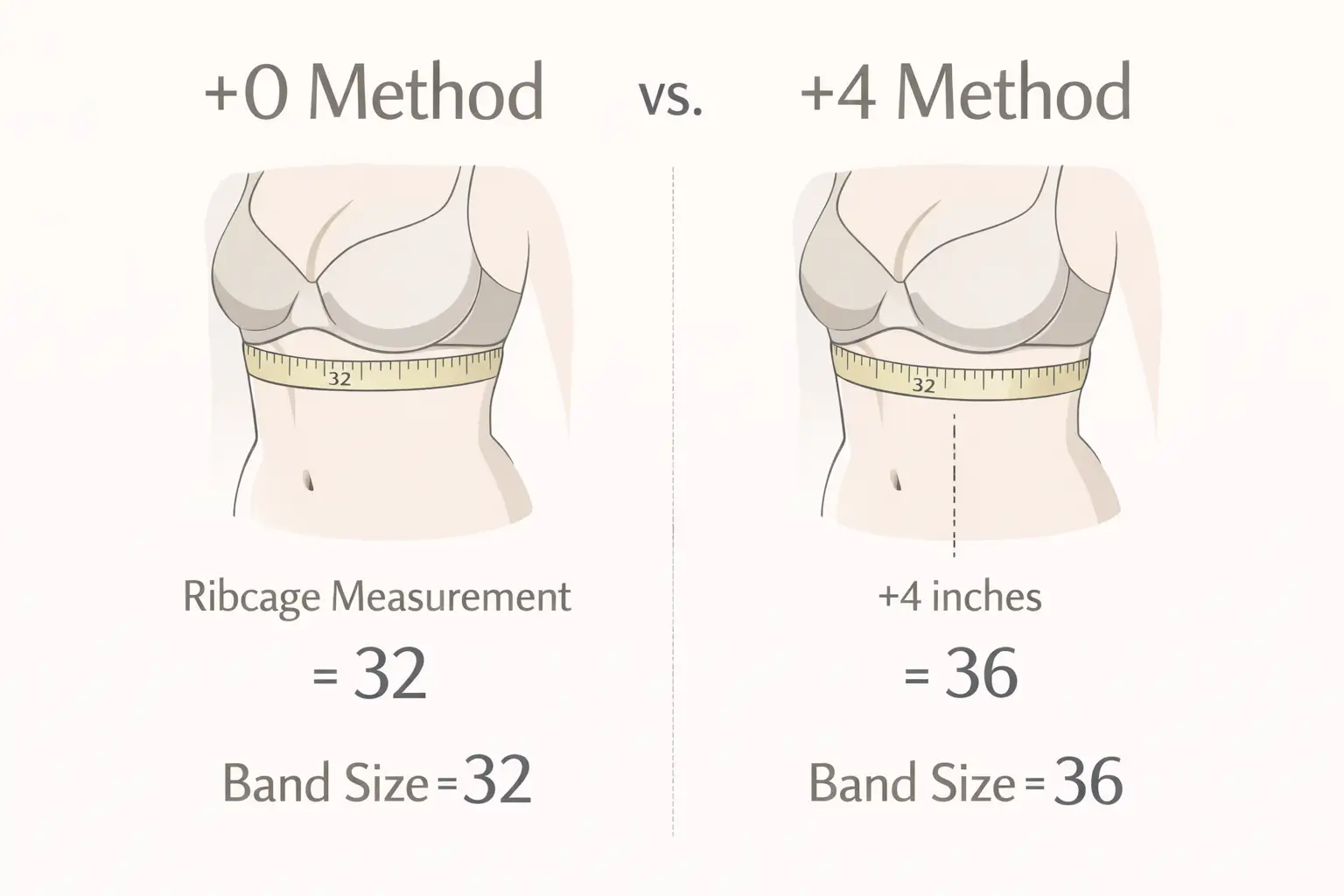
When it comes to finding the right band size, there are two systems that shape how brands work. The older +4 method, once commonly used, involved making space for comfort, while the +0 approach is mostly used today by specialists and full bust specialist sizes. In both cases, you measure the ribcage under the bust, right where the bra band usually sit, to get a true measurement. For example, if you take 32″, that becomes a 32 band, but if you’re measuring odd numbers like 31″, fitters usually suggest rounding up for comfort. This matters because cup sizes like A-D/DD, DD+, or even a DD cup size depend on a stable base, and I’ve seen many people misjudge fit just by guessing the size.
Some of this confusion comes from regional systems, especially the difference between US and UK bra sizing.
Why Band Methods Change Your Fit
You might also take 33″ or 34, and however, with the +4 rule you add 4 inches to the original measurement, then again round up, which can become a 36 band instead. That shift affects the area of support and often creates an issue for those used to wearing +4 sized bands who later switch systems. If this sounds like you, the DD cup sizes explained article often runs through everything you need to know to nail fit every time, wherever you shop, because band accuracy changes how every cup feels.
How Sister Sizes Work
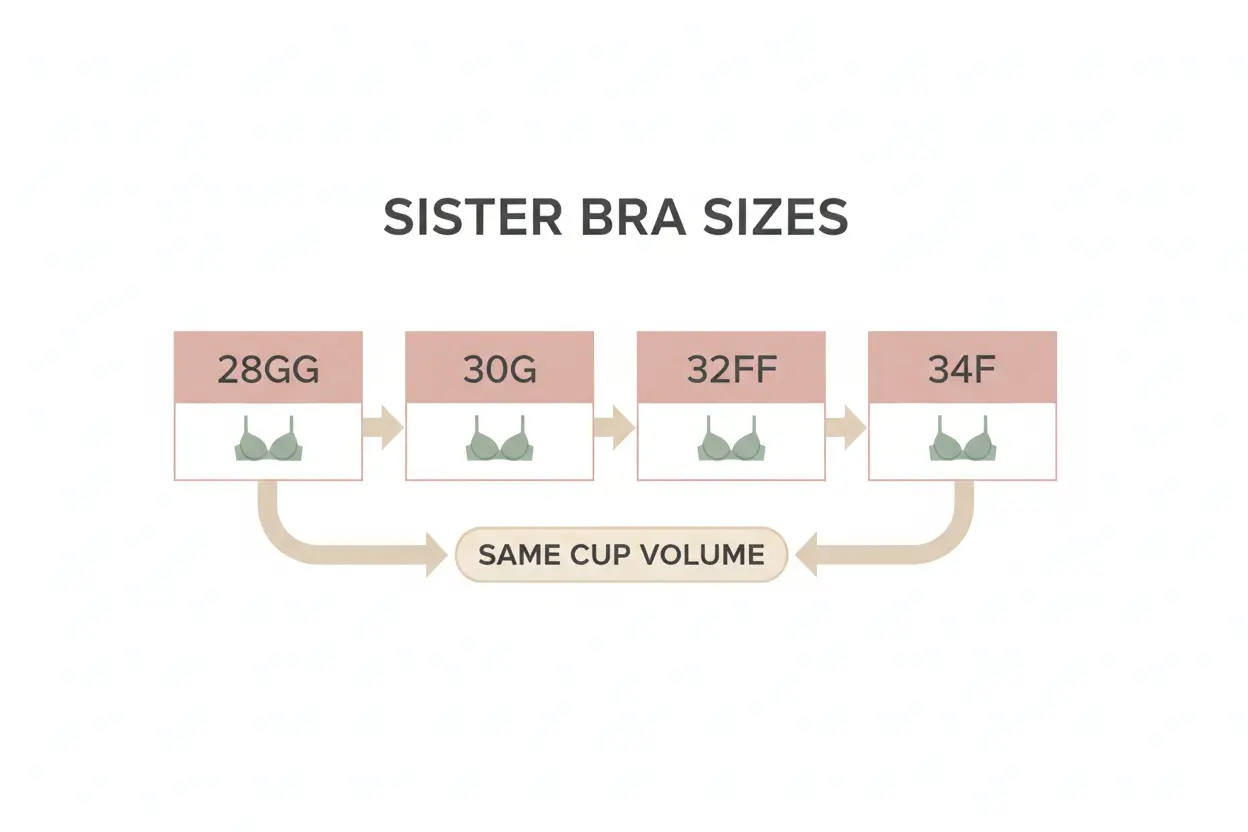
In bra fitting, the system behind bra cup sizes shows how cups interact with each other and are sometimes referred to as sister sizes. This means different bras can share the same cup volume, even when used across varying letters, depending on the band measurement. From my own fitting experience, this guide to bra sister sizes really explains in full detail the real benefit you should know about, especially for online shopping, where trying on bras is not always possible.
This American bra size to UK conversion guide helps you match sister sizes correctly when shopping internationally.
If you buy European brands, this Europe to UK bra size conversion is useful before ordering online.
Explaining What Bra Sizes Really Mean to People
I often wear a 32G, and even when I’m sized by a legitimate professional at a bra specialty store, I still often tell people my size and hear “what, no way, that big.” I try to tell them how bra sizes actually work, but I’ve had a hard time explaining it in a simple way without saying “help me out while I educate people instead of confusing them.”
I usually start with 32 and explain band measurement or back measurement as the circumference of the torso, measured immediately under the IMF at the breast root. The measurement is taken straight across, not twisted up or twisted down, staying parallel to the ground, which already clears up why a G cup size can look different on different bodies.
Then I explain cups as math, starting with 1″ difference btwn band measurement and bust measurement for an A cup, 2″ for a B cup, 3″ for a C cup, and so on. It’s a good starting source to explain bra size, and by 45 seconds in, I can guess why people get more confused about why their boobs look smaller than expected.
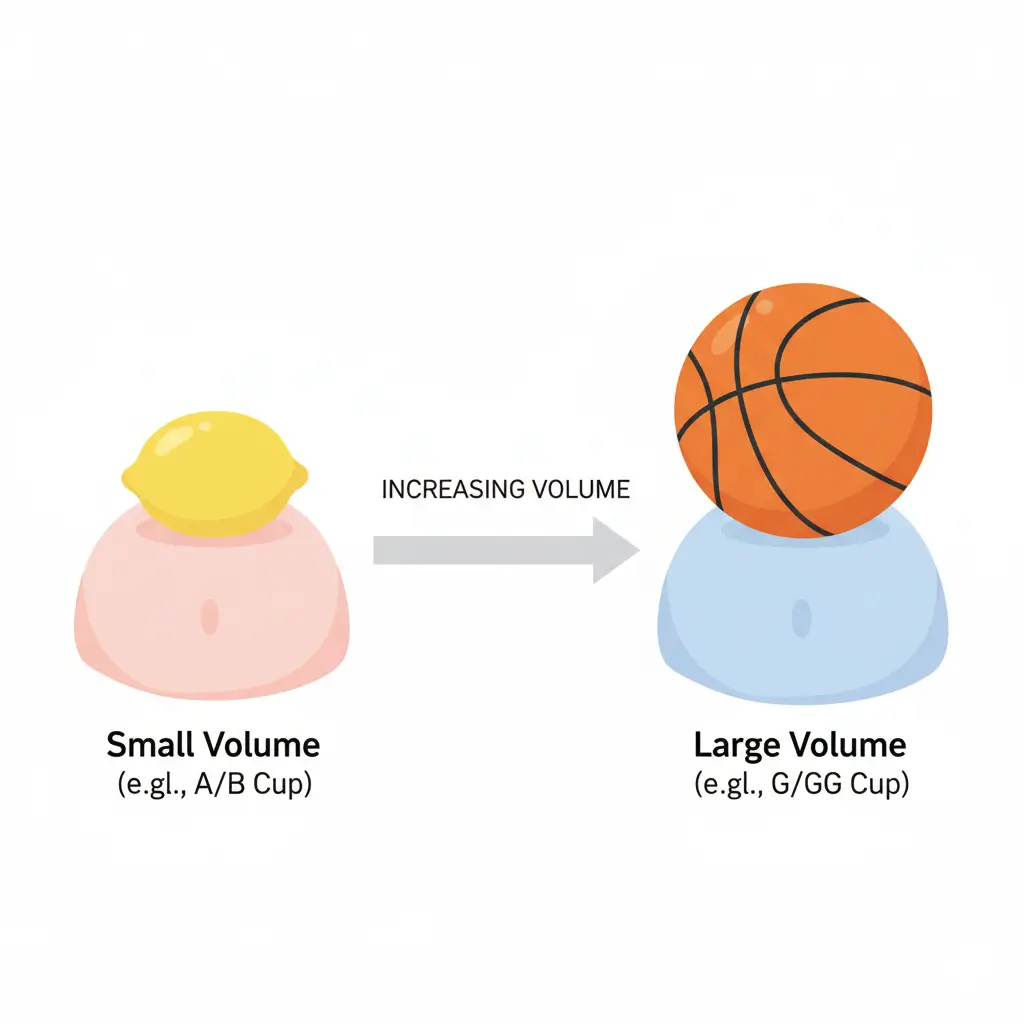
I tell someone that a larger band with a smaller cup can look the same as a smaller band, and that’s when 25 questions come in. It’s not that the cup is smaller in volume, it’s just less projected—think lemon, lemon-size, sitting on a coaster versus a platter, or a basketball or basketball-size object on a dining room table versus the floor at center court.
It could also be breast shape. People with a more shallow breast shape have tissue spread across the chest, which makes sense when I usually say people underestimate size. If you know the bra blogger with 30F, Nothing Ever Fits and Nobody Sympathizes, she says sales associates in stores never believe her when she tells them, though she can recall correctly after an edit that she also fit actually into 32E.
Many are confused because they’re probably wearing cup sizes too small and band sizes too big, often a pre-ABTF size. The idea of going beyond DD feels existentially horrifying, and people didn’t want that truth until they hear a great simple explanation. I’ve tried explaining this to my younger sister and literally said “show her this, thank you later.”
Most people still think in terms like A flat, B is small, C is medium, D is big, DD is huge, and anything above that is porn stars or maybe fat aunt Bertha. But breasts don’t look big just because people assign b, c, D, or DD, and that’s it. A lot of people don’t realize cup size isn’t visual, definitely isn’t static, and a letter alone says nothing about volume of the breast.
Neither band size nor cup stands alone. A 30DD on a petite, slim person can mean relatively large breasts, while a 40DD on a plus size person means relatively small breasts, again visually. The second person looks different because of a larger body, and you absolutely can’t judge looking at them without a bra—an F cup can don’t look like an F at all.
The way breasts are shaped matters: full volume is only visible when supported, often very vertical, with tall roots, some projection, where one part slopes forward and protrudes, not the whole breast. Well, everything known comes down to comparison—the Band-bust difference stays the same, and those letters are all it is about.
I once watched Blisther at a clothing exchange with a bunch of 50 and 60 somethings. One woman made a joke about having DD cups, asking Who has those, and Nobody said anything while I sat quietly, wearing my 32 G bra. Don’t even try to explain this to my generation, who think they spent most of life in ill-fitting bras.
FYI, I only discovered my true bra size a few years ago. So, this explanation probably only works for nerds, but it’s sometimes used to translate math into fit. Yes, mathsy talk ahead: you might remember the circle equation 2π, where radius means you have a 5 inches change in circumference, but that’s only 0.7958 inches of depth.
Even double that, with tissue all in the front, not the back, you get 1.6 inches, approximately a double D cup, which only protrudes about 4 cm. That’s nothing. An FF cup would be like 6.5 cm, and Now, obviously, this is a MASSIVE estimation because one thing—people’s underbust and overbust are not a perfect circle, and shape of the body matters.
But as a good example, an 8 inches change like UK FF translates to a diameter of 2.5 inches in circles, which is really much smaller than you would think. For fitting, start with Band around the ribcage, the closest even number, then Cup size in Inches between bust and ribcage: A=1, B=2, etc, depending on the person and context.
Sometimes I show them the tag, let them see it on themselves, and if it fits you well, I say Push it back. If the cups are way too big, please tell me why there’s no gaping and why it looks amazing. As Jane1814 said, bra sizing is a weird thing—it should be standard across the industry, but it isn’t.
It gets always weird trying to get weird letters after C, like DDD, E, etc. People Literally just think of the alphabet, that D is the 4th letter, a relatively small size, and G the 7th letter won’t be huge. That logic gives people something logical to realize, even if it’s not 100% correct.
I Luv it when people say lol, because many women who needed reduction surgery for back pain would Def agree. Like jocdil, I haven’t had to explain this irl too many times, but I usually start with “I used to wear 32DDs and had XYZ issues—band riding up, cup spillage, underwire sliding down.”

Then, I go down a band to 28, find a good fit, and compensate by going up in cup. Wait, if you know what sister sizing is, I reveal what we already discussed: 28GG sounds huge, but it’s the same volume as, for example, 38DD or 40D, just on a smaller band with different ddd band width.
Before choosing your next bra, it helps to check your measurements with this bra size calculator to make sure both band and cup size are accurate.
FAQs: Bra Cup Sizes Explained
Neither is bigger in cup volume. A 34B and a 32C are sister sizes, meaning they hold almost the same breast volume. The difference is the band size: 34B has a looser band, while 32C fits a smaller ribcage.
Cup size increases alphabetically. A is smaller than B, and B is smaller than C. Each step represents about one inch more difference between bust and underbust measurements. However, cup size alone doesn’t show how large breasts look.
Measure your underbust snugly to get your band size, then measure around the fullest part of your bust. Subtract the underbust from the bust measurement. Each inch of difference equals one cup size (1 inch = A, 2 inches = B, and so on).
C is bigger than B in cup volume. A C cup holds more breast volume than a B cup on the same band size. Keep in mind that a C cup on a small band can look very different from a C cup on a larger band.
Breast shape, distribution, and band size all affect appearance. Shallow or wide-set breasts can spread volume across the chest, making larger cup sizes look smaller. Cup size measures volume, not how far breasts project forward visually.
Yes, bra size can change due to weight shifts, hormonal changes, pregnancy, aging, or muscle changes around the ribcage. That’s why it’s important to re-measure regularly and not rely on a size you’ve worn for years.
Learn more about how and why this tool was created on our About My Bra Size Converter page.
Still unsure about your size? Feel free to contact us and we’ll help you figure it out.