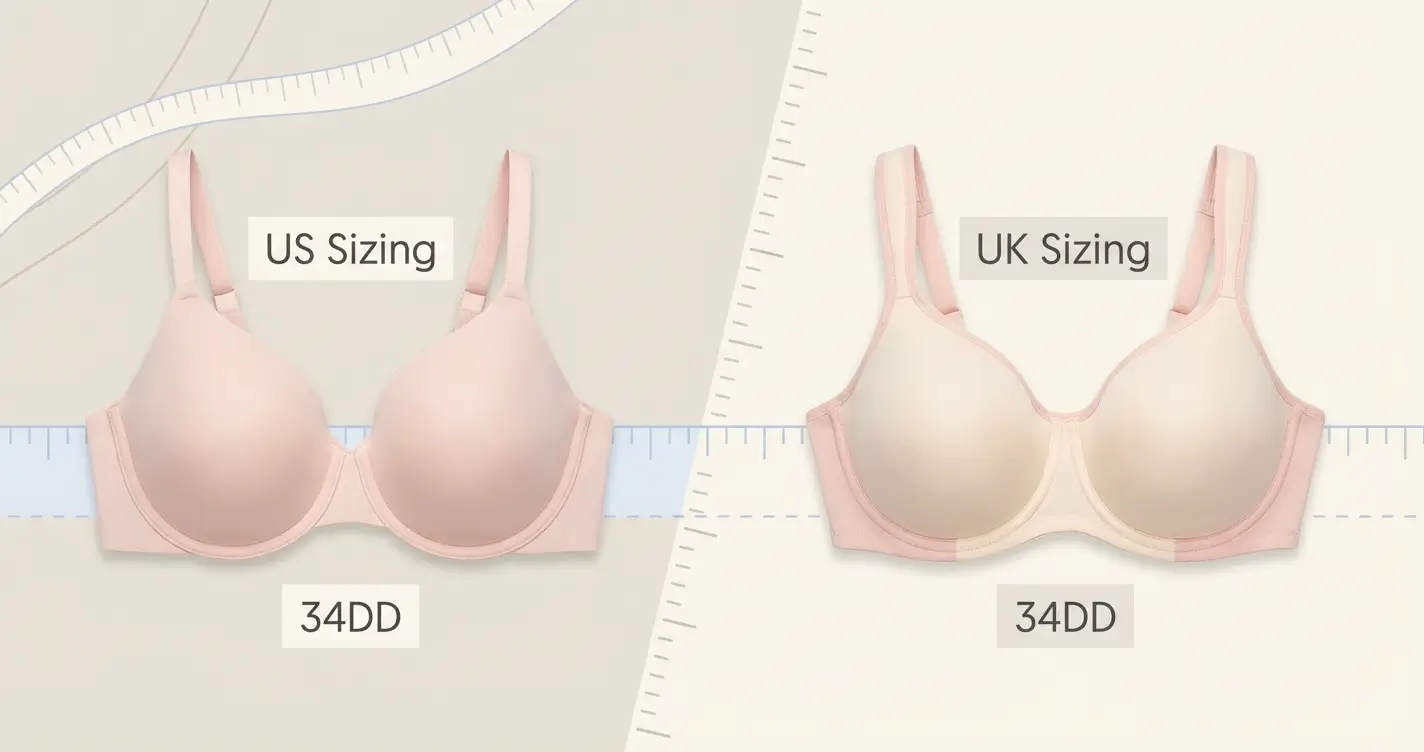
I still remember the day I ordered what I thought was my “perfect” bra from a UK website. I’d been wearing a 34DD for years—comfortably, I thought—so naturally, I ordered a 34DD from Freya. When it arrived, I couldn’t even get the thing on. The cups were massive, the band felt different, and I genuinely wondered if they’d sent me the wrong size.
That embarrassing moment in my bedroom, struggling with a bra that should’ve fit, is when I learned the hard way that US bra sizing and UK bra sizing are not the same thing. Not even close.
If you’ve ever felt confused about bra sizes, ordered something online that didn’t fit, or wondered why that gorgeous Panache bra looked nothing like your usual size—you’re not alone. The truth is, about 70-85% of women are wearing the wrong bra size, and a huge part of that confusion comes from the differences between sizing systems across countries.
Here’s what I’m going to share with you: the actual differences between American bra sizes and British bra sizes, why they exist, how to convert between them, and most importantly, how to find your proper bra fit no matter which system you’re using. I’ve made all the mistakes so you don’t have to.
Why Are Bra Sizes Different Between Countries?
Honestly? There’s no good reason. It’s just one of those frustrating things that happened because different countries developed their sizing systems independently, and nobody ever bothered to create international standardization.
Back in the early days of bra manufacturing (we’re talking 1920s-1940s), each country’s lingerie industry created measurement methods that made sense to them. The US developed one system, the UK another, Europe went their own way, and Australia did something slightly different too. Fast forward nearly a century, and we’re still stuck with this mess.
What really bugs me is that manufacturers could standardize everything tomorrow if they wanted to. But they don’t, probably because it would cost money to retool everything and retrain staff. Meanwhile, we’re the ones left dealing with the confusion.
The real-world impact? I can’t tell you how many times I’ve stood in a fitting room, holding three different sizes of the same bra, wondering which one actually fits. Or scrolled through an online shop, seeing “DD” and having no clue if they mean US DD, UK DD, or something else entirely. It’s exhausting.
This lack of consistency is exactly why so many of us end up in poorly fitted bras. When you can’t trust that a 34DD means the same thing everywhere, how are you supposed to find proper support? Your breasts don’t change size depending on which country’s bra you’re wearing, but apparently your cup size does. Make it make sense!
Understanding US Bra Sizing System
Let’s start with what you probably know—American bra sizes. The US system uses even numbers for band sizes: 32, 34, 36, 38, 40, and so on. These numbers supposedly represent inches around your rib cage, but here’s where it gets weird.
The traditional US sizing method uses something called the “+4 method.” Basically, you measure your underbust (your actual ribcage measurement), then add four inches to get your band size. So if you measure 30 inches around your ribs, the old-school calculation says you should wear a 34 band. I know, it sounds ridiculous. And honestly, it kind of is.
This +4 method dates back to when bras had less elastic and needed extra room to stretch. But modern bras have plenty of stretch, so this method typically puts women in bands that are way too loose. The band rides up your back, your straps dig into your shoulders trying to compensate, and you end up with back pain by 3 PM.
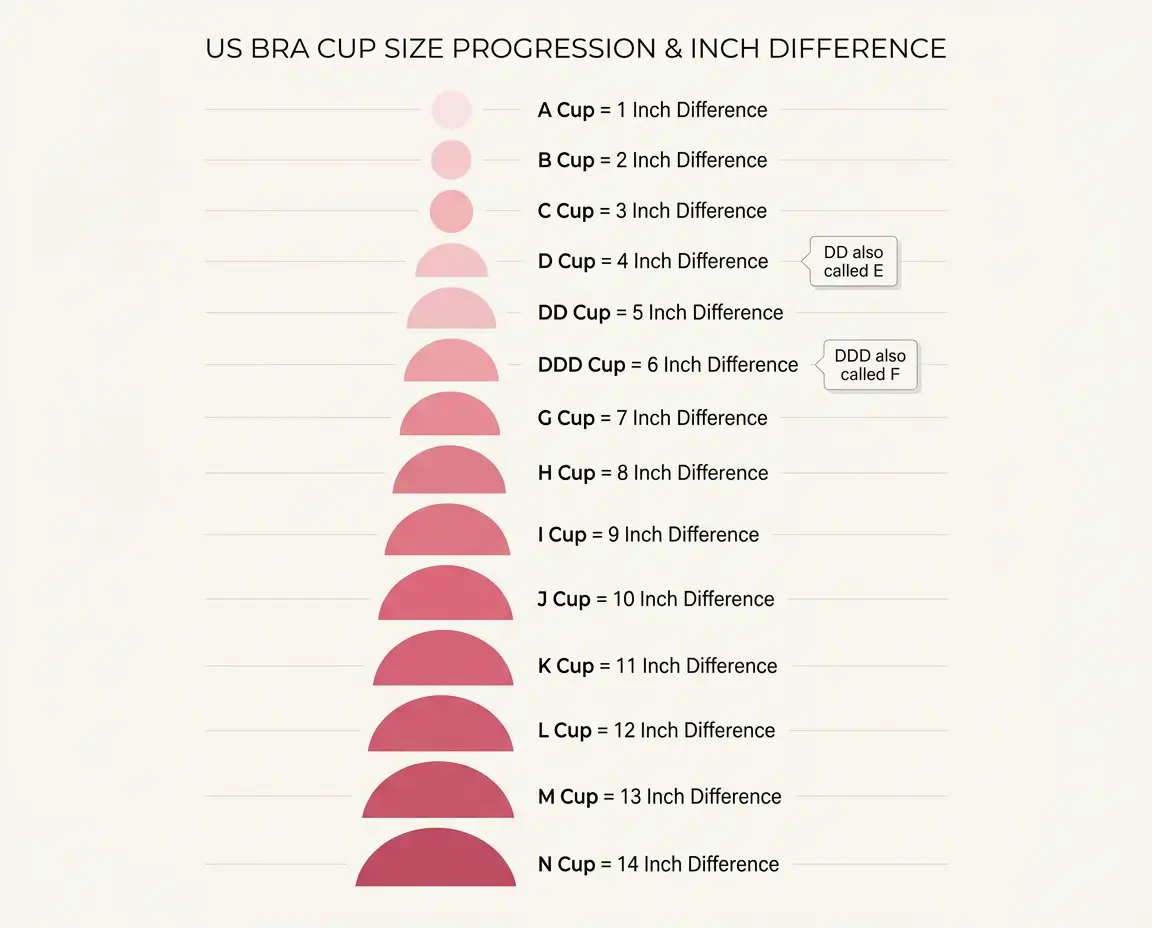
For cup sizes, the US system goes: A, B, C, D, DD (sometimes called E), DDD (sometimes called F), G, H, I, J, K, L, M, N. And this is where things get really messy.
That “sometimes called” part? That’s the problem. Some American brands use DD and DDD. Others use E and F. Victoria’s Secret does their own thing entirely. Natori might size differently than Wacoal. There’s no consistency, which makes shopping a total nightmare.
When I first tried to figure out my US size properly (not just grabbing whatever Victoria’s Secret told me), I went down a rabbit hole of size charts and measurement guides. What I learned is that if you want an American bra size to UK conversion, you need to know exactly which naming system your brand uses.
Here’s a quick measurement tip for the US system: forget the +4 method unless you’re buying from a brand that specifically uses it. Most modern US brands actually work better with your raw measurement or maybe +1 inch if you’re between sizes.
Understanding UK Bra Sizing System
The UK system changed everything for me, honestly. British bra sizing uses the same band numbers as the US (28, 30, 32, 34, 36, etc.), but here’s the crucial difference—they typically use the +0 method, also called raw measurement.
This means if you measure 32 inches around your ribcage, you wear a 32 band. No adding mystery inches. Just your actual measurement, maybe rounded to the nearest even number. Revolutionary, right?
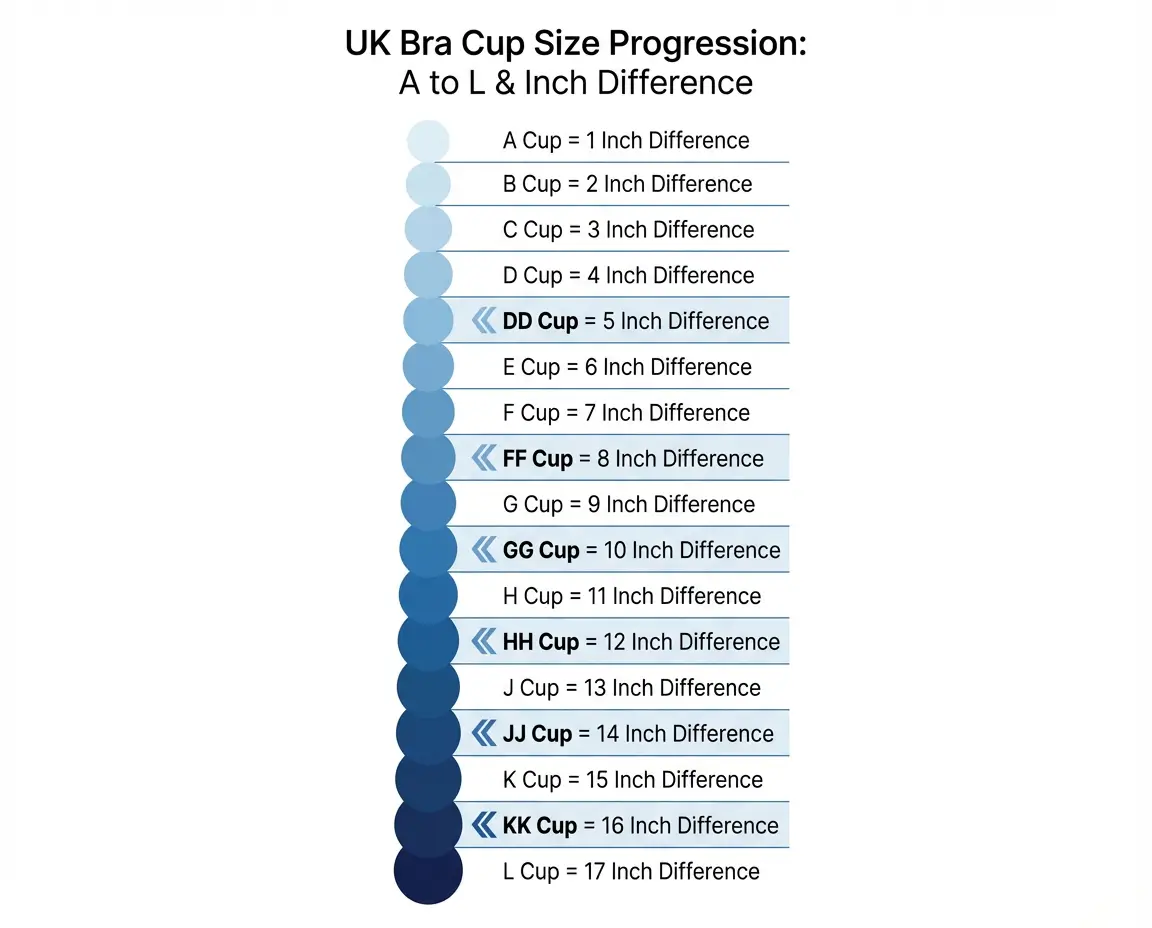
But the real difference is in the cup progression. UK sizes go: A, B, C, D, DD, E, F, FF, G, GG, H, HH, J, JJ, K, KK, L. Notice what they’re doing there with the double letters? After D, instead of jumping straight to E, they add DD. Then E, then FF (not F). It’s this whole double letter system that actually makes more sense when you think about it.
Each cup size represents roughly one inch difference between your band measurement and your bust measurement. So a D cup means your bust is about 4 inches bigger than your band, DD is 5 inches, E is 6 inches, and so on. The double letters give you more granular sizing, especially in larger cup sizes where small differences really matter.
The first time I tried a UK-sized bra from Panache, I was shocked at how much better it fit. The cup depth was right, the underwire actually sat in my inframammary fold (fancy term for where your breast meets your chest), and the band gave me proper support without digging in.
UK brands like Freya, Fantasie, Curvy Kate, Bravissimo, and Elomi have seriously stepped up their game with extended sizing. You can find D+ cups way more easily, and they actually understand that larger breasts need different construction—wider wires, deeper cups, reinforced bands, stronger hook closures.
What I love about UK bra sizing is that it’s more accurate for fuller figures. Once you get past a D cup, the US system kind of falls apart, but the UK system keeps going with proper support and structure. There’s a reason serious bra fitters usually recommend UK-sized brands.
The Marks & Spencer fitting rooms in London taught me more about proper bra fit than any American store ever did. They actually measure you correctly and explain what each part of the bra should be doing.
The Key Differences: US vs UK Sizing Side by Side
Okay, this is the part that’s going to blow your mind (it certainly blew mine).
Even though both systems use the same band numbers—32, 34, 36, etc.—those numbers don’t mean the same thing because of the different calculation methods. A US 34 band assumes you added 4 inches to a 30-inch measurement. A UK 34 band means you actually measured 34 inches. See the problem?
In practice, a lot of modern US brands have started using raw measurements like the UK does, but you can’t count on it. You have to check each brand’s specific sizing guide.
The cup sizes? That’s where things get really wild. Both systems start the same: A, B, C, D. But after D, they completely diverge.
Here’s what I learned the hard way: a US 34DD is NOT the same as a UK 34DD. In the US system, DD might be the same as an E (depending on the brand). In the UK system, DD comes before E, making it one cup size smaller than E.
Let me give you some specific examples that might save you the heartbreak I experienced:
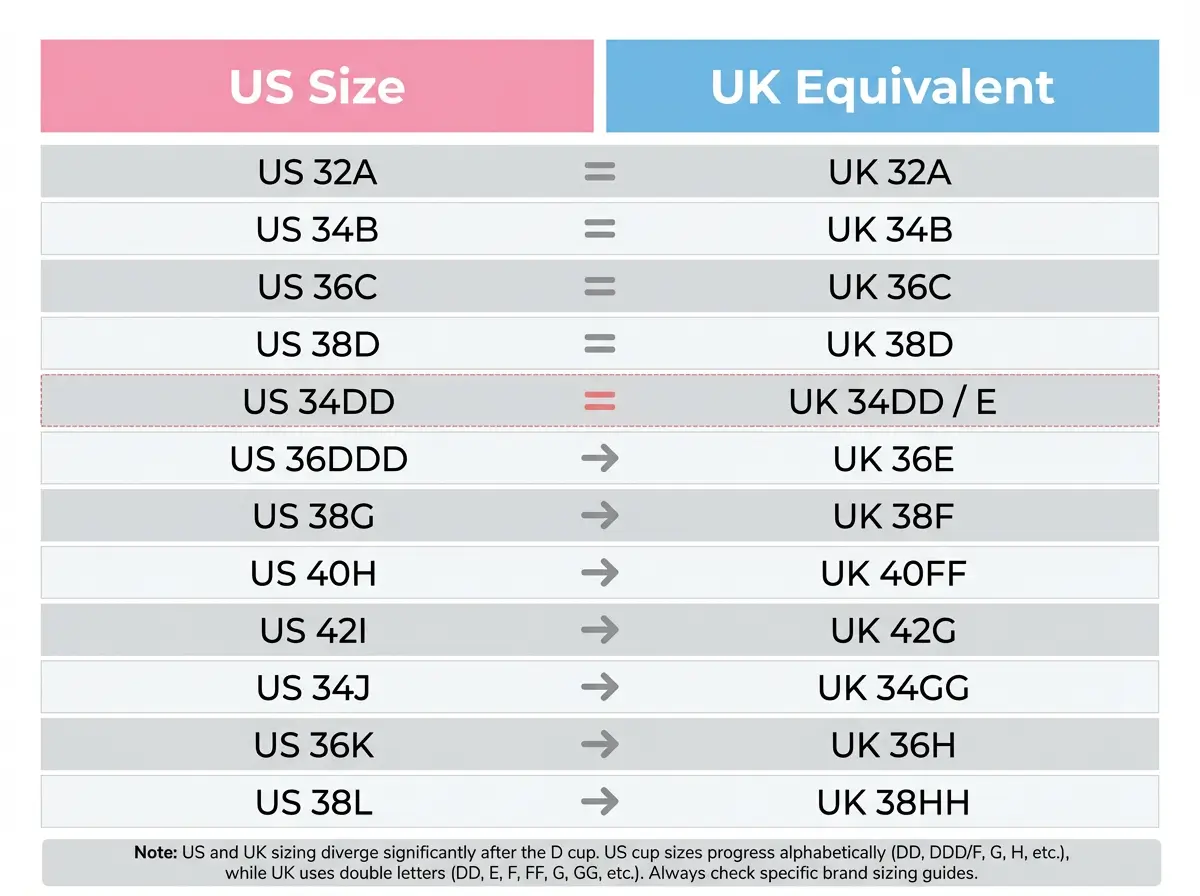
- US D = UK D (so far so good)
- US DD = UK DD/E (starting to diverge)
- US DDD/F = UK E (now we’re in different territory)
- US G = UK F (notice US G is actually smaller than UK G)
- US H = UK FF (UK H is three whole sizes bigger than US H!)
By the time you get to bigger cup sizes, a UK H cup is massive compared to a US H cup. We’re talking about three cup sizes difference. That’s the difference between a bra that fits and a bra that’s comically huge.
I once ordered what I thought was my size from a UK website without checking the conversion. The bra arrived, I tried it on, and the cups literally came up to my collarbones. My partner walked in, saw me drowning in fabric, and asked if I’d accidentally ordered a costume. That’s how different we’re talking.
This is exactly why I now use the International Bra Size Converter before ordering anything. It does all the math instantly so I don’t end up with another collarbone-coverage situation.
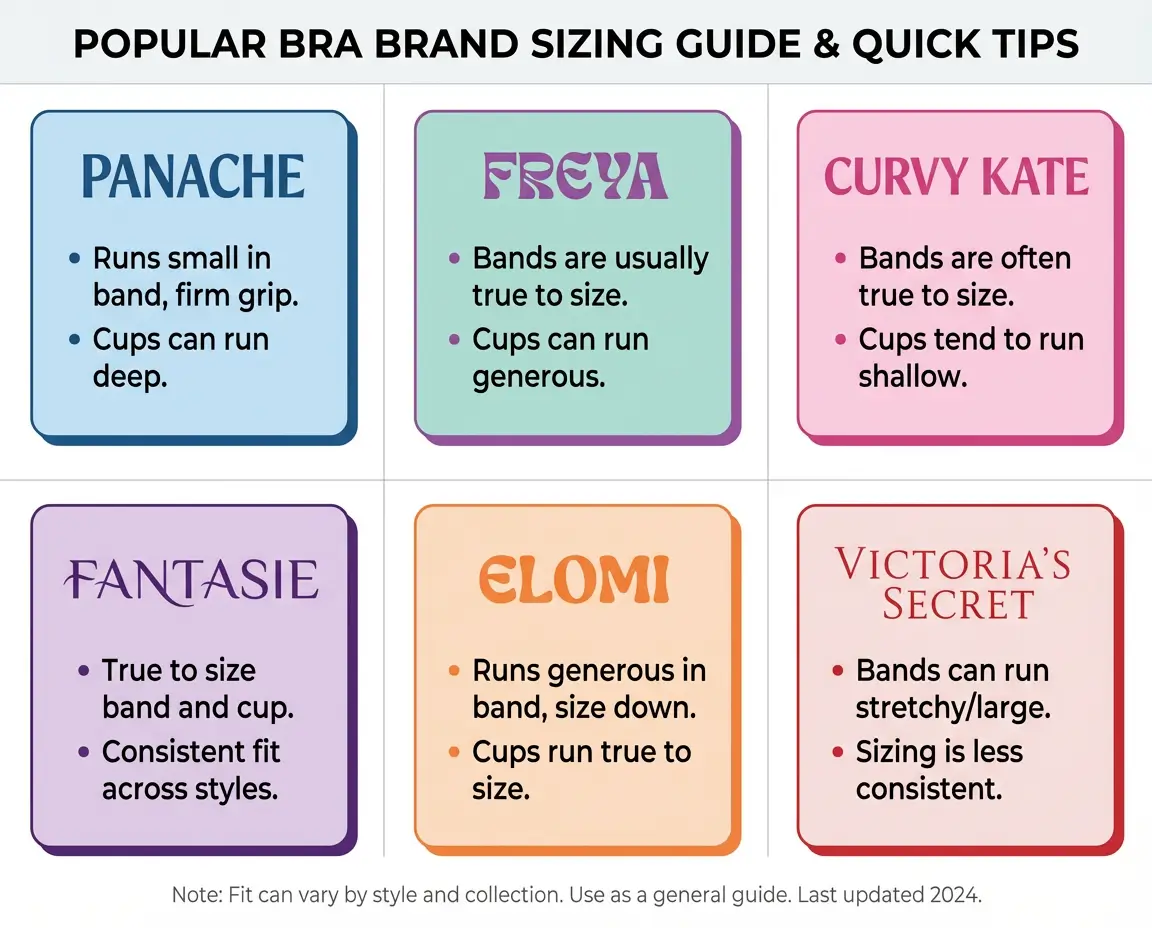
The band tightness feels different too. Because UK brands typically design for raw measurements, their bands often run firmer than US brands. Panache is notorious for running small in the band—I actually size up one band size with them. Freya, on the other hand, tends to run large, so I sometimes size down.
Understanding these differences isn’t just about getting the right size number. It’s about knowing that a 36E from Fantasie is going to fit completely differently than a 36E from an American brand, even if you convert correctly.
How to Convert Between US and UK Sizes
Alright, let’s get practical. Here’s how you actually convert between these two systems without losing your mind.
Step 1: Band Size Good news—the band number usually stays the same. A 34 in the US is typically a 34 in the UK. A 36 is a 36, and so on.
BUT (and this is important), remember that the meaning behind that number is different. If you measured 34 inches for a UK brand, perfect. If a US brand wants you to add 4 inches and you measured 30, you’d also get 34, but it’s not the same 34. Make sense? This is why I measure my actual underbust and then check each brand’s sizing method.
Step 2: Cup Size Conversion This is where you need a chart or a converter because it gets complicated fast. Here are the most common conversions:
- US A = UK A
- US B = UK B
- US C = UK C
- US D = UK D
- US DD/E = UK DD (first divergence!)
- US DDD/F = UK E
- US G = UK F
- US H = UK FF
- US I = UK G
- US J = UK GG
See how it gets messier as you go up? By the time you’re in the G-H range, you really need to double-check your conversion.
Let me give you some real examples from my own bra drawer:
When I thought I was a US 34DD, I was actually a UK 34E. That one cup size difference meant the cups on UK bras actually contained all my breast tissue instead of giving me that awful double-boob spillage.
My friend who wears a US 38G learned she’s a UK 38F. She’d been ordering UK bras in G and couldn’t understand why they were too big.
Another friend in a US 40H discovered she’s actually a UK 40FF. Three letters difference, but it’s only one cup size.
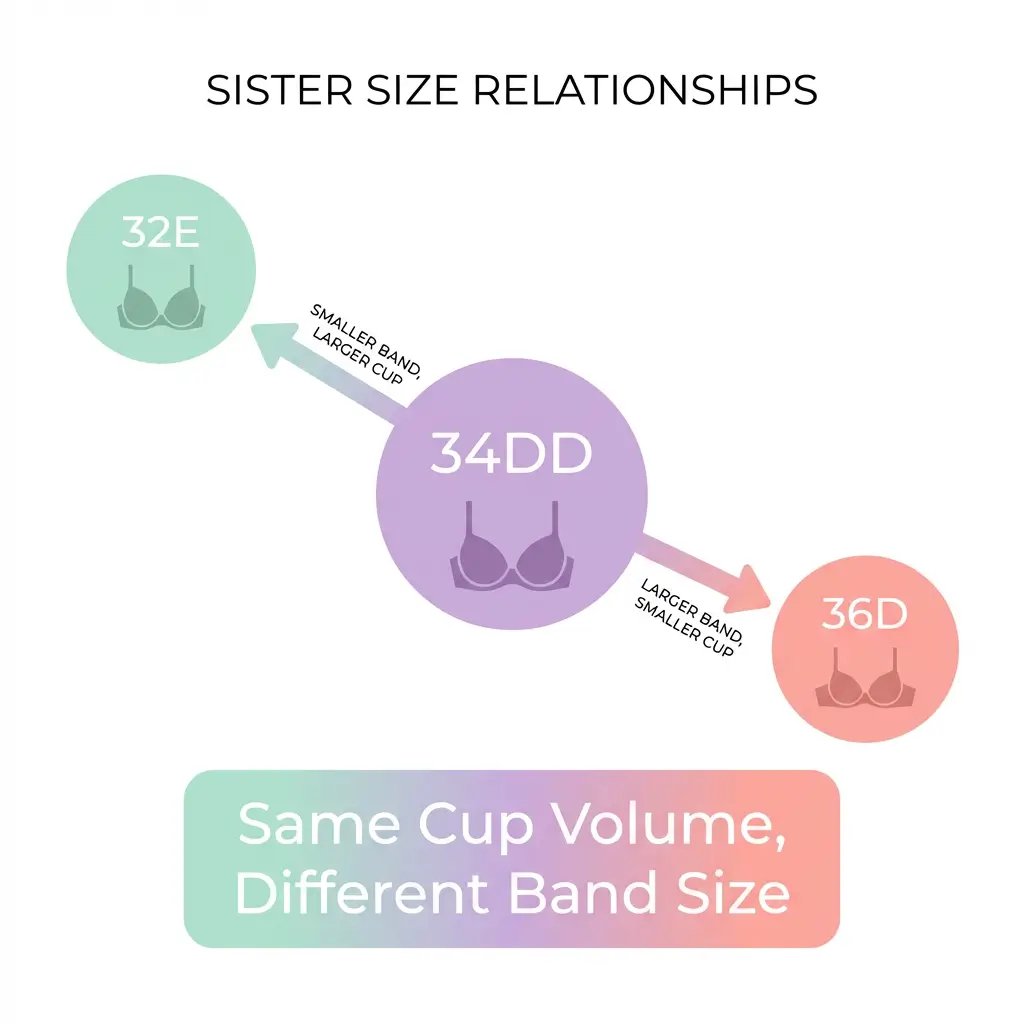
This is where sister sizes come into play too. Sister sizes are different band and cup combinations that have the same cup volume. For example, 34DD, 32E, and 36D are all sisters—same cup volume, different band lengths.
When converting between US and UK, sister sizing helps you troubleshoot fit issues. If your converted size’s band is too tight, try the sister size with a bigger band and smaller cup. If it’s too loose, go down a band and up a cup.
I learned this when ordering from Bravissimo the first time. Their calculator told me 32F, but I’d been wearing US 34DD. I tried both 32F and the sister size 34E. The 32F was perfect—firmer band (hello, actual support!), bigger cups that fit properly. Mind. Blown.
Checking brand-specific sizing is crucial too. Even within UK brands, there’s variation. Curvy Kate tends to run small in cups, so many people size up. Pour Moi runs true to size. Elomi (which makes gorgeous bras for fuller figures) tends to have stretchy bands, so you might size down.
One time I ordered the same style from Panache and Freya in what should’ve been equivalent sizes, and they fit completely differently. Freya was looser in the band and shallower in the cups. Panache had a firmer band and more projection. Both UK brands, both “the same size,” totally different fits.
This is why I always recommend using a converter tool that takes into account these nuances. It saves you from the trial-and-error method (which gets expensive fast).
If you’re also shopping European brands, that’s a whole other system (they use centimeters instead of inches), but you can find Europe to UK conversions easily enough.
The key thing I’ve learned: never assume. Always check. Always convert. Your boobs will thank you.
How to Measure Yourself Correctly
Let me share the measurement method that actually works, because I wasted years using the wrong technique.
What you need: A soft measuring tape (the kind used for sewing, not the metal kind from your toolbox). If you don’t have one, you can use a string and then measure it against a ruler, but a soft tape is like $3 and worth it.
When to measure: First thing in the morning is best, before you’ve eaten or had a bunch of water. If you’re someone who menstruates, your breasts might be larger during certain parts of your cycle, so keep that in mind. I actually measure mid-cycle to get my “average” size.
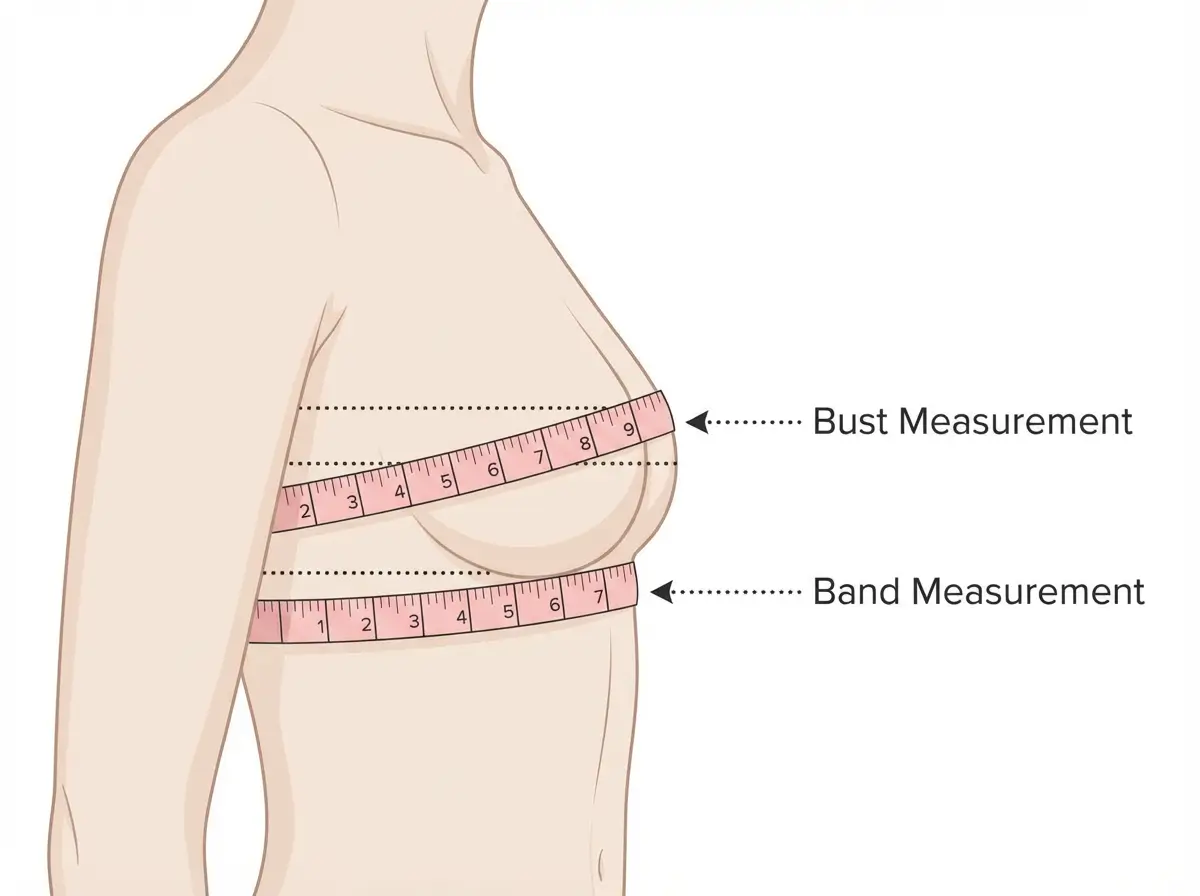
Step 1: Band Measurement This is your underbust or ribcage measurement. Stand up straight (no slouching), wrap the tape around your ribcage directly under your bust, and pull it snug. Not cutting-off-circulation tight, but firm. The tape should be parallel to the ground, not riding up in the back.
Take a normal breath—don’t hold your breath or inflate your lungs like you’re at the doctor’s office. Write down this number.
Here’s where the US method and UK method differ:
- UK method: That number you wrote down? That’s your band size (rounded to the nearest even number). If you measured 33.5 inches, you’re probably a 34 band.
- Old US method: Add 4 inches to that number. So 33.5 becomes 37.5, rounded to 38. (But honestly, I don’t recommend this anymore.)
Most modern brands, even American ones, are moving toward raw measurements, so I’d stick with the UK method unless a specific brand tells you otherwise.
Step 2: Bust Measurement Now measure around the fullest part of your breasts. Lean forward slightly (this helps get an accurate reading for larger busts), keep the tape loose—not tight—and make sure it’s level all the way around. Again, parallel to the ground.
The tape should skim across your nipples and the fullest part of your breasts without compressing them. Write down this number.
Step 3: Calculate Cup Size Subtract your band measurement from your bust measurement. Each inch of difference equals roughly one cup size:
- 0 inches = AA cup
- 1 inch = A cup
- 2 inches = B cup
- 3 inches = C cup
- 4 inches = D cup
- 5 inches = DD/E cup
- 6 inches = DDD/E/F cup (depending on system)
- 7 inches = F/FF cup
- And so on…
For example, if your underbust is 32 inches and your bust is 37 inches, that’s 5 inches difference, putting you around a DD/E cup in a 32 band.
Important measuring tips I learned the hard way:
Wear a non-padded bra or no bra at all when measuring. Those push-up bras with three inches of padding? They’re lying about your actual size.
Keep the measuring tape parallel to the ground. I used to let it ride up in the back, which gave me totally wrong measurements.
Measure multiple times. Seriously, I measure three times and take the average because I’m paranoid about getting it wrong again.
When to round up vs. down: If you’re between band sizes and have a larger bust, round down for more support. If you’re smaller-busted, round up for comfort. For cup sizes, when in doubt, go up—you can always tighten straps, but you can’t make cups bigger.
Don’t measure over a super puffy sweater or compression sports bra. I know that sounds obvious, but I’ve seen people do it!
Your breast size can change with weight fluctuations, pregnancy, hormonal changes, or just aging. I re-measure every six months or so, and I’ve gone through three different sizes in the past two years just from normal body changes.
The calculator at our site does all this math for you automatically, which is honestly a lifesaver when you’re standing there with a tape measure at 7 AM trying to remember what 5 inches of difference means.
Common Fit Issues and What They Mean
Let me walk you through the fit problems I’ve experienced (all of them, unfortunately) and what they actually indicate:
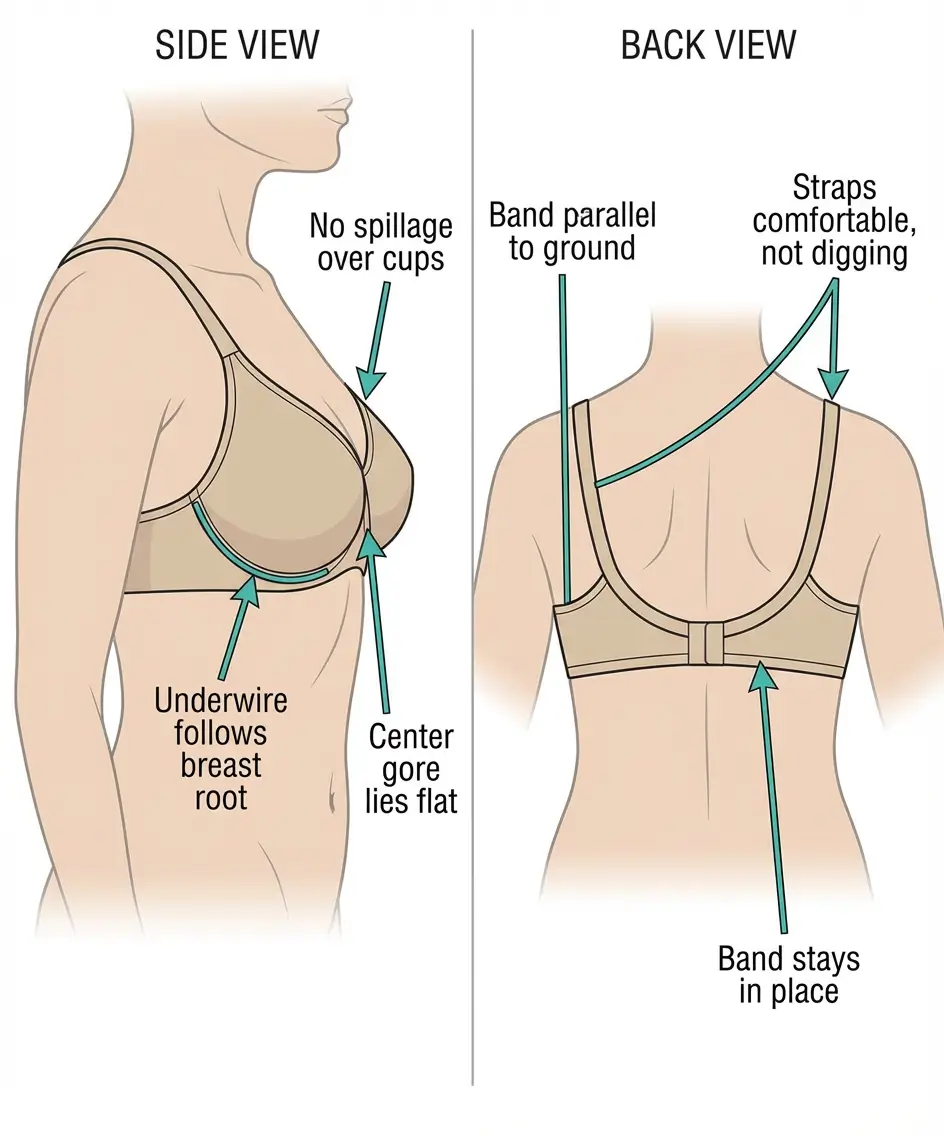
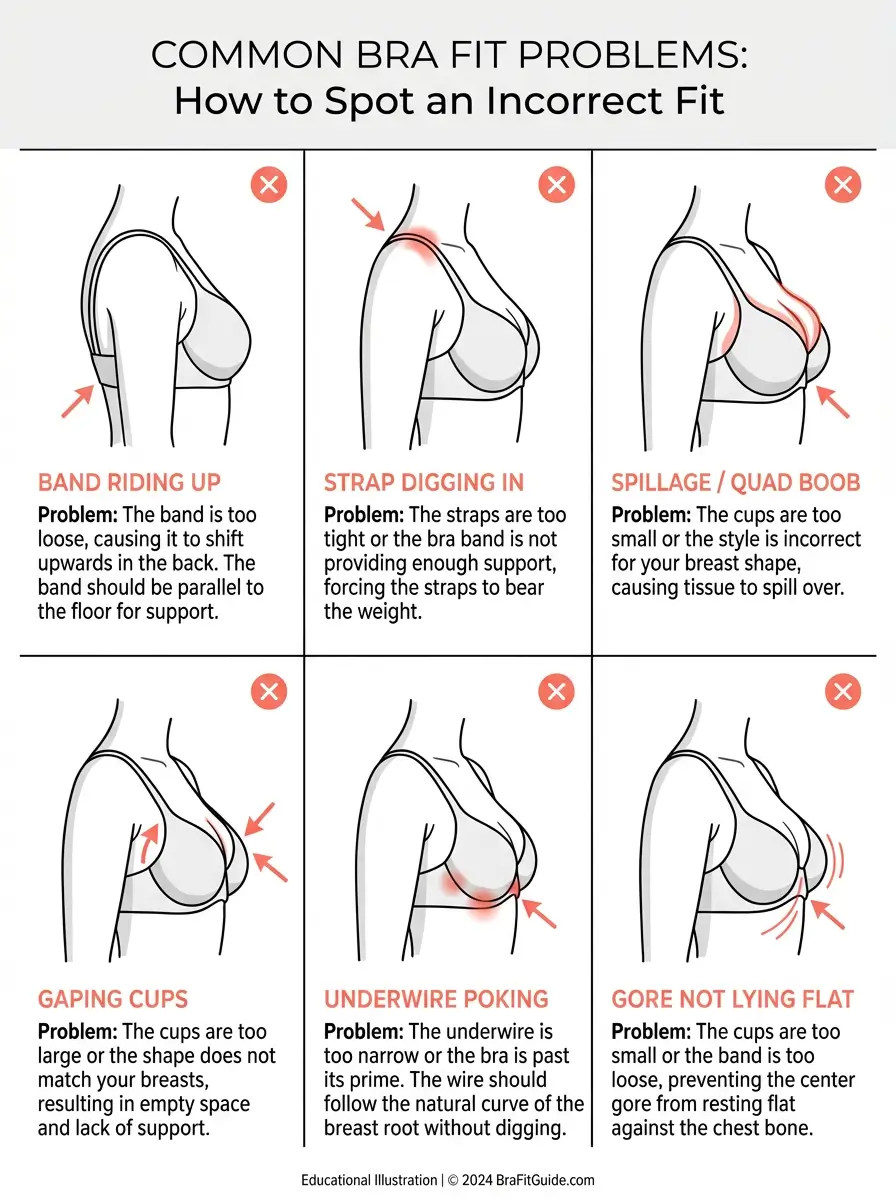
Band riding up your back → This was my life for years. I’d reach behind me throughout the day, yanking my band back down. Turns out, this means your band is too large. The band should stay put, parallel to the ground, all day long. If it’s creeping up, size down in the band and up in the cup to maintain the same cup volume (sister sizing).
Straps digging into your shoulders → Here’s something I wish I’d known earlier: the band provides 80% of your support, and the straps only provide 20%. If your straps are doing all the work, your band is too loose. I used to have permanent grooves in my shoulders from overtightened straps trying to compensate for a loose band. Once I sized down in the band, I could loosen my straps and still get better support.
Breast spillage or “double boob” → You know that look where your breast tissue is spilling over the top of the cup, creating a double-boob effect? Super flattering under a t-shirt. (That’s sarcasm.) This means your cups are too small. Go up at least one cup size, maybe two. In my experience, this is more common with US-sized bras that don’t account for the cup progression properly.
Gaping cups → The opposite problem—when there’s space between your breast and the cup fabric. This can mean the cups are too large, but it can also mean the cup shape is wrong for your breast shape. Some bras are designed for full-on-top breasts, others for full-on-bottom. If you’re scooping and swooping (pulling all your tissue into the cup) and still getting gaping, try a different style or go down a cup size.
Underwire poking you → If the underwire is stabbing you in the armpit or sitting on top of breast tissue, your cups are too small. The wire should encircle all your breast tissue and rest flat against your ribcage. I once wore a bra where the wire was literally on top of breast tissue for an entire wedding. By the end of the night, I had actual bruises. Don’t be like past me.
Red marks → Okay, some red marks are normal—they’re like sock marks, they fade quickly. But deep, painful indentations that last for hours? That’s a problem. Could mean your band is too tight (though this is less common than you’d think), or more likely, your cups are too small and the wire is digging in to compensate.
Center gore not lying flat → The gore is that little piece of fabric between the cups. It should lie completely flat against your sternum. If it’s floating away from your chest, your cups are definitely too small. Your breasts are pushing it forward because they don’t fit in the cup space.
Back bulging → This one’s tricky. Some back bulging is just… having a back. Bodies aren’t perfectly smooth! But if you’re getting significant overflow over the band, it might be too tight. Try going up a band size and down a cup size (sister sizing again).
Here’s something interesting I noticed: these fit issues present differently in US versus UK sized bras. With US bras, I often got band riding up and strap digging because the bands ran so loose. With UK bras (especially Panache), I sometimes got back bulging because their bands run firm.
Curvy Kate bras gave me gaping at the top because they’re designed for a different breast shape than mine. Freya bras were perfect for my shape. Same “size” on paper, completely different fit.
When you’re experiencing fit issues, sister sizes are your friend. If everything feels right except one thing, adjust that one thing and compensate with sister sizing. The fit puzzle is solvable; you just need the right pieces.
Near brand-specific variations discussion
Shopping for bras internationally used to terrify me. Now I actually prefer it, because UK brands offer way better options for my size. Here’s what I’ve learned:
Reading size charts carefully is non-negotiable. Every single time, even if you’ve ordered from that brand before, check their size chart. Look for notes like “this style runs small” or “try sizing up for fuller busts.” Those little notes can save you a return.
Checking if a brand uses US or UK sizing seems obvious, but it’s easy to forget. Wacoal? US sizing. Natori? US sizing. Panache, Freya, Fantasie, Elomi, Curvy Kate, Bravissimo, Sculptresse, Pour Moi? All UK sizing. Chantelle and Triumph are European, which is yet another system. When in doubt, check the brand’s website—they usually specify.
Understanding brand-specific variations:
Panache runs quite small in the band. I wear a 34 in most brands but need a 36 in Panache. Their cups run true to size, though, so I go 36DD instead of 34DD.
Freya runs large in the band. Most people size down one band size with them. I’m a 34 in other brands but take a 32 in Freya. Their cups also run slightly shallow, so if you have projected breasts, you might need to size up a cup.
Curvy Kate needs a cup size up for most people. Their bands run true to size, but the cups run small, especially in balconette styles.
Fantasie fits true to size for me, but some people find them to run small in the cup. Their bands are consistently firm.
Elomi (which makes incredible bras for fuller figures) has stretchy bands, so many people size down. But their cups are generous and supportive.
I learned these quirks through trial and error (expensive!) and by reading reviews on sites like Bratabase, where people share detailed fit information.
Return policies are your best friend. I never order from a site that doesn’t offer free returns for first-time customers. Bare Necessities, Bravissimo, and Breakout Bras all have good return policies. Amazon actually has a ton of UK brands now with free Prime returns, which is how I try new styles risk-free.
Trying multiple sizes is the strategy I use every time. When I order online, I order three sizes: my “calculated” size plus the sister size up and down. Yes, it’s annoying to deal with more packages and returns, but it’s better than ordering one bra, finding it doesn’t fit, and having to wait another week for round two.
Where to buy US bras online: Most department stores (Nordstrom, Macy’s, Dillard’s), Victoria’s Secret (though their size range is limited), Bare Necessities, HerRoom, and Amazon.
Where to buy UK bras: Bravissimo ships internationally, Amazon has UK brands, Bare Necessities carries them, Breakout Bras specializes in them, and Figleaves has a massive selection. I’ve had good experiences with all of these retailers.
Professional fittings vs. DIY: I’m pro-DIY measurement because most mall stores measure incorrectly (they still use that +4 method or want to fit you into their limited stock). But if you can find an independent lingerie boutique that specializes in bra fitting, that’s gold. They’ll have experience with UK brands and proper fitting technique. Just avoid big chain stores that try to squeeze everyone into a limited size range.
Some random shopping lessons:
I once bought five Panache bras in different styles, all in “my size,” and three of them didn’t fit because different styles have different fits. Even within one brand, you can’t assume.
Reading reviews on Bratabase and Reddit’s ABraThatFits community saved me probably hundreds of dollars. People share incredibly detailed fit information—whether something runs small, what breast shapes it works for, etc.
Don’t assume expensive means better fit. Some of my best-fitting bras were $30 Freya bras on Amazon. Some $80 designer bras fit terribly.
Colors and patterns sometimes fit differently than nude/black in the same style. I don’t know why manufacturers do this, but they do. A white bra might have slightly different stretch than a black one in the same size.
If you’re curious about why we created our converter tool and our mission to help people find better-fitting bras, you can read more about us.
Why Getting the Right Size Matters
This isn’t just about aesthetics or having a bra that looks pretty (though that’s nice too). Proper bra fit actually affects your health, comfort, and quality of life.
Comfort seems obvious, but let me tell you—the difference between a bra that fits and one that doesn’t is the difference between forgetting you’re wearing a bra and counting down the seconds until you can rip it off. I used to come home and immediately unhook my bra, leaving red marks and indentations. Now? I sometimes forget I’m wearing one until bedtime.
Pain prevention is huge. Before I figured out proper sizing, I had constant upper back pain, neck pain, and shoulder pain. My physical therapist actually asked about my bra fit because it was contributing to my posture issues. A properly fitted band distributes weight across your ribcage instead of hanging everything from your shoulders. Since switching to UK-sized bras with proper support, my chronic shoulder pain is basically gone.
Breast health matters too. Constantly wearing too-tight bras can affect lymphatic drainage. Underwires sitting on breast tissue can be uncomfortable and potentially problematic. Plus, proper support helps prevent ligament stretching over time (Cooper’s ligaments don’t regenerate).
Posture improvement was unexpected but welcome. When a bra actually supports your breasts, you don’t have to hunch forward to compensate for the weight. I stand straighter now, and my core strength has improved because I’m not constantly adjusting my posture to manage poor bra support.
Confidence is real. Wearing a bra that fits properly makes clothes fit better. No more quadboob under t-shirts. No more visible bra lines because the band is rolling up. No more constant adjusting throughout the day. I feel more put-together and comfortable in my own skin.
Clothing fits better when your bra fits right. Dresses lie smoother. Shirts don’t pull weird. You don’t have to size up in tops to accommodate breast spillage. One properly fitted bra made half my wardrobe fit better.
Long-term, the health benefits add up. Less pain means better sleep, better mood, better ability to exercise comfortably. I used to avoid certain exercises because my poorly fitted sports bras made running painful. Now I have properly sized sports bras (also UK-sized, thank you Shock Absorber and Panache Sport), and I can actually work out without pain.
Studies have shown that the majority of women experience pain from ill-fitting bras, including headaches, neck pain, and back pain. One study found that properly fitted bras reduced pain in 85% of participants. Another found that wearing the wrong size contributed to poor posture in 70% of women studied.
My personal transformation happened over about three months of wearing properly fitted bras. My posture improved, my back pain decreased, and honestly, I just felt better in my body. It sounds dramatic to say a bra changed my life, but… kind of did?
Find Your Perfect Fit Today
So here’s what you need to remember: band numbers are the same between US and UK sizing (32, 34, 36), but they’re calculated differently and might fit differently. Cup letters diverge after D, with the UK using a double-letter system (DD, FF, GG) that provides more accurate sizing, especially for larger cups.
The +4 band measurement method is outdated. Measure your actual ribcage and use that number (rounded to the nearest even number) as your band size for most modern brands.
Cup size in the UK system is generally more accurate and offers more options for D+ cups. If you’re struggling to find bras that fit in US sizing, especially if you’re above a DD cup, try UK-sized brands.
Your size isn’t permanent. Bodies change with weight fluctuations, hormones, aging, pregnancy, and just normal life stuff. I recommend measuring yourself every six months to a year to make sure you’re still in the right size.
Most importantly: don’t let sizing confusion stop you from finding a bra that actually fits. Yes, it’s annoying that different countries size things differently. Yes, it’s frustrating that brands within the same system vary. But you deserve to wear a bra that doesn’t hurt, doesn’t ride up, and actually provides the support your breasts need.
Try our free International Bra Size Converter right now. It takes literally 30 seconds to enter your current size and see what it translates to in different sizing systems. Whether you’re shopping from a UK website, trying to figure out what size to order from a new brand, or just curious what your “real” size might be, the converter does all the complicated math for you.
I wish I’d had this tool when I was standing in that fitting room with a bra that didn’t fit, wondering what went wrong. It would’ve saved me years of discomfort, wasted money on bras that never fit right, and a lot of frustration.
Your perfect bra is out there. The sizing confusion doesn’t have to stop you from finding it. Measure yourself, use the converter, and don’t be afraid to try UK brands—they might just change your life like they changed mine.
Have questions about finding your size or converting between systems? Contact us—we’re here to help you finally find a bra that actually fits.
Now go forth and find your perfect bra. Your shoulders, back, and breasts will thank you.
Frequently Asked Questions: Difference Between US & UK Bra Sizing