
What Is a D Cup Bra Size? Complete Guide for Females!
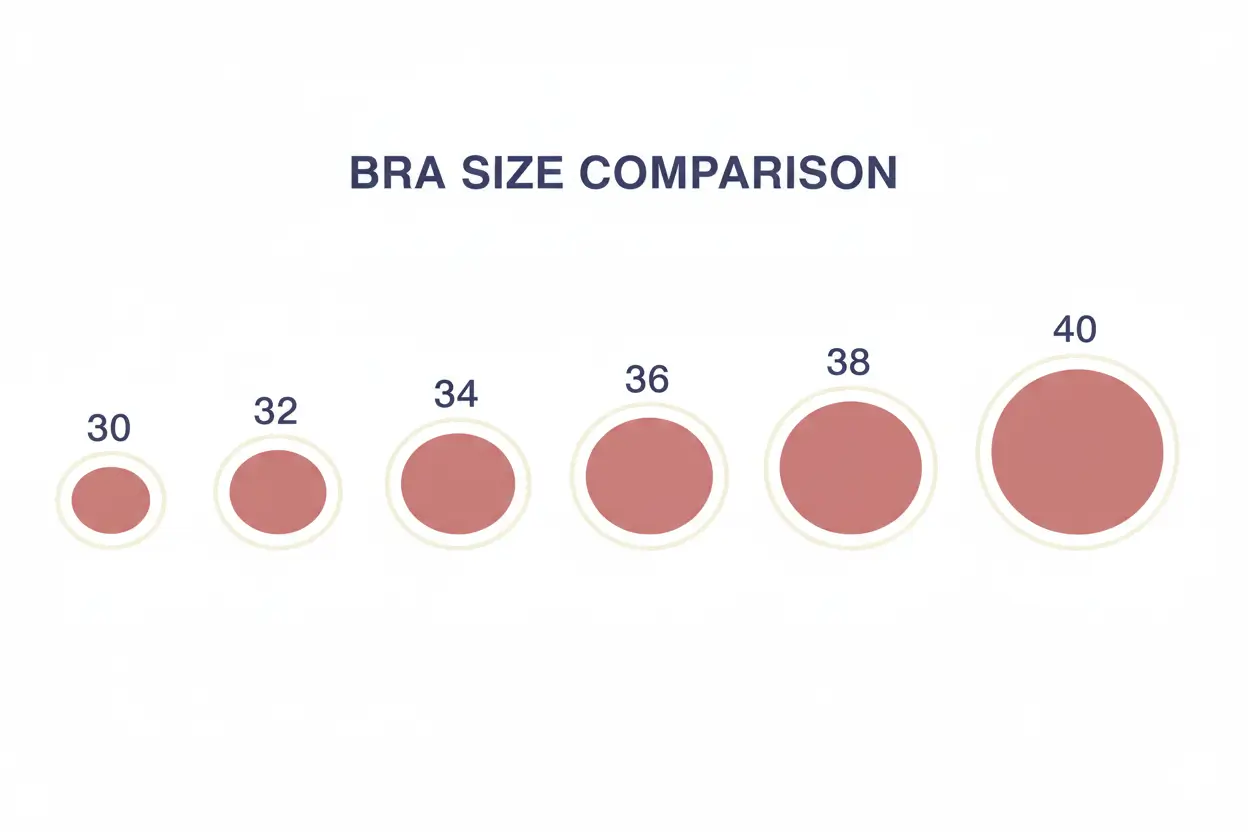
When you hear “double D” or “DD”, you might picture something huge, but here’s a key fact most women don’t realize: a DD cup size is actually becoming increasingly common and is often considered an average size in many regions today. In fact, less than 1% of women globally are truly a D cup or larger, which shows how much confusion exists around bust sizing. A DD represents a 5-inch difference (or 5 inches) between your bust circumference and your underbust (or band circumference), which means the measurement around your ribcage versus the fullest part of your bust. This moderate-to-full or slightly above-average bust volume isn’t a fixed size at all—it’s actually proportional to your band size, so a 32DD has a completely different volume than a 38DD or 40DD, even though they’re both technically the same cup size.
Let me give you some examples to show the contextual size difference: a 32-inch band paired with a 37-inch bust creates a 32DD, while a 36-inch band with a 41-inch bust gives you a 36DD, and a 40-inch band with a 45-inch bust results in a 40DD—notice how the actual volumes vary dramatically? This is a common misconception many woman face when shopping for incorrect bra sizes. For comparison, DD breasts sit between a D cup and an E cup (sometimes called DDD or triple D cup), making them larger than average but not extreme. The weight of DD breasts averages around 2.15 pounds, though this depends on your body type and breast density. In terms of appearance, what looks moderate-to-full on a 32 band might appear quite different on a 40 band, which is why it’s essential to measure both your overbust and underbust to find your proper band and proper cup size—especially since larger cup sizes are more common than most people think.
How Big is a Double D Chest?
One of the most frequent questions I get about bra sizing is this solid question: “How big is a Double D cup, really?” The answer isn’t as straightforward as you might think. Double D boobs (or DD cups) are seriously misunderstood—some people imagine them as huge, while others see them as pretty normal. The truth is, it depends on more than just the letter. Your Cup size works together with your body shape and band size, and brand sizing differences can affect how DD boobs actually look and feel. This guide is all about breaking it down for real, whether you’re a teen figuring out your first bra, a woman shopping for the right fit, or even a partner trying to buy a surprise gift—consider this your go-to read.
So here’s the thing: a DD means your bust size is 5 inches (that’s a 5-inch difference) larger than your band size. For example, if you wear a 34 band size, your bust would be approximately 39 inches around. But size doesn’t tell the whole story. A 32DD and a 38DD are both DDs, yet they’re completely different in actual volume. A smaller band size creates a smaller cup volume, even if the cup letter is the same. That’s why DD boobs can appear fuller on a petite frame and more proportioned on a broader body. Understanding this relationship between cup and band is key to finding your perfect fit and not getting hung up on letters alone.
Want an easy way to check if you’re in DD territory? Grab a measuring tape and Measure snugly around your ribcage under your bust for the band. Then measure around the fullest part of your chest for your bust measurement. Subtract the band from the bust—if it’s 5 inches, you’re usually in DD range. When thinking about big boobs, double d is the most common cup size people imagine. However, less than 1% of women worldwide are actually considered a D cup or higher. This article will talk about everything you need to know about double d boobs, so keep reading.
Want to skip the manual math? Use our International Bra Size Converter to find your exact size in seconds.
If you’re new to all of this, it helps to get bra cup sizes explained from the basics before diving into DD specifics.
How Heavy Are DD Breasts?
The short answer is simple: it varies. Naturally, if you have FF cup boobs, they’re going to weigh something completely different than AA cup breasts. The long answer? Breast weight depends on a ton of factors, including your cup size, shape, body weight, age, hormone levels, life stages, breast composition, and density. Breast density, as you can imagine, plays a pretty big role here. Boobs composed of dense glandular and fibrous tissues are heavier than those with more fatty tissue, even if they’re the same size. On top of that, most people lose breast density as they get older. So let’s say two people wear the exact same cup size—they could still have completely different breast weight because of these factors. There’s really no straight answer across the board when it comes to weight, not to mention that more than half of people have one boob that’s bigger than the other.
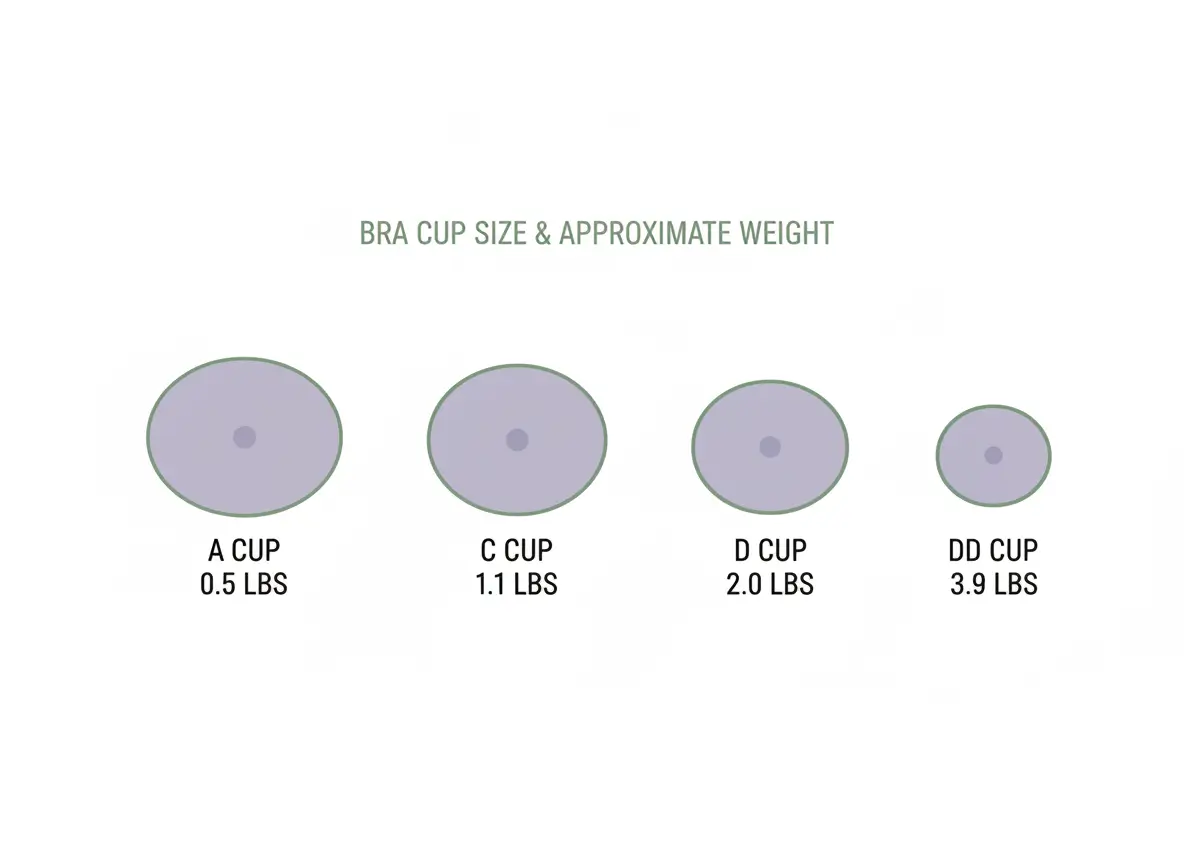
If you’re curious about average breast weight, here’s a little something to give you an idea: A cup boobs weigh around 0.5 pounds each, B cup boobs about 0.6 pounds, C cup boobs around 1 pound, and D cup boobs hit 1.5 pounds. Now, DD/E cup boobs fall anywhere between 1.5 pounds to 3 pounds, while F/FF cup boobs can be 3 to 4 pounds per breast. DD-size breasts typically weigh approximately 680g–1360g (1.5 to 3 pounds per breast), and individual weight is always based on tissue density and body composition. A pair of DD breasts often weighs around 2.5 pounds total, or about 2.2 lbs each according to most estimates.
Some sources suggest that larger DD, DDD, or E cups may reach even higher weights, contributing to back and shoulder pain for many women. Here are the Key Factors and Estimates: Weight Per Breast for DD/E cups is estimated at around 1.5 to 3 pounds per breast. The Total Weight of a pair of DD breasts may weigh 2.5 pounds total, though some estimates for DDD-F suggest a total pair weight of 15–23 lbs, which is honestly a common misconception. Density Matters a lot—Breast weight depends heavily on the ratio of fat to glandular tissue. There’s also the Band Size Impact: a 30DD and a 40DD have different volumes and therefore different weights.
Disclaimer: Breast weight varies significantly between individuals and cannot be precisely determined by bra size alone. Every body is unique, and these numbers are just general guides to help you understand what you might expect when it comes to your own chest.
What are common DD Bra Problems and How to Fix Them
Common DD bra problems often stem from improper support, resulting in a whole list of uncomfortable frequent fit issues that can make your day miserable. You might notice straps digging into shoulders, bands riding up the back, underwires digging into ribs, Breast spillage (also known as the quad-boob effect), gaping cups, or the center gore not resting flat against your breastbone. These Common DD Bra Fitting Issues are super frustrating, but luckily, there are clear Solutions. Let’s break down what’s going wrong and how to fix it.
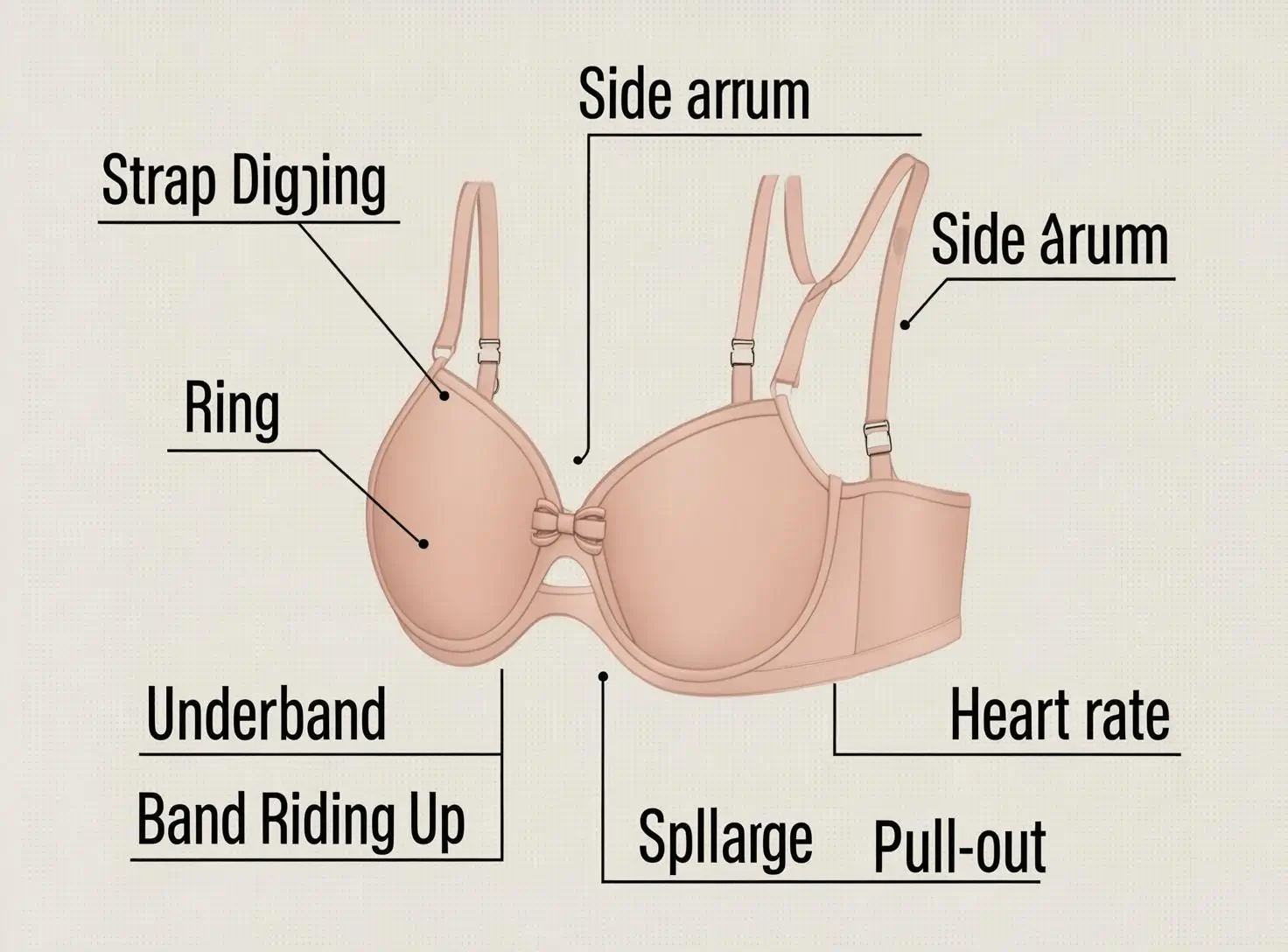
Straps Digging in Usually indicates your band is too loose and not providing the necessary support—the band should do most of the heavy lifting, not the straps. If you’re dealing with Spillage or the Quad-Boob effect, your cup is too small, so try going up a cup size. Band Riding Up means the band is too large and not properly anchoring your bra in place. Underwire Digging happens when the wire is likely resting on breast tissue because the cup is too small or the band is too tight. Gapping Cups signal the cup is too big or the style is just wrong for your shape. And if you notice Center Gore Floating—where the center piece between cups should sit flat but floats away—the cup is likely too small.
Here are some practical Tips for DD+ Cups: Prioritize the Band—Ensure it’s snug since it provides the majority of support. Check Style too; if you experience spillage, try full-coverage cups instead of demi or balconette styles. Also, deal with Unevenness—if one breast is larger, fit the bra to the larger side and consider using a spacer or insert for the smaller side. These adjustments can transform your comfort level completely.
Is a DD Bra Size Average?
Yes, 34DD is frequently cited as the average bra size in the United States, representing a significant increase from the 34B average of about 20–30 years ago. This shift is attributed to better fitting methods, an increased body mass index (BMI), and more frequent breast augmentations. Here are the Key Details on Average Bra Size: the 34DD Standard has been confirmed by Multiple surveys, including those from lingerie retailer Intimacy, which indicated that 34DD is the current average, marking a major jump from 34B over the last few decades. Shifting Averages show that Some sources indicate the average may now be even higher—like 34DDD or in the DD-FF range, depending on the population and study you’re looking at.
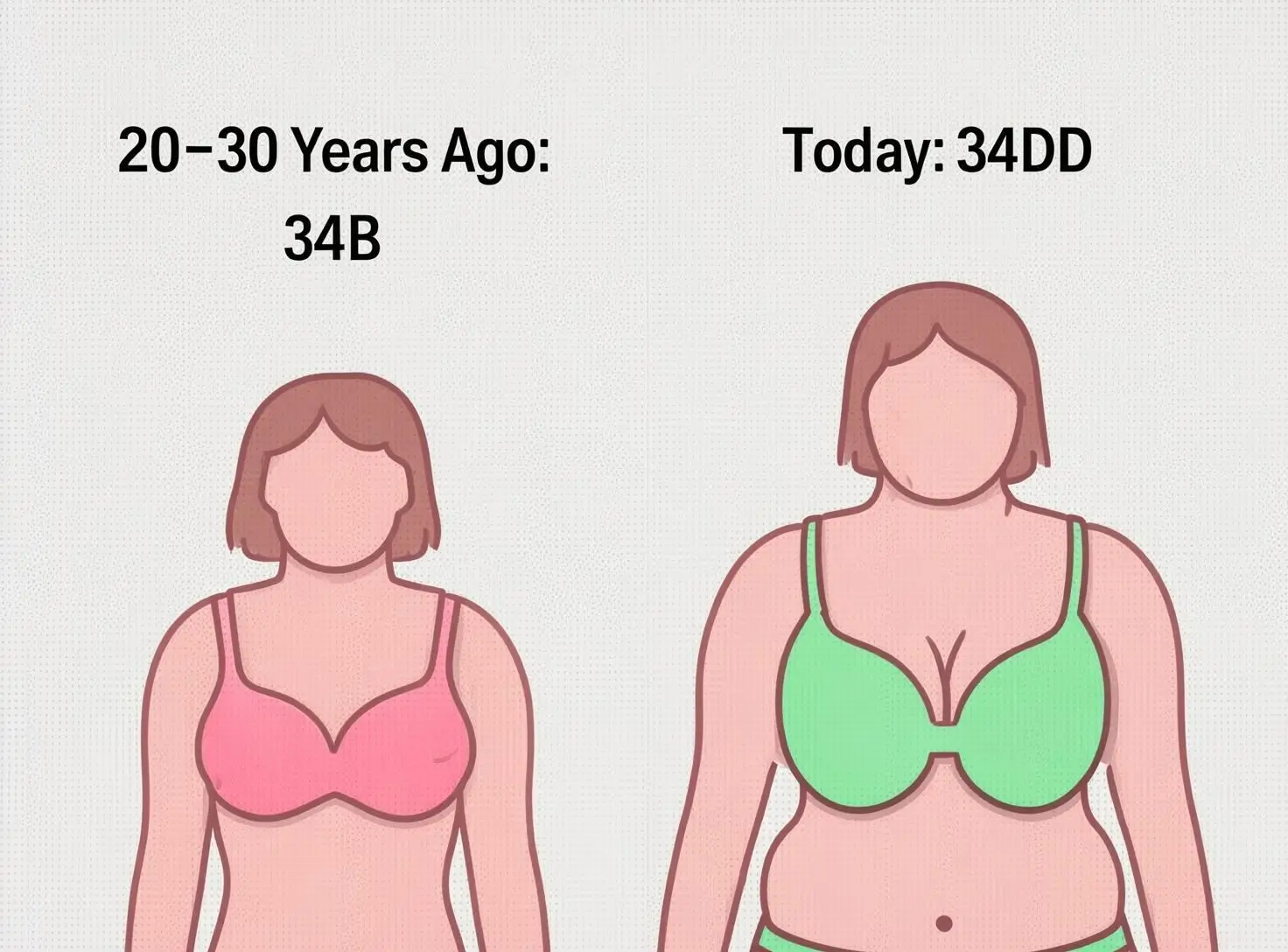
So, Why It Changed? While some of this is due to increased body weight, much of the change actually stems from women moving away from ill-fitting bras to correctly sized ones. There’s also Variation by Age to consider—34DD might be the common average, but sizes vary by age. Younger adults often range from 32A to 34B, whereas those over 40 may fall into the 36D to 40DD ranges due to hormonal and body changes. It’s important to note that many women still wear the wrong size, often wearing a band that’s too large and a cup that’s too small, which can skew perceived averages. Getting properly measured can make all the difference in comfort and support.
Still confused by the numbers and letters? Here’s a full breakdown of what bra sizes actually mean and how the system works.
Is DD a Real Cup Size?
Yes, DD is absolutely a specific, common bra cup size that represents a 5-inch difference between your bust and underbust measurements, typically falling between a D and an E or DDD cup. It’s not considered an overly large size—rather, it’s an intermediate size that’s often equivalent to an E cup in European brands. Here are the Key Details About DD Cups: the Definition is straightforward—a DD cup means a 5-inch difference between your bust and underbust. Size Progression generally follows this sequence: D, DD, DDD/E/F, representing a 1-inch increase from a D cup. When it comes to Equivalent Sizes, in many US sizing systems, DD is equivalent to an E cup, while in others (like UK), it falls between D and E. Understanding this helps you find out what works for you across different brands.
This is especially important to know because the difference between US and UK bra sizing can cause real confusion when shopping international brands.
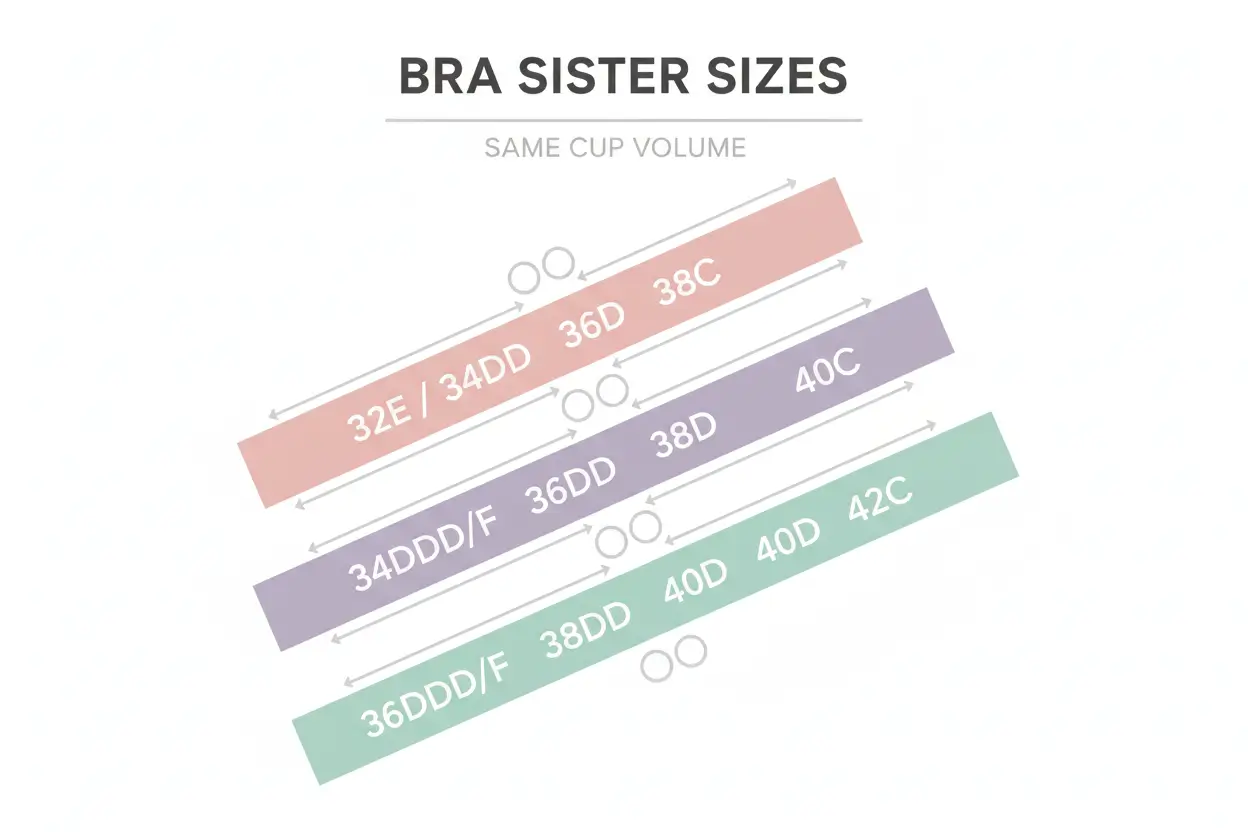
Now here’s the first thing to realise: a DD cup bra doesn’t really mean anything without the band size paired with it. For example, a 30DD is not only smaller than a 38DD in the measurement around the band, but also in the capacity of the cup. There’s no such thing as a universal DD size in itself—the concept is best explained using the system of sister sizes. To find out more in depth, check out a guide to bra sister sizes. All of these bras are DD sizes, for example, from 30DD to 38DD—each with a different band length and cup volume. This is Relative to Band Size: a 30DD is not the same volume as a 36DD. The cup volume is proportional to the band size—a DD on a small band is smaller than a DD on a large band.
If you already have a bra that’s fitting relatively well, our fitting guide has step by step instructions on what to look for in a well-fitting bra and which steps to take to improve it. Starting at the beginning? How to measure bra size has you covered. If you’d like to know why it’s so important to be sure which system you’re using for underband sizing, what makes DD+ brands different from core size ones, and understand more about DD+ as a size category in general, this guide is for you. Also, Sister Sizes can help: If your DD cup feels too small, a sister size (such as going up a band size and down a cup size, e.g., 34DD to 36D) can be used to improve comfort. Don’t get hung up on the letters all the time—really, it’s about finding your best size that makes you feel supported and confident.
What is the Largest Breast Size?
The largest natural breasts belong to Annie Hawkins-Turner, also known as Norma Stitz, who holds the Guinness World Record with a measurement of 102ZZZ. Her breasts weigh approximately 56 to 85 pounds each and have a 70-inch chest-over-nipple measurement—an extreme case of macromastia that’s significantly larger than the average breast size, which is around a C to D cup in countries like Norway and the US. When it comes to the Largest Implanted Breasts, Sheyla Hershey formerly held records with 38KKK, achieved through multiple surgeries. These cases are far from typical, but they highlight the incredible range of breast sizes that exist. For context on Average Breast Size, According to studies, the largest average breast sizes are typically found in countries like Iceland, the UK, and the USA, which often report average sizes around a C or D cup.
Measurements of Extreme breast sizes often result in serious health challenges, including chronic back, shoulder, and neck pain, and typically require custom-made bras for proper support. While DD breasts are nowhere near these extremes, understanding the full spectrum helps put your own size in perspective and reminds us that every body is different—and that’s completely normal.
How Big Are 38 Double D Breasts?
A 38DD bra size typically fits someone with a 38-inch underbust (band) and a bust measurement around 43-45 inches, representing a full-busted, curvier silhouette. It’s considered a larger, full-figured size that requires significant support, featuring wider bands, comfortable straps, and increased cup volume compared to a 38D. Here are the Key Details About 38DD: the Measurement Profile shows that the underbust is generally 38 inches, while the fullest point of the bust is about 5 to 6 inches larger, falling in the 43″–45″ range. This difference is what defines the DD cup size, and understanding this helps you find bras that actually fit well.
When it comes to Support Needs, Due to the weight of the bust, 38DD bras often require wide bands, sturdy underwires, and side support panels to provide lift and prevent shoulder strain. Without proper support, you might experience discomfort or even pain throughout the day. In terms of Body Type, This size is common among plus-size and fuller-figured individuals. For Sister Sizes, If a 38DD is not available or fits poorly, try a 36E (36DDD) for a tighter band, or a 40D for a looser band—these options can help you dial in the perfect fit.
The good news about Availability is that 38DD is a standard size offered by many lingerie brands, including Wacoal and Honeylove, so you have plenty of choices. Disclaimer: Breast size can vary significantly between individuals with the same bra size due to shape and volume distribution, so always try before you buy when possible.
If you’re shopping European brands for your 38DD, check out our European to UK bra size conversion to avoid ordering the wrong size.
What is Considered a Large Bra Size?
What is considered a large bra size is honestly subjective and depends on your body proportions, but in standard retail and clinical contexts, D cups and above are typically the threshold for “large.” Bra sizes like D, DD, and above are generally considered “big” or full-bust, though this is relative to your band size. A large bust is often characterized by cup sizes ranging from F/DDD, G, and higher. Generally, once cup sizes exceed D/DD, they’re considered to be in the larger range since cup volume is proportional to the band. Here are some Key Considerations for Big Bra Sizes: Subjectivity plays a huge role—what’s “Big” is relative. A D cup on a 30-band (30D) looks much smaller than a D cup on a 40-band (40D). In terms of Proportion, Many women considered full-busted fall into the DD to G range.
When we talk about Common Big Sizes, While “large” is subjective, specialty and, often, well-fitted sizes for larger breasts frequently go into G, H, and up to K or N cups. The Plus Size Cutoff is important to know: Bras are often classified as plus-size if they have a band size of 38+ or a cup size of D+. Unfortunately, when Properly measured, many individuals often wear a smaller cup and larger band than they should, making the perception of what is big somewhat skewed. This is why getting fitted properly can completely change your understanding of your own size.
Let’s break down General Size Classifications: While perceptions vary, common sizing categories are often grouped as follows—Average/Medium is generally C cups, Large Typically starts at D, DD (E), and DDD (F), and Very Large/Extra Large is Often defined as G cups and beyond. Plus-Size Bras are Often categorized as a DD cup or larger combined with a band size of 40 or greater. These are just general guidelines, but they help frame the conversation around what’s considered bigger than average in the bra world.
Here are the Key Factors that shape Perception: Relative Volume and Sister Sizes matter a lot—a cup letter is not a fixed volume; it represents the difference between your ribcage (band) and the fullest part of your bust. Because of this, a 32D actually has less breast tissue volume than a 36D, even though they’re both D cups. Body Frame also plays a role: On a petite or slim frame, a D cup may appear very large, whereas the same cup size may look average or moderate on a broader or plus-size frame. Retail Availability skews perception too—Many standard retailers only carry up to DD or DDD, leading many to view anything above these as specialty or extremely large.
From a Medical Definition standpoint, Clinically, breasts may be considered large if they weigh over 500 grams each, or cause physical discomfort such as chronic back and neck pain. This medical perspective focuses less on cup letters and more on the actual physical impact on your body, which is ultimately what matters most for your health and comfort.
Is DD a Medium or Large Size?
A DD cup is generally considered a medium-to-large size depending on your band size, often acting as a bridge between average and larger cup volumes. Because it’s proportional rather than a fixed size, a 30DD is small-to-medium in volume, while a 38DD is considered large. It’s commonly considered medium in many modern bralette ranges, which shows how sizing perspectives have evolved. Here are the Key Considerations: Proportionality matters—your cup size is always relative to your band size. For example, a 34DD has less total volume than a 36DD, even though they’re both DD cups. There’s also a big Misconception here: While DD was historically considered very large, it’s actually quite common today and is not the largest size available, with many brands now offering sizes up to K, L, or N.
Let’s talk Measurements: in the UK/US, a DD cup represents roughly a 5-inch difference between your underbust (band) and overbust measurement. Understanding Sister Sizes is also helpful—a 34DD is a sister size to a 36D and a 32E, meaning they have similar cup volumes on different band sizes. Note: For the best fit, it’s recommended to look at your band size in combination with your cup size, as a 32DD is very different from a 40DD in actual breast volume. This is why you can’t just rely on the letter alone—context is everything when it comes to finding bras that truly fit and feel comfortable.
UK brands tend to have a more detailed cup size range — our full UK bra sizes guide breaks down every size from A to K in the British system.
Is DD Actually Big?
No, a DD cup is not inherently “big” or considered a very large size, despite the common cultural stereotype. DD simply means your bust is roughly 5 inches larger than your underband, and the appearance depends entirely on your band size. A 30DD is small-to-average, while a 40DD is much larger. Here are some Key Truths About DD Cups: Size is Relative—a 32DD and a 40DD have the same or similar cup letter, but the 40DD is much larger overall due to the band difference. There’s also a Common Misconception: Many retailers stop at DD, causing people to think it’s the largest size. In reality, cup sizes go much higher into E, F, G, and beyond. DD is Not Always Huge—a 30DD fits, looks, and feels much smaller than a 36DD or 40DD, often appearing quite small in volume.
For a side-by-side perspective, it’s worth understanding what a D cup bra size looks like before deciding where DD falls on the spectrum.
Understanding Sister Sizes is also important here: DD cups are often interchangeable with smaller letters on a larger band. For example (e.g.), a 34DD has the same volume as a 36D or 38C. Many women who believe they are DD are actually wearing the wrong size and may need a smaller band and larger cup for a proper fit. So no, DD isn’t automatically “big”—it all comes down to how it works with your unique body proportions.
How Much Does a DD Breast Weigh?
On average, a single DD-cup breast weighs approximately 1 to 2.5 pounds, meaning a pair typically weighs between 2 and 5 pounds total. While some estimates suggest individual breasts can feel heavier depending on tissue density, 1.5 to 3 lbs per breast is a common range for D-E cups. Here are some Key points regarding the weight of DD breasts: Weight Variation is real—Breast weight is not determined by cup size alone. It varies based on your body composition, specifically the ratio of fat to glandular tissue. Total Weight for a combined weight of 2 to 4 lbs for both breasts is frequently cited, though some sources indicate it can be slightly higher depending on your band size. When it comes to Density Factors, the average density of breast tissue is approximately 1.04 kg/L, meaning a 32D (or 10D) breast weighs roughly 0.86 kg (about 1.9 lbs), and a 32E (DD) is around 1.1 kg (approximately 2.4 lbs).
The Impact on Body is something many women with DD breasts experience firsthand. This weight can cause physical discomfort, including back, neck, and shoulder pain, often leading individuals to consider breast reduction surgery for relief. Understanding how much your breasts actually weigh can help you make informed decisions about the support you need—from choosing the right bra to exploring medical options if discomfort becomes a daily struggle.
What is the Most Attractive Cup Size?
Studies on attractiveness indicate that C and D cup sizes are generally rated as the most attractive, often associated with a moderate-sized, projected, firm shape. Preferences definitely vary, with some studies showing a preference for slightly larger, 3/4-view breasts. Ultimately, perceptions of attractiveness are completely subjective. Here are the Key Findings on Preferred Breast Size: the Most Attractive Sizes according to studies from the National Institutes of Health (NIH) on .gov sites show that C and D sizes are frequently ranked as most appealing. When it comes to Size Preferences, Surveys indicate that 41% of men prefer D cups, 31% prefer C cups, and 12% prefer B cups. The Ideal Shape goes Beyond size—a round, firm, youthful shape is generally considered most attractive across different preferences.
There are also Cultural Differences to consider: While some Western cultures may favor larger breasts, others, such as in Japan, may prefer smaller, more subtle sizes. The Influence of View matters too—Breast attractiveness ratings vary based on profile, with oblique views often rated higher than straight-on angles. While data suggests a preference for C/D cups, remember that attractiveness is deeply personal and not limited to one size. What matters most is how you feel about your own body, not what any survey says is “ideal.”
What is the 3 Bra Rule?
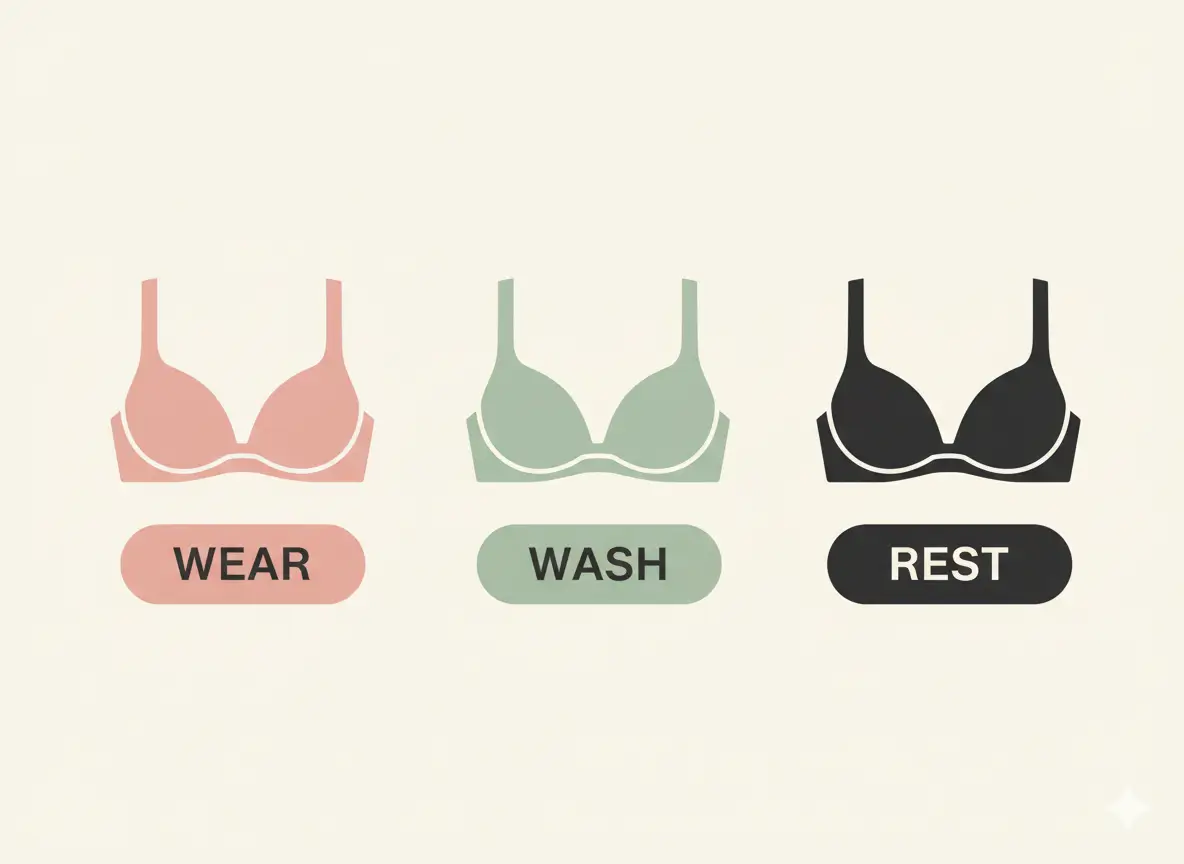
If you’re wondering, “How many bras should I own?” there’s a good rule of thumb called the 3 bra rule. It suggests owning three everyday bras, hence the name. One is on your body, one is in the drawer ready to wear, and one is in the wash. We recommend two bras in a neutral or skin tone shade, like our Mocha or Taupe bras, and at least one in a darker color, like Black. Depending on your cup size and support needs, you can choose from a variety of styles like wireless, t-shirt, plunge, or full coverage bras. The 3 Bra Rule is a classic guideline designed to extend the life, shape, and support of your bras by rotating between three of them. The idea is simple: wearing the same bra every day stretches the elastic and reduces support, while giving it 24–48 hours to rest helps the fabric recover.
In the rotation, you keep one bra to wear, one in the wash, and one to rest. This cycle prevents overuse, maintains elasticity, and keeps your bras in better condition longer. However, in today’s world, this rule doesn’t fully apply for everyone. Women now wear different outfits and switch between styles based on neckline, activity, and occasion. You may need T-shirt bras for daily wear, sports bras for workouts, strapless or multiway bras for special outfits, and lace or padded styles for specific looks. Because each bra serves a different purpose, it’s better to plan your bra collection around your wardrobe and lifestyle, not just a three-piece rotation.
Instead of sticking to the old rule, build a versatile set of bras that match your clothing choices and daily activities while still rotating them wisely to extend their lifespan. The 3 bra rule is a guideline recommending a minimum of three everyday bras in rotation to maintain hygiene, support, and longevity. The rule consists of having one bra on your body, one in the wash, and one resting in the drawer. Key aspects include a Rotation Schedule: By wearing one bra while others rest, you allow the elastic to recover, which prevents the band from stretching out too quickly. Optimal Care ensures you always have a clean, functional bra available while others are being laundered.
The Ideal Setup, based on common recommendation, includes two neutral/skin-tone bras for daily wear and one dark option. Adhering to this rule helps bras last longer and maintains their original shape and support. Whether you have DD breasts or any other size, rotating your bras properly is key to getting the most out of your investment and keeping yourself comfortable all day long.
What Are Common DD Bra Problems?
Common DD bra problems often stem from incorrect sizing, or, more frequently, a shape mismatch, leading to spillage, riding up, and discomfort. The Key issues include digging shoulder straps (often caused by a band that’s too large), underwire digging into breast tissue, and, significantly, a lack of support that causes back/shoulder pain. Let’s break down the Top DD Bra Fit Problems: Breast Spillage or Overflowing happens when breasts spill over the top or sides of the cup—this is likely because the cup is too small, even if it feels like a large size. Band Riding Up occurs When the back band rides up towards your shoulder blades, which means it’s too loose and not providing proper, horizontal support. Digging Straps: Straps that dig into your shoulders usually indicate the band is too loose and failing to support the weight, forcing the straps to do the work instead. Underwire Discomfort happens when Wires sit on breast tissue rather than your ribcage or dig into the sides, which indicate the cup is too small or the wrong shape. Gaping Cups create a gap at the top of the cup, often paired with a tight band, and suggests the cup shape is too shallow or too large.
Understanding the Common Causes for DD Issues is important: Assuming DD is “Huge” is a major misconception—DD simply means a 5-inch difference between your bust and underbust. A 30DD has a much smaller volume than a 40DD. Shape Mismatch is another big problem—a bra can be the right size but wrong shape (e.g., too shallow or too projected) for your breasts. Incorrect Measuring is common too—Many people wear a band that’s too large and a cup that’s too small. Here are some Troubleshooting Tips: Tighten the Band—the band should be firm and level. If it rides up, go down a band size and up a cup size. Check the Gore—the center part (the gore) should lay flat against your chest bone. If it floats, the cup is too small. Try Wider Straps: For better weight distribution and less digging, look for styles with wider, more cushioned straps.
Is Double D XL or XXL?
Double D (or DD) generally translates to XL or XXL in alpha-sized (S/M/L) bras, depending on your band size and brand. According to various size charts, a 36DD or 38DD often aligns with XL, while larger bands like 40DD or 42DD typically correspond to XXL. Because DD is a cup size (representing volume), not a band size (representing width), a double D on a small frame is not the same size as on a large frame. This is why you can’t just say “DD equals XL”—it really depends on the full bra size, including both the band and cup measurements. When shopping for bralettes or alpha-sized bras, always check the brand’s specific size chart to see how they convert DD into their S/M/L/XL/XXL system, as there’s no universal standard across all brands.
What Comes After DD Breast Size?
After a DD cup, the standard bra sizing progression generally moves to DDD (also known as F in many US brands), and then G. However, sizing conventions vary, with UK brands typically following a DD, E, F, FF, G sequence, while US brands often use D, DD, DDD, G. It is recommended to check specific brand charts because every manufacturer does things a bit differently. Here’s the Common Cup Size Order for US Sizing: DD (or E), DDD (or F), G, H. Understanding these progressions is crucial, especially if you’re finding that your current DD bra feels too small and you need to size up.
Shopping a UK brand? You can quickly convert your American bra size to UK to make sure you’re ordering the right size.
For a deeper breakdown, our UK cup size conversion guide walks you through finding your perfect fit across all international sizing systems.
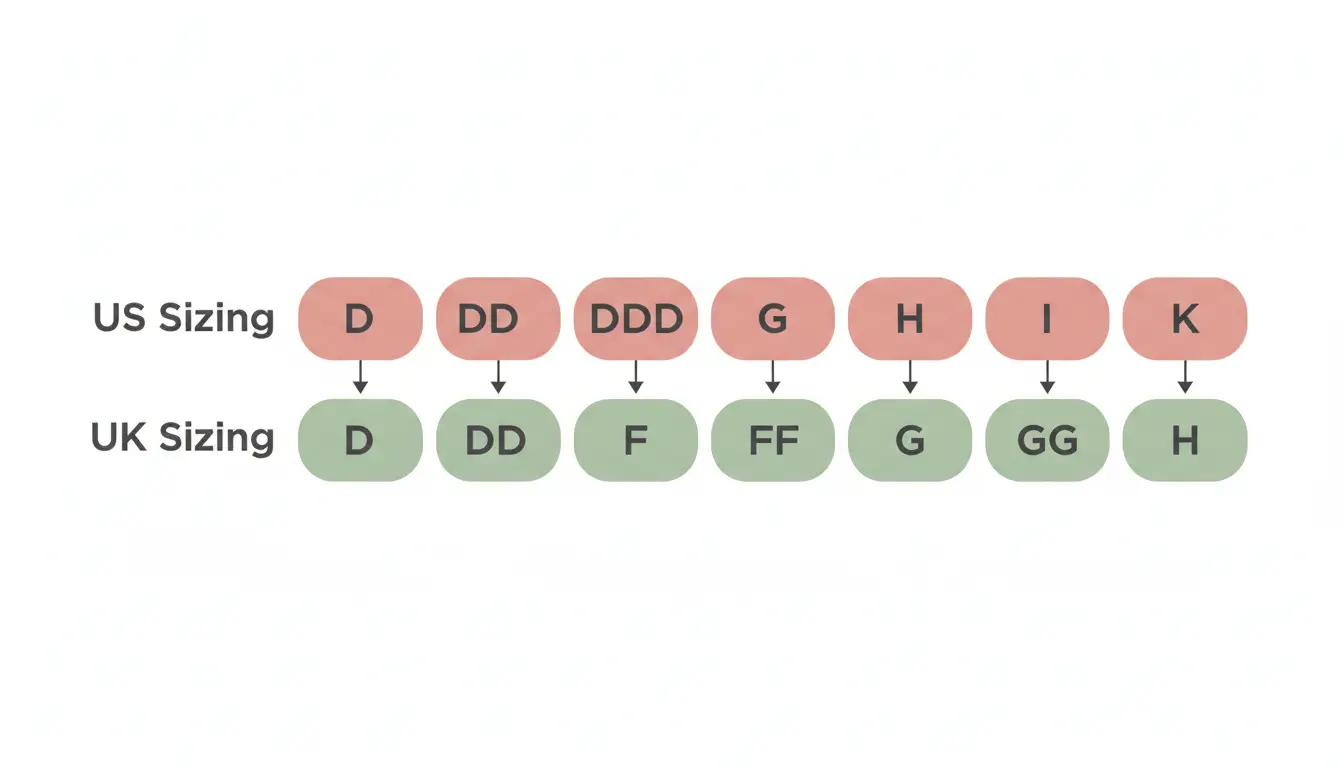
There are some Key Considerations when Sizing Up: US vs. UK Sizing matters a lot—UK brands include more letters (e.g., FF, GG) and often represent a better fit for larger busts, often starting with D, DD, E, F, FF, G. Manufacturer Variations mean that Sizes can differ between manufacturers, particularly with plus-size brands, which may use conventions like DDDD or G. Volume Changes are significant too: a DD cup typically holds roughly 600–800 cc, while moving to a G cup increases volume to approximately 1100–1400 cc. This is a substantial jump in breast tissue volume, which is why proper support becomes even more important as you go up in cup size.
For Support: For sizes G and above, full-coverage cups with sturdy underwire or reinforced bonding are recommended to handle the extra weight comfortably. If your DD cup is too small, the next step is usually DDD or E, followed by F or G, depending on your manufacturer’s scaling. Always try on multiple brands and styles to find what works best for your unique shape and needs.
Is DD the Same as DDD?
DD (Double D) and DDD (Triple D) refer to bra cup sizes indicating the difference between your bust and band measurements, with DDD being one cup size larger than DD. Specifically, a DD cup represents a 5-inch difference, while a DDD cup represents a 6-inch difference, and is often equivalent to an F cup in US sizing. Let’s break it down further: DD (Double D/E) Represents a 5-inch difference between your bust and band size. In many sizing systems, this is equivalent to an E cup. DDD (Triple D/F) Represents a 6-inch difference between your bust and band size. It is one size larger than DD and is equivalent to an F cup in the US. Understanding the Volume Difference is important: As a larger size, the DDD cup has more volume and is designed to provide more support for a fuller bust compared to a DD cup.
Before comparing DD to DDD, it also helps to understand the difference between a D and DD bra — they’re closer than most people think.
There are also Sizing Variations to keep in mind: In US sizing, the progression often goes D, DD, DDD (or E), then F. In UK sizing, the progression is D, DD, E, F. Therefore, a DDD cup is generally one full cup size larger than a DD cup. So no, they’re definitely not the same—DDD offers noticeably more coverage and support than DD, which is why it’s crucial to get properly measured if you’re experiencing spillage or discomfort in your current DD bras.
Are DD Breasts Big?
A DD cup is not universally considered “big,” as bra size is relative to your band size—a 30DD is much smaller in volume than a 36DD. While DD is often perceived as large due to limited retail stocking, it generally represents a 5-inch difference between your bust and band, placing it in a moderate, average-to-full range rather than extremely large. Here are the Key details regarding DD cup size: Relative Volume matters—a 32DD has a smaller total volume than a 36DD. The cup size indicates the difference between your underbust and bust measurement, not a fixed, universal volume. Understanding Sister Sizes helps too: a DD on a smaller band can have the same cup volume as smaller letter cups on larger bands—for example (e.g.), a 30DD has the same volume as a 32D, 34C, or 36B.
There’s a big Misconception here: the belief that DD is “huge” is a misconception fueled by mainstream stores that often stop stocking at that size, making it seem like the upper limit when it’s really not. When it comes to Average Size, With many women incorrectly wearing 36-38 bands, the average cup size has increased, making DD/DDD a common, average-to-full size rather than exceptionally large. In terms of Appearance, a DD cup typically indicates a fuller bust with a 5-inch difference, resulting in a more pronounced curve and volume compared to A, B, or C cups.
So are DD breasts big? It really depends on your frame and band size. What looks substantial on a petite body might appear quite proportional on a larger frame, which is why context matters so much when discussing breast size.
What Are Common Problems with DDD Bras?
Common problems with DDD (or E in UK sizing) bras often stem from wearing the wrong size—a frequent issue, as many retail brands stop at DDD, leading to sticker shock and improper fitting. Because DDD represents a significant bust size, issues often revolve around lack of support, discomfort, and poor, mass-market design. Here are the most common problems with DDD bras, based on reported fit issues: 1. Straps Digging In and Causing Pain — The Issue is that Thin or non-adjustable straps dig into your shoulders, causing pain, nerve issues (like bra strap syndrome), and indentations. The Cause? Often, the band is too loose, forcing the straps to do the heavy lifting. The Solution is to Look for wider, padded straps and ensure your band is snug. 2. Underwire Discomfort and Poking — The Issue is that Underwires dig into your ribcage, sternum, or armpits, or poke through the fabric. The Cause: the cup is usually too small, or the band is too loose, causing the wire to sit on breast tissue rather than behind it.
3. Spillage and Quadboob — The Issue is that Breast tissue escapes from the top or sides of the cup, creating a double bubble effect. The Cause is simple: the cup size is too small. The Solution? Size up in the cup, or look for full-coverage styles that provide more containment. 4. Band Riding Up the Back — The Issue: the back band does not stay parallel to the floor, rising up toward your shoulder blades. The Cause is a band that’s too loose, providing poor support. 5. Gaping or Empty Cups — The Issue is There is extra, empty space at the top or side of the cup. The Cause: the cup is too large, or the shape of the bra does not match your user’s breast shape (e.g., shallow vs. projected).
6. Limited Selection and Poor Quality — The Issue: Finding stylish, comfortable, and supportive DDD bras can be difficult. The Reality is Many retailers carry limited, low-quality options in this size range, forcing consumers to settle for poor, ill-fitting bras. 7. Straps Slipping Off Shoulders — The Issue is a Constant need to pull up straps. The Cause is Often due to a band that’s too large, or straps set too far apart for your user’s shoulder width. 8. Lack of Support Leading to Physical Discomfort — The Issue includes Back, neck, and shoulder pain, along with skin chafing. The Cause: the bra is not lifting the bust properly, shifting weight to your shoulders and spine instead of distributing it evenly.
How to Fix These Issues: Use a Calculator for proper fitting (using tools like the A Bra That Fits calculator is crucial, as many people underestimate their cup size). Check the Band: Ensure your band is snug, as it provides 80% of the support. Use the 3-Bra Rule: Rotate at least three bras to allow the elastic to recover between wears. Adjust Straps: Tighten or loosen them to ensure the weight is distributed properly, not just sitting on your shoulders. Taking these steps can transform your comfort level and help you finally find DDD bras that actually work for your body.
Want to learn more? Explore all our bra sizing guides and resources to become a confident bra shopper.
Frequently Asked Questions (FAQs)
A double D chest means your bust measurement is 5 inches larger than your band (underbust) measurement. For example, a 34DD means a roughly 39-inch bust. However, actual size varies — a 30DD looks noticeably smaller than a 38DD, even though both carry the same cup letter.
DD is a medium-to-full cup size, not extreme as many assume. It sits one size above a D and one below a DDD or E cup. Its actual appearance depends heavily on your band size — on a petite frame it looks fuller, while on a broader frame it appears more proportional.
Yes. According to multiple lingerie surveys, 34DD is now considered the average bra size in the United States — a significant shift from the 34B average recorded 20–30 years ago. This change is largely attributed to better fitting methods, increased BMI, and greater awareness of proper bra sizing.
A single D-cup breast weighs approximately 1 to 1.5 pounds, meaning a pair typically weighs around 2 to 3 pounds total. Exact weight varies based on tissue density, body composition, and band size. Denser, glandular tissue weighs more than fatty tissue, even at the same cup size.
No. DD represents a 5-inch difference between your bust and band, while DDD (also called F in US sizing) represents a 6-inch difference. DDD is one full cup size larger than DD, offering more coverage and volume. If your DD cup causes spillage, DDD may be your better fit.
After DD, the next size is DDD (or E/F depending on the brand). US sizing typically follows: DD → DDD → G → H. UK sizing goes: DD → E → F → FF → G. Always check the specific brand’s size chart, as naming conventions vary significantly between manufacturers.
Not universally. A 30DD is small-to-average in volume, while a 40DD is genuinely full and large. Because cup size is proportional to band size, “DD” doesn’t represent a fixed volume. Many mainstream retailers stop stocking at DD, which falsely makes it seem like the upper limit of sizing.
Full-coverage bras are generally best for DD cups, as they provide maximum support, reduce spillage, and distribute breast weight evenly. Underwire styles with wide bands and padded straps offer the most comfort. Balconette or demi styles can work but may cause spillage for fuller shapes.
Discomfort usually signals a fit issue — not the size itself. Common culprits include a band that’s too loose, a cup that’s too small, or a style that doesn’t match your breast shape. If straps dig in or the band rides up, try going down a band size and up a cup size.
Yes, noticeably. In US sizing, DD typically equals E. In UK sizing, DD sits between D and E as its own distinct size. This means a UK 34DD and a US 34DD may not fit identically. Always refer to the brand’s specific size conversion chart when shopping internationally.