
English Bra Sizes (UK Bra Sizes) Guide
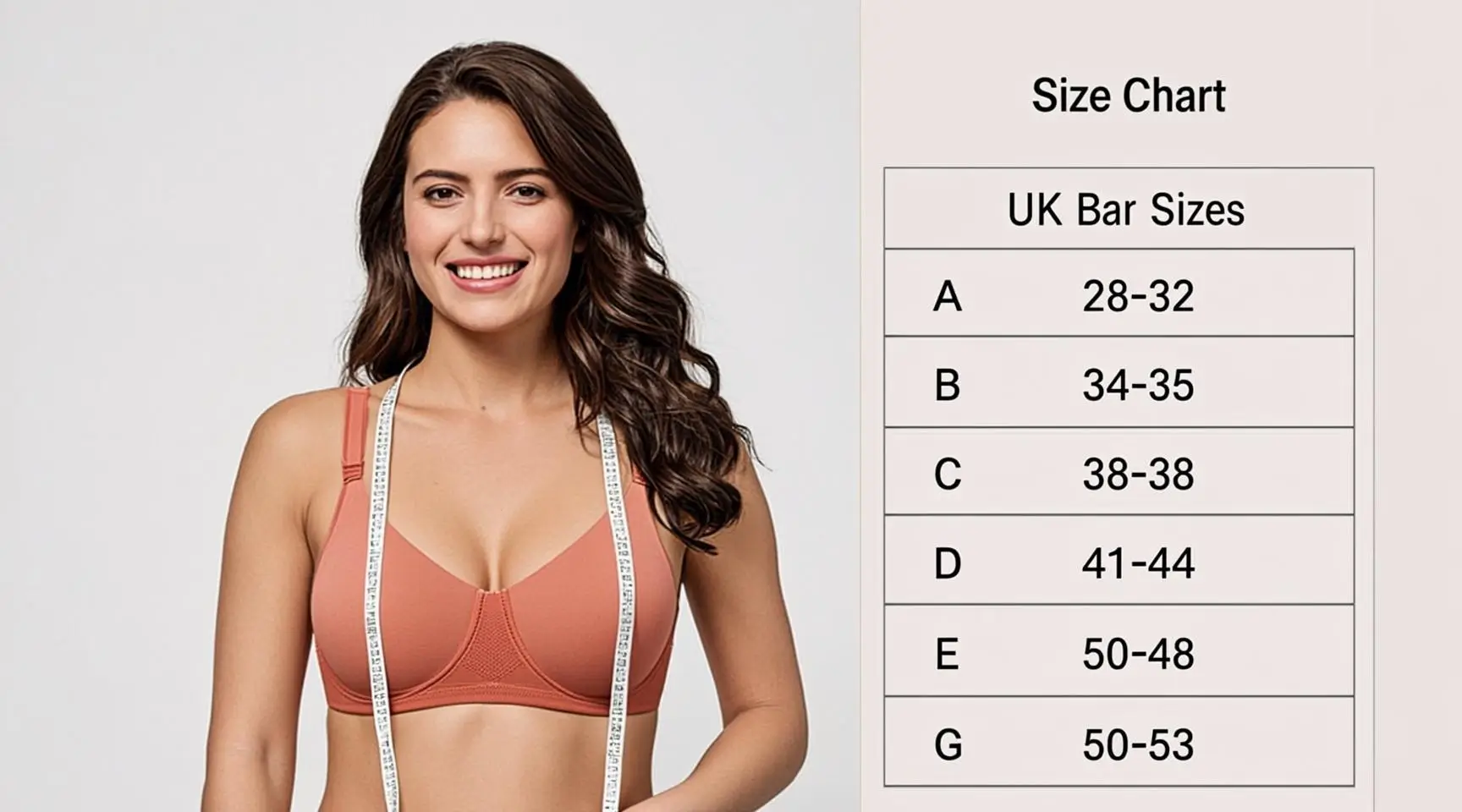
Did you know that approximately 80% of women wear the wrong bra size? This startling statistic highlights just how confusing bra sizing can be, especially when navigating the unique English bra sizing system. Whether you’re shopping online from a British retailer or simply trying to understand your measurements across different systems, mastering UK bra sizes can transform your comfort and confidence.
UK bra sizing follows a distinct pattern that differs from American and European systems, particularly when it comes to larger cup sizes. In this comprehensive guide, you’ll learn everything from measuring techniques to international conversions, helping you find bras that truly fit your body. We’ll explain why your usual size might not be your actual size, how to decode those confusing letters and numbers, and most importantly, how to achieve that perfect fit you deserve.
Ready to discover your true size? Our International Bra Size Converter can help you translate your measurements across multiple sizing systems instantly, saving you time and frustration when shopping globally.
What Are English (UK) Bra Sizes?
English bra sizes, commonly referred to as UK bra sizes, follow a systematic approach that combines band measurements with cup designations. Unlike the European system that uses centimeters, UK sizing measures the band in inches, creating a foundation that’s generally consistent with US sizing but with crucial differences in cup labeling.
The UK bra sizing system works on a simple principle: the band size (measured around your ribcage) combined with your bust measurement determines your cup size. For example, a UK 34C means a 34-inch band with a C cup. The brilliance of this system is its logical progression – each cup size represents a one-inch difference between your bust measurement and band measurement.
However, where UK sizing truly diverges from US sizing is in cup designations beyond DD. While American sizing typically uses DDD, DDDD, etc., UK sizing employs a more elegant progression: after DD comes E, F, FF, G, GG, H, HH, and beyond. This means a UK 32E is equivalent to a US 32DDD – a critical distinction that often causes confusion for international shoppers.
The band sizing in UK measurements remains consistent with US sizing (both use inches), but the cup lettering creates a significant difference that can lead to ordering completely wrong sizes if you’re unaware of the conversion. This is especially important for women with fuller busts who often find themselves navigating the more complex end of the size spectrum.
Not sure of your size? Use our International Bra Size Converter to find your perfect fit across all major sizing systems without the guesswork.
How to Measure for UK Bra Sizes
Finding your accurate UK bra size requires precise measurements and understanding how to interpret them. Don’t worry if you’ve never done this before – we’ll walk you through each step with expert tips to ensure accuracy. Remember, your bra size can change over time due to weight fluctuations, pregnancy, aging, or even your menstrual cycle, so regular measuring is essential.
Step 1: Measure Your Band Size
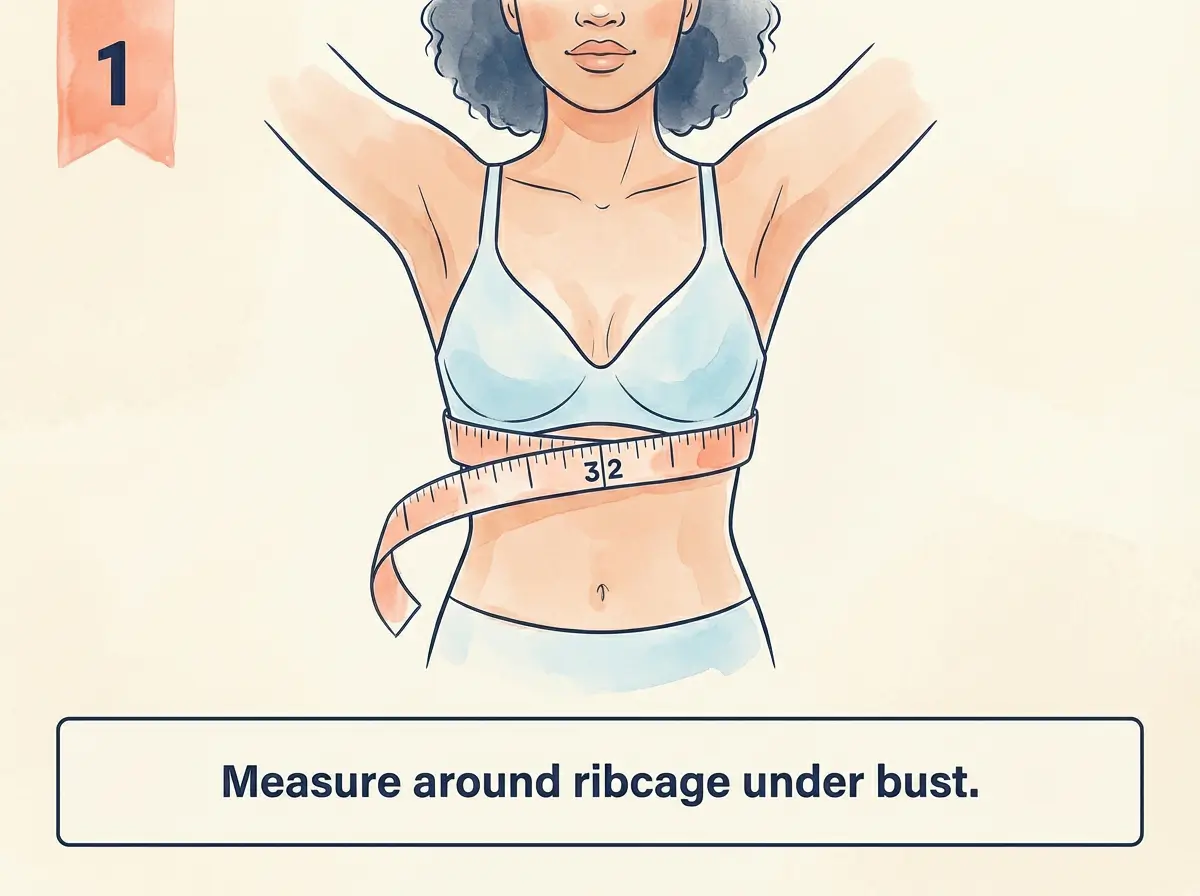
For the most accurate band measurement:
- Wear a non-padded bra or no bra at all
- Use a soft measuring tape (the kind used for sewing)
- Stand straight with arms at your sides
- Measure around your ribcage, directly under your bust
- Ensure the tape is parallel to the floor and snug but not tight
- Take the measurement in inches (UK sizing uses inches for band sizes)
If your measurement is an odd number (like 31 or 33), round up to the next even number. For example, a 31-inch measurement becomes a 32 band, while 33 inches becomes 34.
Step 2: Measure Your Bust Size
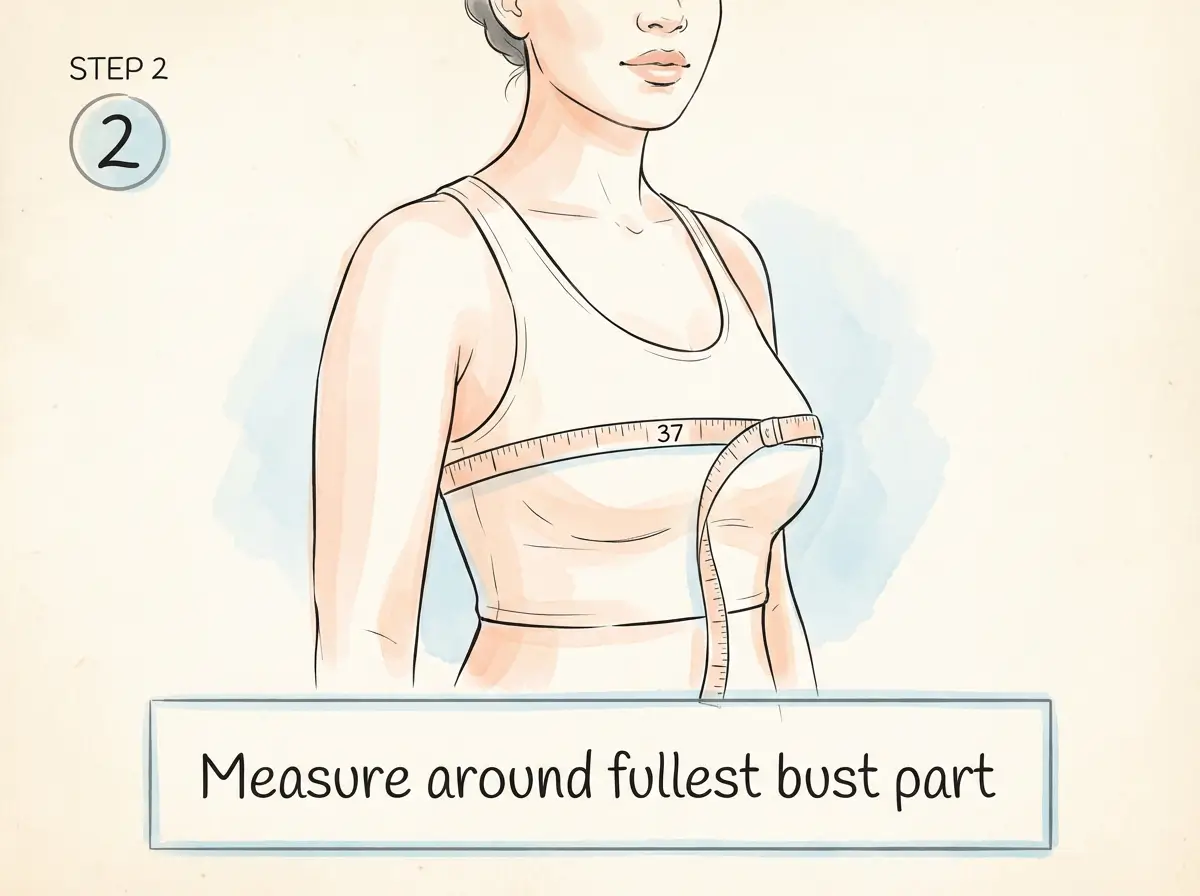
Now for your bust measurement:
- Keep the measuring tape level and parallel to the floor
- Measure around the fullest part of your bust
- Don’t pull the tape too tight – it should rest gently against your skin
- Wear the same non-padded bra or no bra as before
- Record this measurement in inches
Step 3: Calculate Your Cup Size
The magic happens when you find the difference between your bust measurement and band measurement:
- 1 inch difference = A cup
- 2 inches difference = B cup
- 3 inches difference = C cup
- 4 inches difference = D cup
- 5 inches difference = DD cup (UK) or E cup (UK standard)
- 6 inches difference = E cup (UK) or F cup
- 7 inches difference = F cup (UK) or FF cup
- 8 inches difference = FF cup (UK) or G cup
For example, if your band measurement is 34 inches and your bust measurement is 39 inches, that’s a 5-inch difference, making you a UK 34DD (or 34E in some British retailers).
Pro Tips for Accurate Measurements
- Measure yourself at the end of the day when your body is at its largest
- Have someone help you measure if possible – it’s incredibly difficult to get accurate bust measurements alone
- Take multiple measurements and use the average
- Remember that bra bands stretch over time, so a new bra should feel snug on the loosest hook
- Different brands may fit differently – UK sizing is a starting point, not an absolute rule
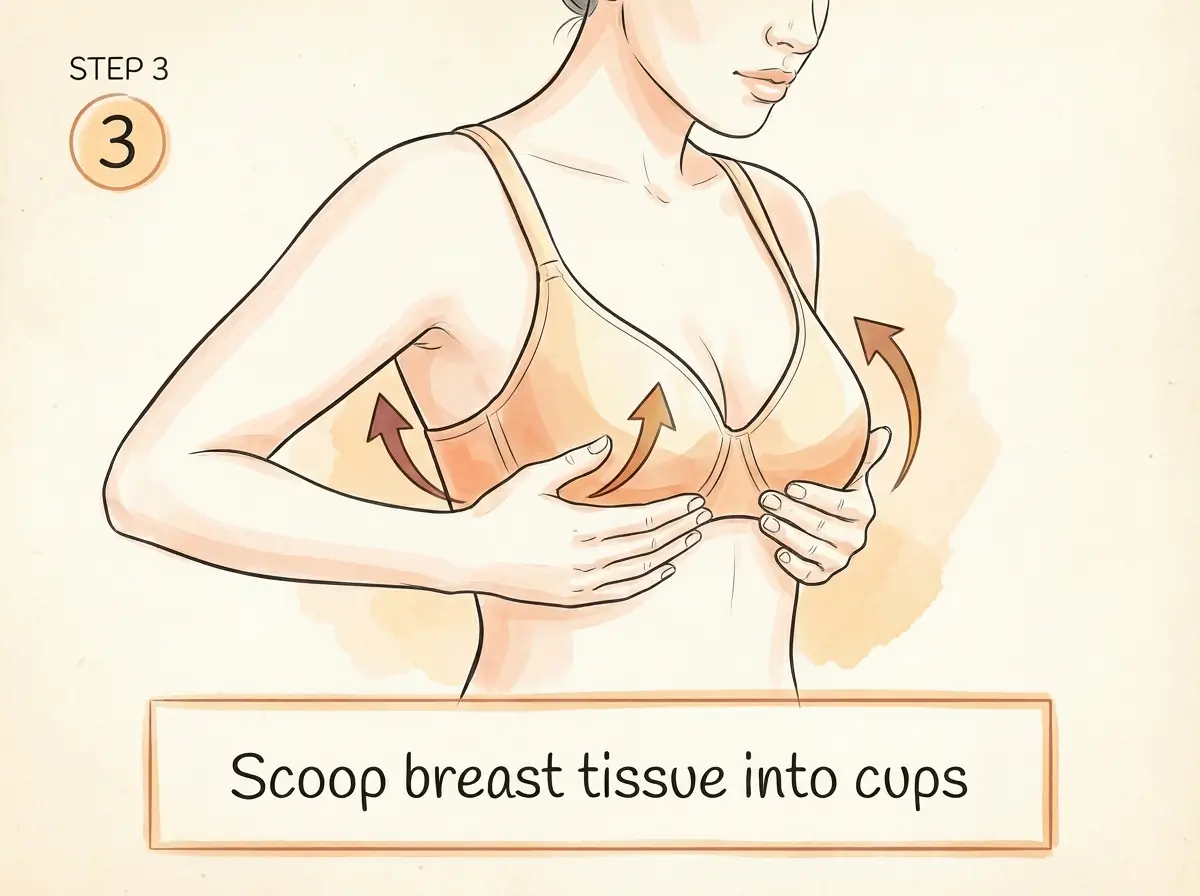
If your measurements place you between sizes, it’s generally better to go with the larger cup size and smaller band size. For instance, if you measure between 34D and 34DD, try a 32DD first – this is actually a sister size that often provides better support.
Ready to find your exact size? Try our free Bra Size Converter Tool to get instant results in the UK, US, EU, and more sizing systems. Simply enter your measurements or current size, and let our converter do the complex calculations for you – no more confusing charts or guesswork!
UK Bra Size Chart
A comprehensive UK bra size chart serves as your roadmap to finding the perfect fit across British brands and retailers. Unlike simplified charts you might find elsewhere, a proper UK size chart accounts for the full spectrum of sizes available, from the petite 28A to the impressive 44K and beyond.
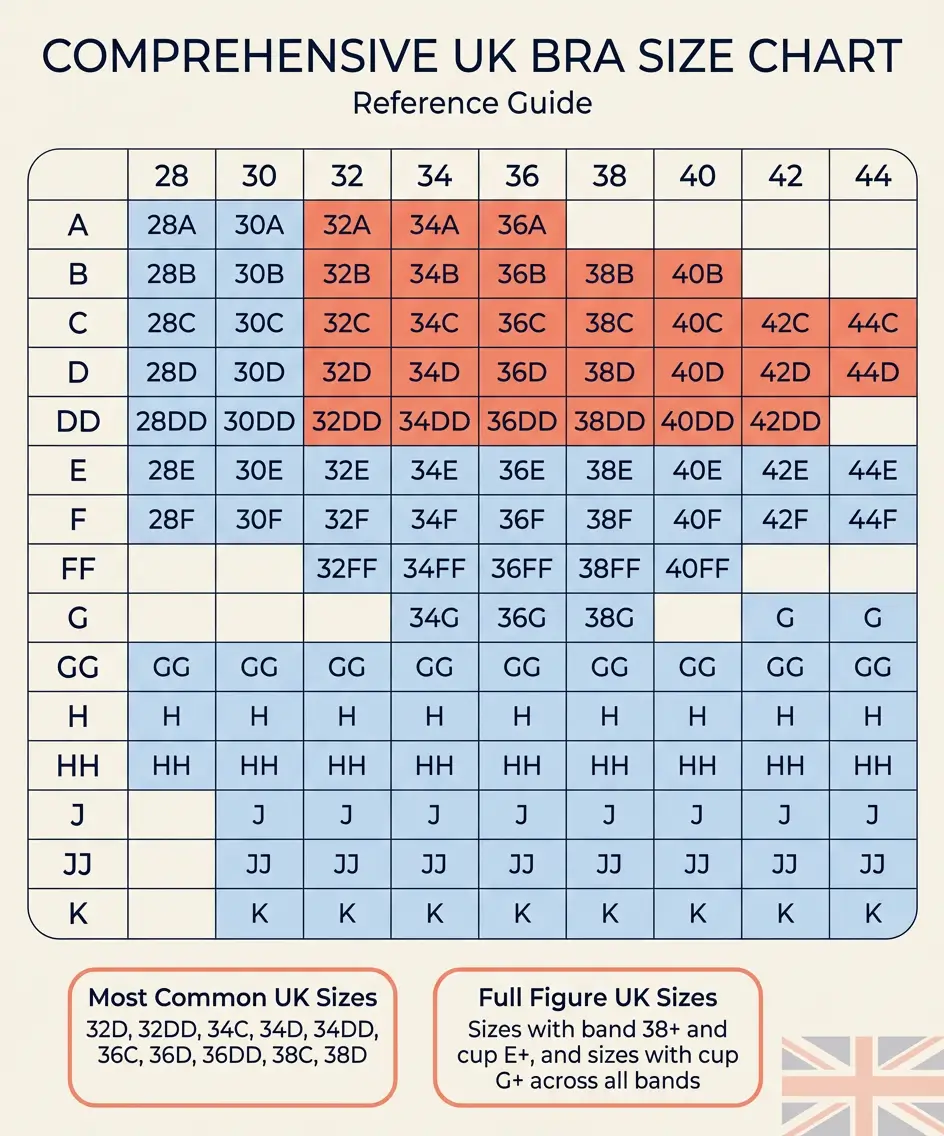
UK band sizes typically range from 28 to 44+ inches, measured in even numbers. These band sizes remain consistent with US measurements, which is one area where international shoppers don’t need to convert. The real complexity lies in the cup progression, where UK sizing follows a unique pattern that differs significantly from American standards after the DD cup.
In the UK system, cup sizes progress as follows: A, B, C, D, DD, E, F, FF, G, GG, H, HH, J, JJ, K, KK, and so on. Notice the pattern? After DD, UK sizing uses single letters where US sizing might use triple or quadruple Ds. This means that what Americans call a DDD, British retailers label as an E. What Americans call a DDDD, Brits call an F. This pattern continues throughout the size range.
The double-letter system in UK sizing (FF, GG, HH) serves a specific purpose – it creates a more gradual progression between cup volumes. For example, between F and G sits FF, providing a half-step that accommodates the natural variation in breast shapes and volumes. This nuanced approach is why many women with fuller busts prefer UK-branded bras.
However, it’s worth noting that even within the UK, some retailers may use slightly different conventions. High-street stores might simplify their charts, while specialist lingerie boutiques often carry the full range. This inconsistency is precisely why having a reliable conversion tool is invaluable.
View our comprehensive size chart and convert between systems with our Bra Size Converter. Our tool accounts for all these variations and provides accurate conversions for every major sizing system worldwide.
UK vs US vs EU Bra Sizes: Key Differences
Navigating between different international bra sizing systems can feel like learning a new language. The differences between UK, US, and EU sizing aren’t just about measurements – they reflect cultural approaches to lingerie design, body types, and manufacturing standards. Understanding these distinctions can save you from costly ordering mistakes and uncomfortable fittings.
Band Size Consistency
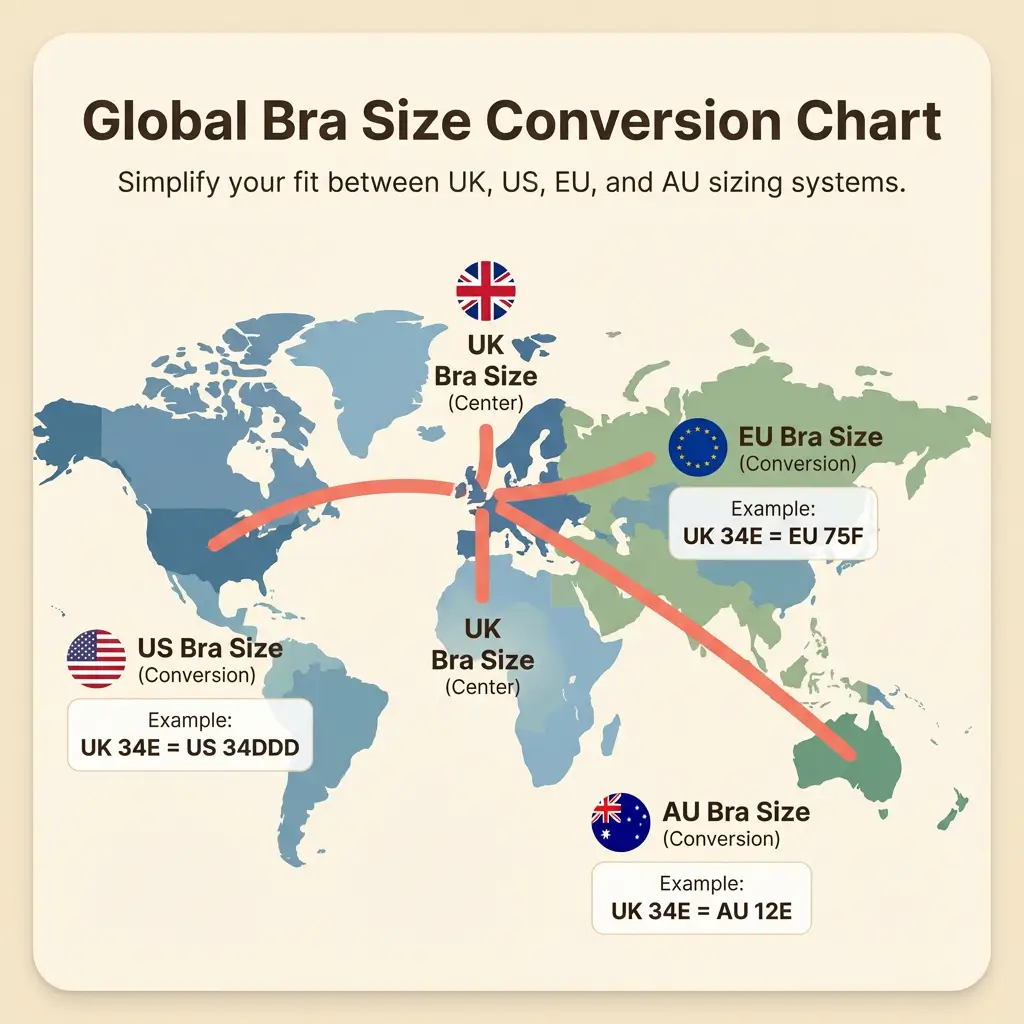
One area of remarkable consistency is band sizing between UK and US systems – both measure in inches and use the same numerical values. A UK 34 band equals a US 34 band. However, EU sizing completely differs here, measuring bands in centimeters and using a conversion formula (EU band size = UK band size + 10, roughly). For example, a UK 34 band converts to approximately EU 75.
The Cup Size Conundrum
Where things get complicated is cup sizing, especially beyond DD. Here’s the breakdown:
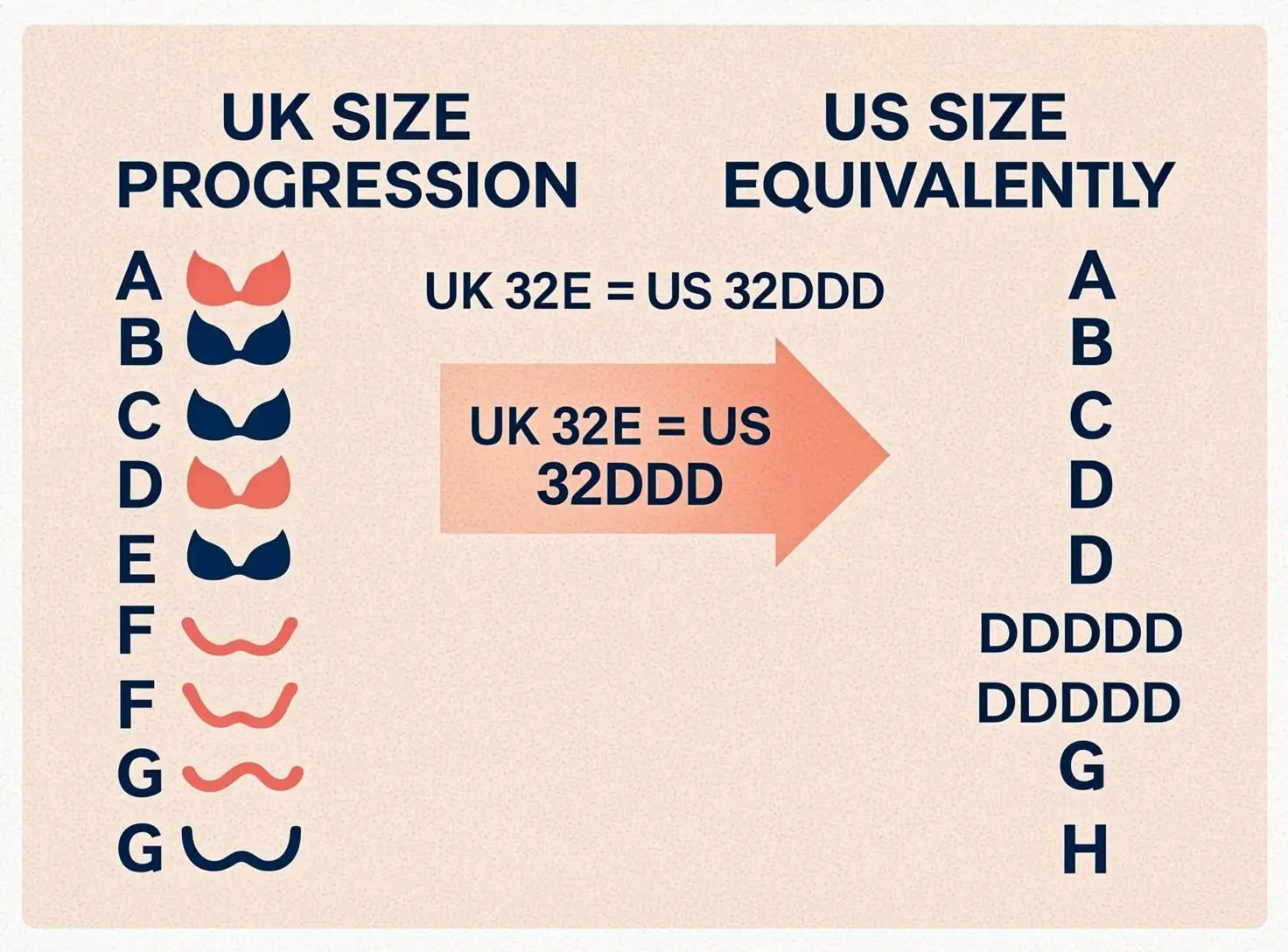
UK to US Cup Conversion:
- UK A = US A
- UK B = US B
- UK C = US C
- UK D = US D
- UK DD = US DD
- UK E = US DDD
- UK F = US DDDD
- UK FF = US G
- UK G = US H
- UK GG = US I
UK to EU Cup Conversion:
European sizing uses a completely different letter system:
- UK A = EU A
- UK B = EU B
- UK C = EU C
- UK D = EU D
- UK DD/E = EU E
- UK F/FF = EU F
- UK G/GG = EU G
- UK H/HH = EU H
Practical Conversion Examples
Let’s look at some real-world examples to clarify these differences:
- UK 32DD = US 32DD = EU 70E
This size remains consistent between UK and US systems but converts to an E cup in European sizing.
- UK 34E = US 34DDD = EU 75F
Here’s where the UK and US diverge significantly – that E cup in Britain is a triple-D in America.
- UK 36FF = US 36G = EU 80G
The double-F in UK sizing equals a single G in US but maintains the G designation in European sizing.
- UK 38G = US 38H = EU 85H
This demonstrates how the progression continues to diverge between systems.
Why These Differences Matter
These variations aren’t just academic – they affect fit, comfort, and even breast health. Wearing a cup that’s too small can cause painful spillage and poor support, while a cup that’s too large won’t provide adequate lift. Similarly, incorrect band sizing affects the entire bra’s performance since the band should provide 80% of the support.
The manufacturing differences compound these issues. British brands like Panache, Freya, and Curvy Kate design specifically for the UK sizing system, while American brands like Victoria’s Secret and ThirdLove follow US conventions. European brands like Marie Jo and PrimaDonna use EU sizing but often provide conversion charts.
Confused by the differences? Our International Bra Size Converter makes it easy to convert between the UK, US, EU, and other sizing systems in seconds. Simply enter your current size or measurements, select your target system, and get accurate conversions instantly – no more guesswork or disappointing online orders!
Understanding Sister Sizes in UK Bra Sizing
Sister sizes represent one of the most valuable yet underutilized concepts in bra fitting. Understanding sister sizes can transform your lingerie experience, especially when your exact size is unavailable or when you’re between sizes. In the UK sizing system, sister sizes follow a logical pattern that maintains the same cup volume while adjusting the band tightness.
What Exactly Are Sister Sizes?
Sister sizes are bra sizes that hold the same breast volume but distribute it differently through band and cup adjustments. When you move to a smaller band size, you increase the cup letter to maintain the same volume. Conversely, when you increase the band size, you decrease the cup letter.
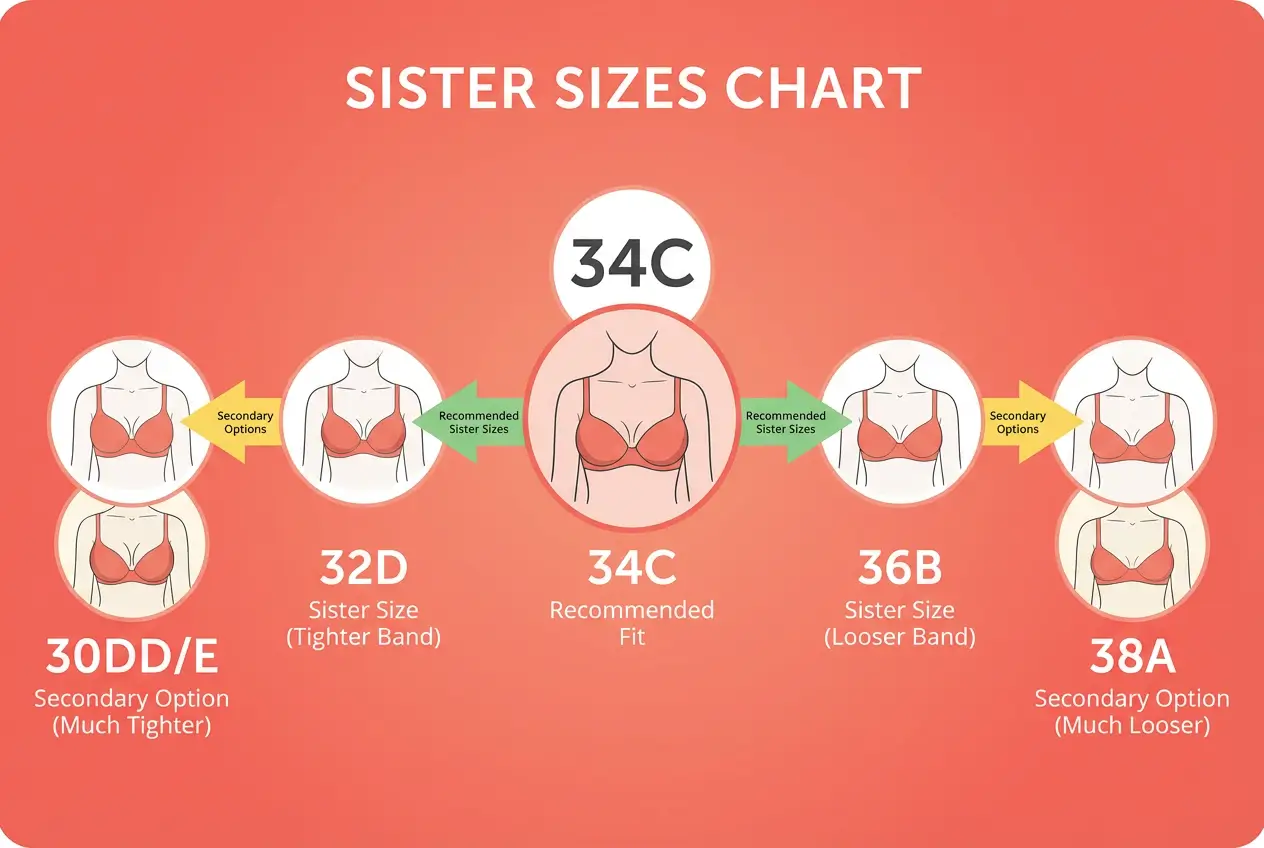
For example, if your perfect fit is a UK 34C, your sister sizes would be:
- 32D (smaller band, larger cup)
- 36B (larger band, smaller cup)
- 30DD/E (even smaller band, even larger cup)
- 38A (even larger band, even smaller cup)
Why Sister Sizes Matter in UK Sizing
The UK sizing system’s unique cup progression makes sister sizing particularly important. Because UK sizing uses a more nuanced letter system (especially with double letters like FF, GG), understanding sister sizes helps you navigate brand variations and find alternatives when your exact size isn’t available.
For instance, if you typically wear a UK 32E but can’t find it in your favorite style, you might try:
- 30F (sister size down)
- 34DD (sister size up)
Both should accommodate the same breast volume while offering different band tensions.
When to Try Sister Sizes
Several situations call for experimenting with sister sizes:
Brand Variations: Different manufacturers cut their bras differently. A Panache 32E might fit like a Curvy Kate 30F due to subtle differences in how they construct their cups and bands.
Style Differences: Balconette bras often run larger in the cup than full-cup styles. If a 34D balconette feels tight in the cup, try the sister size down (32E) rather than immediately going up a cup size.
Age and Body Changes: As we age, breast tissue changes. You might find that a sister size provides better support as your body evolves – perhaps moving from a 36C to a 34D for better uplift as breast tissue becomes less firm.
Between Sizes: If your measurements put you between sizes (say, between 34D and 34DD), trying sister sizes often yields better results than simply choosing one or the other. A 32DD might fit perfectly when neither 34D nor 34DD feels right.
How to Calculate Sister Sizes
The formula for finding sister sizes in UK sizing is straightforward:
- To go down one band size: Increase cup size by one letter
- To go up one band size: Decrease cup size by one letter
Remember that the UK system’s unique progression affects this calculation after DD:
- From DD, the next cup up is E (not DDD as in US)
- From E, the next cup up is F
- From F, the next cup up is FF
- From FF, the next cup up is G
This pattern continues throughout the size range, making it essential to understand the specific UK cup progression when calculating sister sizes.
Calculate your sister sizes instantly with our Bra Size Converter, which automatically accounts for the UK’s unique cup progression and provides all your sister size options in seconds.
Common UK Bra Size Mistakes to Avoid
Even the most experienced bra shoppers can fall victim to common sizing pitfalls, especially when navigating the nuances of UK bra sizing. These mistakes can lead to discomfort, poor support, and wasted money on bras that never get worn. Let’s explore the most frequent errors and how to avoid them.
Mistake #1: Too-Large Band, Too-Small Cup
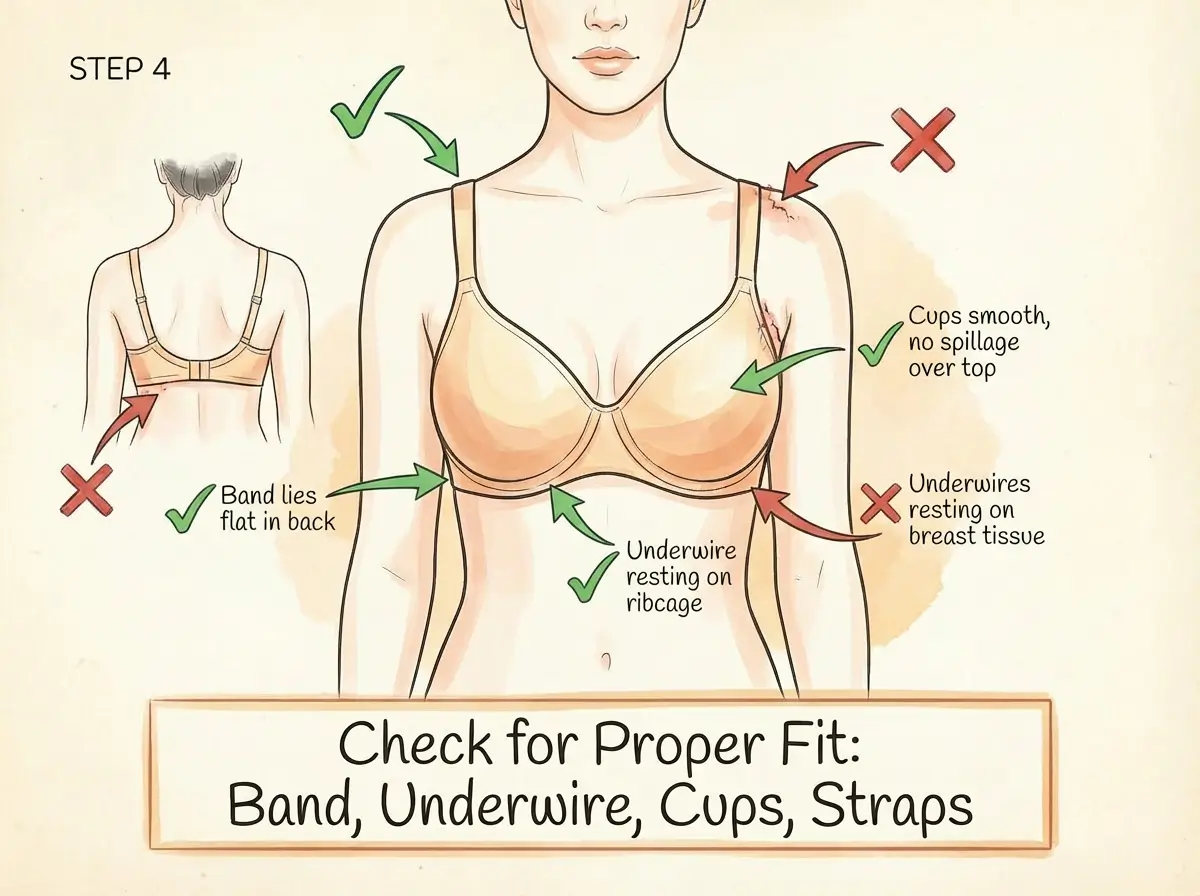
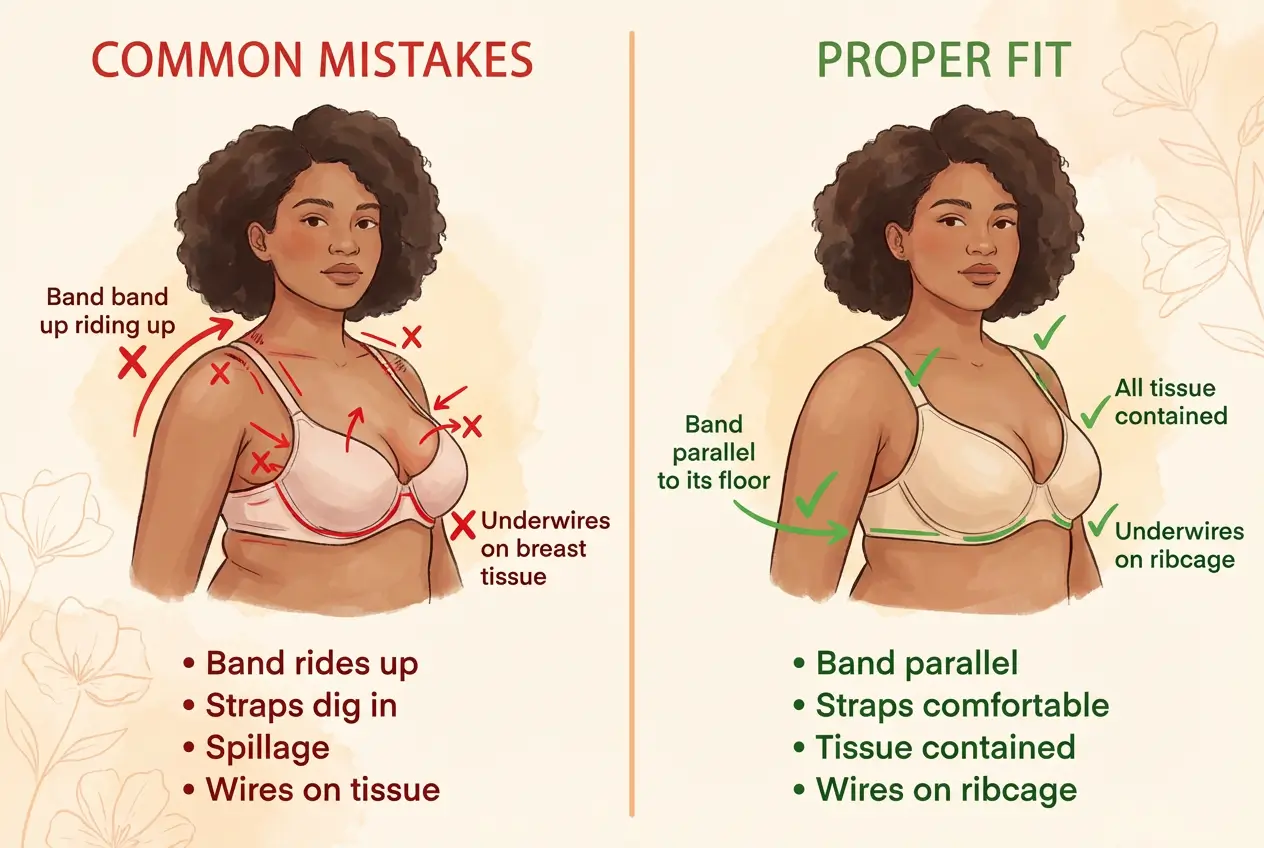
This is the most prevalent bra fitting error across all sizing systems. Many women wear bands that are too loose (often on the tightest hook from day one) while simultaneously wearing cups that are too small. This combination creates a vicious cycle: the loose band rides up, causing the straps to dig in, while the small cups cause spillage and discomfort.
The Fix: Remember that 80% of support should come from the band, not the straps. Your band should fit snugly on the loosest hook when new, allowing you to tighten it as the elastic stretches over time. If you’re constantly tightening your straps to compensate for a loose band, you need a smaller band size and likely a larger cup size (a sister size down).
Mistake #2: Not Trying Sister Sizes
Many women become fixated on one specific size (perhaps what they’ve always worn or what a salesperson told them years ago) and never explore sister sizes. This is particularly problematic in UK sizing where the cup progression differs from other systems.
The Fix: Always try at least two sister sizes when bra shopping. If you think you’re a 34C, also try 32D and 36B. You might be surprised to discover that a different band-cup combination provides dramatically better fit and comfort. Sister sizes are especially crucial when ordering online where you can’t try multiple sizes.
Mistake #3: Assuming All Brands Fit the Same
British lingerie brands each have their own unique fit profiles. A 32E in Panache won’t necessarily fit like a 32E in Freya or Curvy Kate. Some brands run larger in the cup, others have narrower bands, and some cater specifically to projected vs. shallow breast shapes.
The Fix: Research brand-specific fit information before purchasing. Read reviews from women with similar measurements to yours. When possible, try on multiple brands in-store to understand their unique fit profiles. For online shopping, order multiple sizes of the same style if the retailer has a good return policy.
Mistake #4: Not Remeasuring Regularly
Your bra size isn’t static. Weight fluctuations, pregnancy, breastfeeding, aging, hormonal changes, and even fitness routines can significantly alter your measurements over time. Many women wear the same size for decades despite substantial body changes.
The Fix: Measure yourself every 6-12 months, or immediately after significant life events (pregnancy, major weight change, surgery). Pay attention to fit signals: if your band rides up, your cups gap, or your underwire doesn’t sit flat against your ribcage, it’s time to remeasure.
Mistake #5: Ignoring the "Scoop and Swoop" Technique
Even with perfect measurements, improper bra placement can ruin the fit. Many women simply step into their bras and fasten them without adjusting their breast tissue properly.
The Fix: Always use the “scoop and swoop” technique when trying on bras:
- Lean forward slightly when putting on the bra
- Fasten the band on the loosest hook
- Use your hands to gently lift breast tissue from underneath and guide it into the cups
- Stand up straight and adjust straps as needed
This technique ensures all your breast tissue is properly contained within the cups, giving you an accurate sense of fit.
Ensure you’re wearing the right size by checking with our Bra Size Calculator. Our tool accounts for all these variables and provides personalized recommendations based on your measurements and fit preferences.
Conclusion
Mastering UK bra sizing opens up a world of better-fitting, more comfortable lingerie options. From understanding the unique cup progression that distinguishes British sizing from American standards to learning how sister sizes can save your shopping experience, this knowledge empowers you to make confident purchasing decisions.
Remember that proper bra fit isn’t just about comfort – it impacts your posture, back health, and even how your clothes fit. The time invested in learning your true size and understanding how different systems compare pays dividends in daily comfort and confidence.
Don’t let confusing sizing charts or intimidating conversion formulas hold you back from finding your perfect fit. The journey to better bras starts with accurate measurements and understanding how different systems relate to each other.
Take action now! Use our free International Bra Size Converter to find your perfect fit across the UK, US, EU, and more sizing systems. Get accurate results in seconds and transform your lingerie drawer with bras that truly support and flatter your unique shape. Your comfort and confidence are worth it!
FAQs About UK Bra Sizes
The main difference lies in cup sizing beyond DD. UK and US band sizes are identical (both measured in inches), but UK cup progression continues with E, F, FF, G, etc., while US sizing uses DDD, DDDD, G, H, etc. For example, a UK 32E equals a US 32DDD, and a UK 32F equals a US 32DDDD. This difference becomes more significant with larger cup sizes.
To measure for UK bra sizes: First, measure around your ribcage under your bust in inches for your band size (round up to the next even number if odd). Then measure around the fullest part of your bust. The difference between these measurements determines your cup size: 1 inch = A, 2 inches = B, and so on. Remember that UK sizing uses inches for band measurements, unlike EU sizing which uses centimeters.
Sister sizes are bra sizes that hold the same breast volume but with different band and cup combinations. For example, if your size is 34C, your sister sizes would be 32D (smaller band, larger cup) and 36B (larger band, smaller cup). Sister sizes are crucial when your exact size isn’t available or when a particular brand fits differently than others. They help maintain proper support while accommodating brand variations.
UK bra sizes don’t inherently run larger or smaller than US sizes, but they label cup sizes differently beyond DD. The same physical cup volume might be labeled as E in the UK but DDD in the US. Band sizes remain identical between systems. The confusion comes from the different labeling conventions rather than actual size differences. When converting between systems, you’re translating labels, not adjusting for larger or smaller cuts.
To convert to UK sizing: For band sizes, no conversion is needed between UK and US as both use inches. For cup sizes up to DD, the letters remain the same. Beyond DD, add one letter for each step: US DDD = UK E, US DDDD = UK F, US G = UK FF, and so on. For EU to UK conversion, band sizes require adding approximately 10 (EU 75 = UK 34), while cup sizes follow a different progression entirely. Use our bra size converter tool for accurate conversions.