
What Is a D Cup Bra Size? Complete Guide for Females!
Many women think a D cup means the same thing for everyone, but in real bra shopping, it’s more about proportion than a single label. A D cup is defined by a 4-inch difference between the bust and band size, yet cup sizes always vary with different band sizes.Because a D cup looks different on every band size, the easiest way to avoid confusion is to calculate your exact fit using our International Bra Size Converter. That’s why 32D and 36D are not the same, and why learning how cup sizes explained from A to D cups really matters. From experience, I’ve seen how confusion starts when band sizes change but expectations don’t, leading to the classic guessing game instead of clarity. Understanding D cup bras, bra cups, and how sister sizes like 34D, 36C, and 32DD work helps when your exact size unavailable due to availability issues.
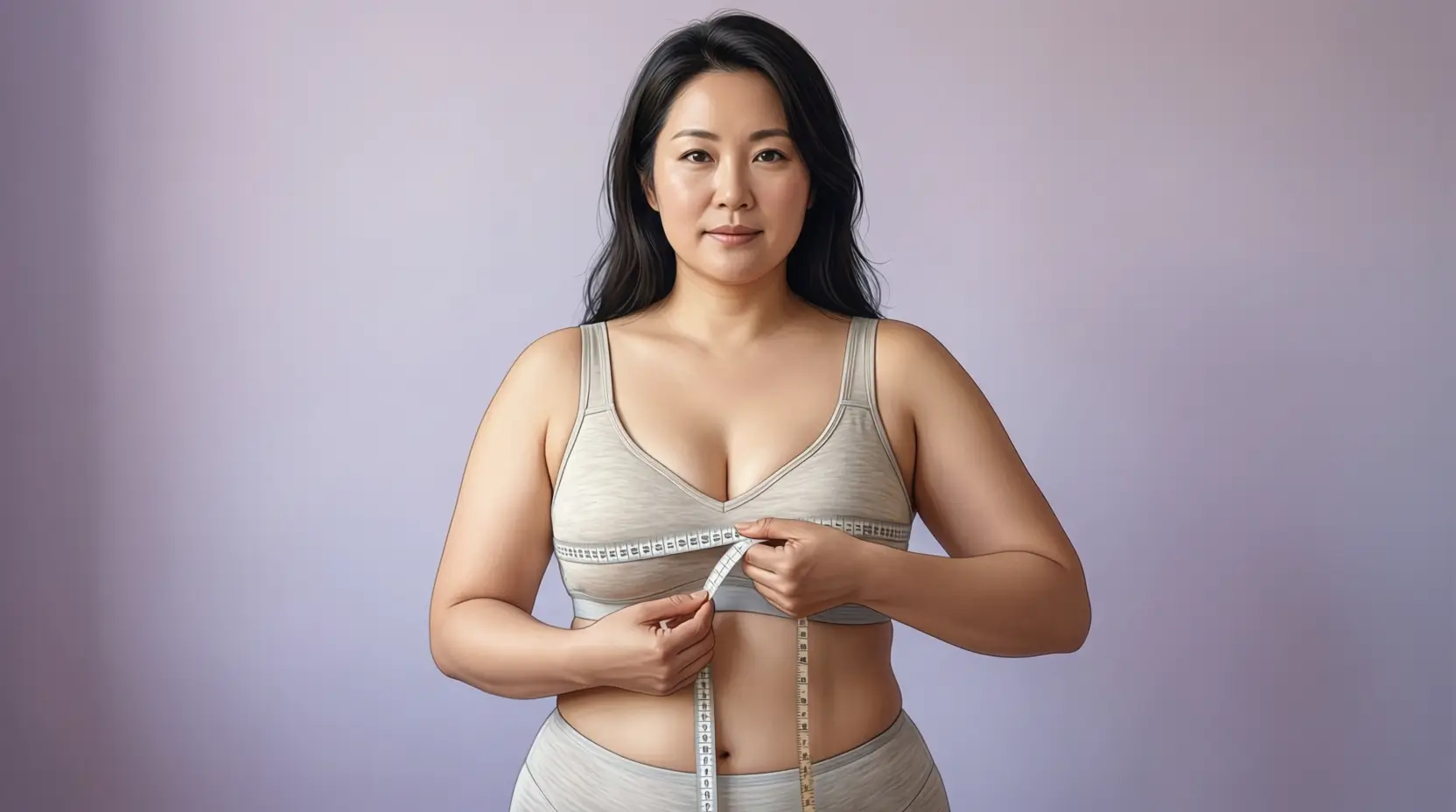
Getting it right starts with accurate measurements, which are essential for real comfort and support. Using a soft tape to measure, first measure ribcage around the ribcage, then measure bust, makes the size chart far more useful. I always suggest to try multiple fits because the right fit, ideal fit, or even perfect fit should feel natural at every step. When sizing is off, common issues like back pain, spillage, discomfort, or a lack of fashionable options show up fast. The good news is there are many styles, including T-shirt bras and sports bras, designed so you feel supported, confident, and feels just right. You’re not alone, so worry no more—use a complete guide, discover what suits your unique shape, and let the right bra help empower you instead of holding you back.
A Clear Way to Understand What Is a D Cup Bra Size
If bra numbers and letters feel confusing, this guide on what bra sizes really mean breaks everything down in simple terms.
Many people start with the common misconception that a D cup bra size always means very large breasts, but in reality it works very differently. A D cup is based on a 4-inch difference between your band size and bust measurement, so it is not a size by itself. The band number, band, underbust, and underbust measurement all matter because cup sizing is relative and scales across sizes. This is why 30D, 34D, 36D, 38D, and 42D are very different and doesn’t look the same when compared. From years of fitting experience, I’ve seen confusion clear up once someone understands that D cup bras change with the body, not just the label.
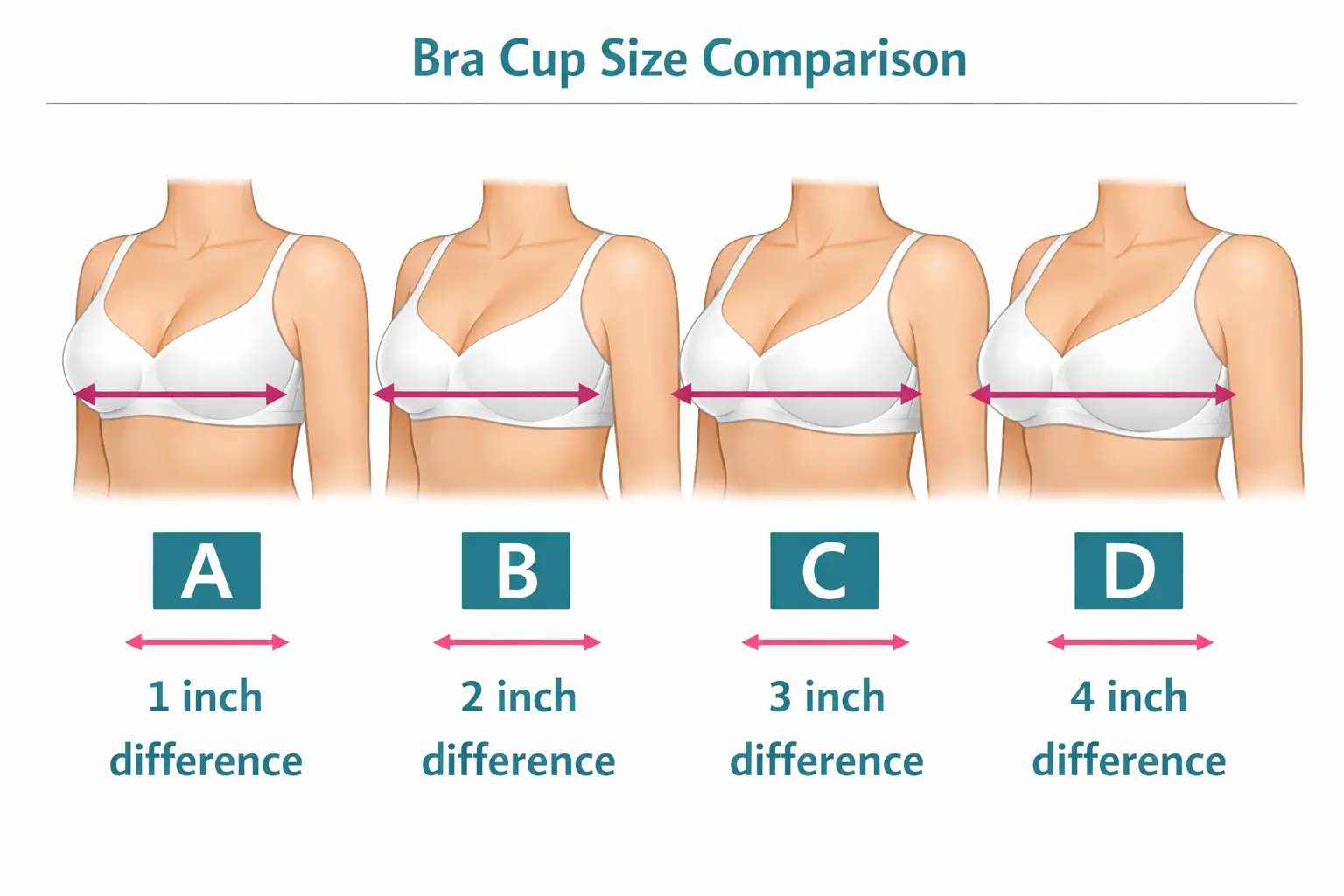
The letter D is the cup letter, which shows cup size and volume—how much space is needed for breasts and breast tissue. The number of inches difference follows a simple system: A = 1 inch, B = 2, C = 3, D = 4, DD = 5, etc. For example, a 34 inches band with a 38 inches bust gives 34D, while a 42-inch underbust with a 46-inch bust comes from 42 + 4. A 38-inch underbust with a 45-inch bust equals 38 + 7, often labeled 38F or FF, which a calculator suggests and often matches measurements fairly well. This also explains why a 42B with a 44-inch bust may matches bust measurement but ends up 4 inches too big in the band.
Problems happen when cups go around the chest but won’t be deep enough to enclose tissue, sitting on the front half and not providing support—often called wearing a boob hat, like an ill-fitting hat on the top of your head. This comes from adding 4 inches, the +4 method, an outdated and incorrect method of bra sizing that puts people in bands too big and cups too small. It’s still super common in size guides, especially on Amazon and other retailers, where they size people even though they don’t make bras that way. These bras won’t fit correctly, so I always say ignore any size guide that tells you to add inches.
How a D Cup Bra Size Is Measured in Real Life
If you’ve taken your measurements but still feel unsure, you can instantly check your results by using our bra size calculator tool online.
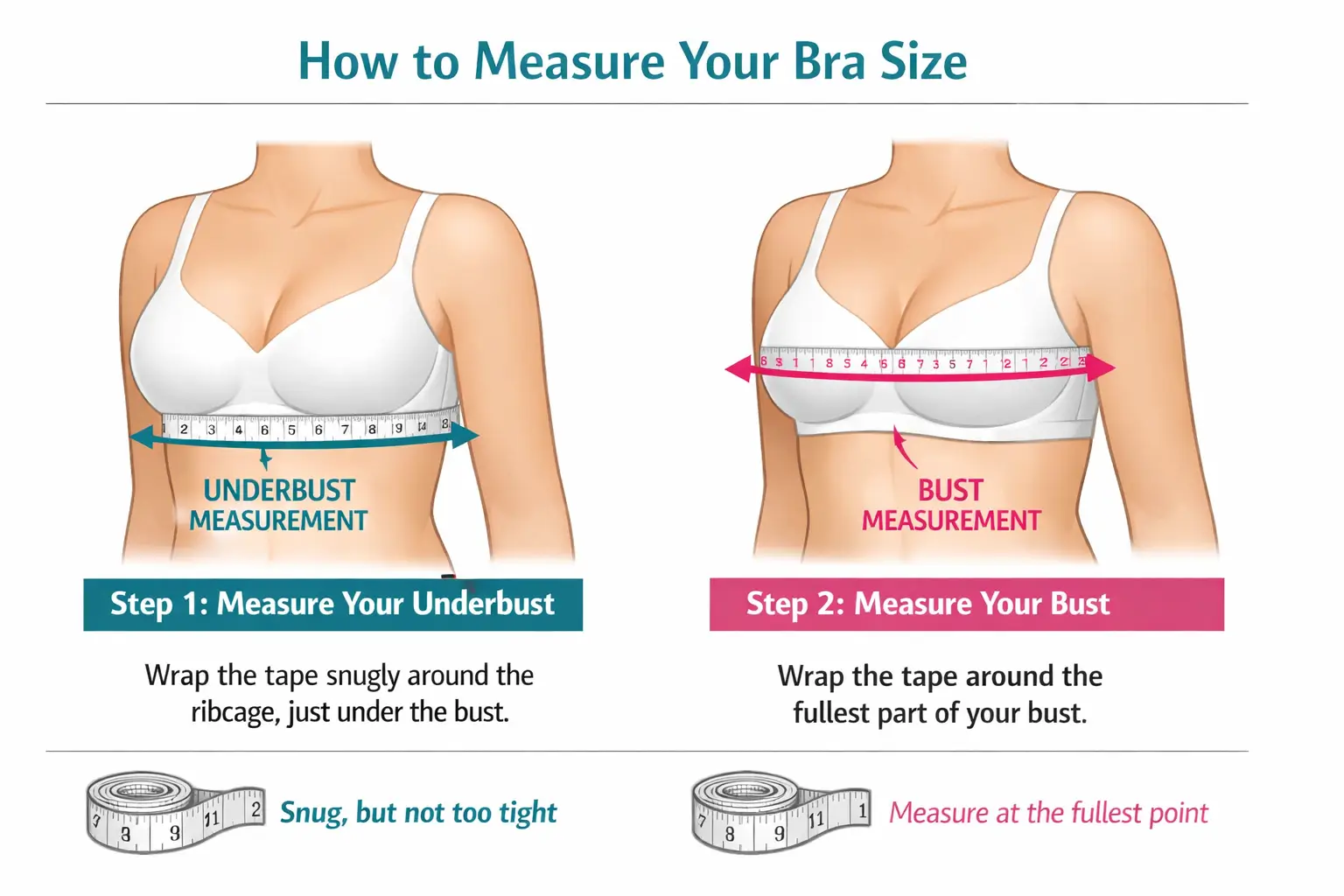
Before anything else, start with Things You Need to get a right bra fit. From my professional fitting experience, using a soft measuring tape or measuring tape makes a real difference. A mirror is optional but very helpful, and you should wear a non-padded bra or no bra so results stay accurate. This simple setup helps with knowing how to measure your band and bust accurately, which is the foundation of correct sizing.
When Measuring Your Bust Size, wrap the tape around the fullest part of your bust, ensure it stays straight and parallel to the floor, then write down the measurement in inches. For Measuring Your Original Band Size, measure around your ribcage, just under the breasts. The tape should feel snug, not tight, and you should round the result to the nearest whole number. This step is often skipped, yet it’s where most sizing mistakes begin.
Next comes Find Out the Final Band Size, which many guides still explain. Take the number you got: if it’s even, add 4; if it’s odd, add 5. For example, if your ribcage measures 31 inches, your band size becomes 36 using 31 + 5, giving a final band size of 36. This method is part of the traditional system and helps explain older sizing logic, even though modern fitting often adjusts it.
The Cup Size and Band Size Relationship is the critical bit many miss. Cup sizes have two parts—the cup size and the band size—and both must make sense together. A DD cup doesn’t exist on its own; it must be paired for comparison purposes, which is why 30DD is smaller than 38DD in circumference measurement and capacity. In Bra Size Ranges and Calculations, band sizes can run from petite 26 inches to expansive 46 inches, while cup sizes range from AA cup to beyond a generous J cup. Bra size is calculated using chest circumference, measured around the rib cage below bust, plus breast volume, where each inch increase equals a one-cup size increase.
Finally, Understanding Bra Cup Sizes clears confusion for those unsure of their right bra size. A good fitting guide offers step-by-step instructions to identify a well-fitting bra and adjust it accordingly. To truly understand bra cup sizes, remember—contrary to popular belief—the letter in a bra size doesn’t represent breast volume alone. It’s a combination that indicates the difference between bust circumference and underbust circumference: A cup means one-inch difference, B cup means two-inch difference.
How a D Cup Compares to Other Bra Sizes
To see how D compares with other letters, this resource on bra cup sizes explained helps clarify volume differences.
When people look at difference in cup sizes, they often focus only on letters like C, B, A cup, B cup, C cup, or D cup, but simply put, sizing is more tricky than that. A D cup is larger than A B or C, yet smaller than E cup, and these gaps are often just one-inch differences measured in inches. For example, a C cup is 1 inch smaller, a DD/E is 1 inch larger, and a B can be 2 inches smaller when compared from a D. This is where understanding bra sizing helps, because these sizes are relative, not the same, especially across different brands and brands that size differently.
The between D cup and DD cup change is a trickier bit for many, especially the uninitiated asking how does it work or which is right for you. A DD cup uses DD letters and is slightly larger, offering a slightly fuller bust, while a D cup has slightly less volume. Jumping going straight to E can feel confusing, because an E cup is larger than E cup sounds, yet a DD cup is still smaller than F cup. This shows how cups, the cup, and the cup component must be considered together with the band, since not all DD cups are the same and sizes differ by measurements.
From years of shopping for a bra, I’ve learned this is why comfort, fit, and support change so much between sizes, and why less support required in smaller cups doesn’t apply as volume grows. It’s important to measure yourself carefully, especially when lingerie stores offer professional fitting services to help find the perfect size for your body type. Remember, bra sizing isn’t just about letters—it’s about how everything works together to feel right.
A vs. B Cup: Small Differences That Matter
When comparing B cup sizes to A cup sizes, the change may look minor, but it affects how a bra feels in daily wear. A cup sizes are considered small, defined by a one-inch difference between the bust and band measurements, offering minimal coverage that feels ideal for smaller busts and a natural look. In contrast, B cup sizes use a two-inch difference, giving slightly more coverage and better support, which is why they are a popular choice for many women who want a subtle boost without losing comfort. From my fitting experience, this small shift often makes bras feel more balanced on the body, even though the size change looks simple on paper.
Comparing Cup Sizes: B vs. C Cup
Moving up the alphabet, C cup sizes are the natural transition from B cup sizes, and the change is defined by a three-inch difference between the bust and band measurements. In real fittings, C cups offer more coverage and support, making them suitable for medium-sized busts while maintaining balance and comfort. This size shift improves shaping and creates a flattering silhouette across various body types, which I often see helps wearers feel more secure without sacrificing ease of movement.
C vs. D Cup: Where the Real Change Happens
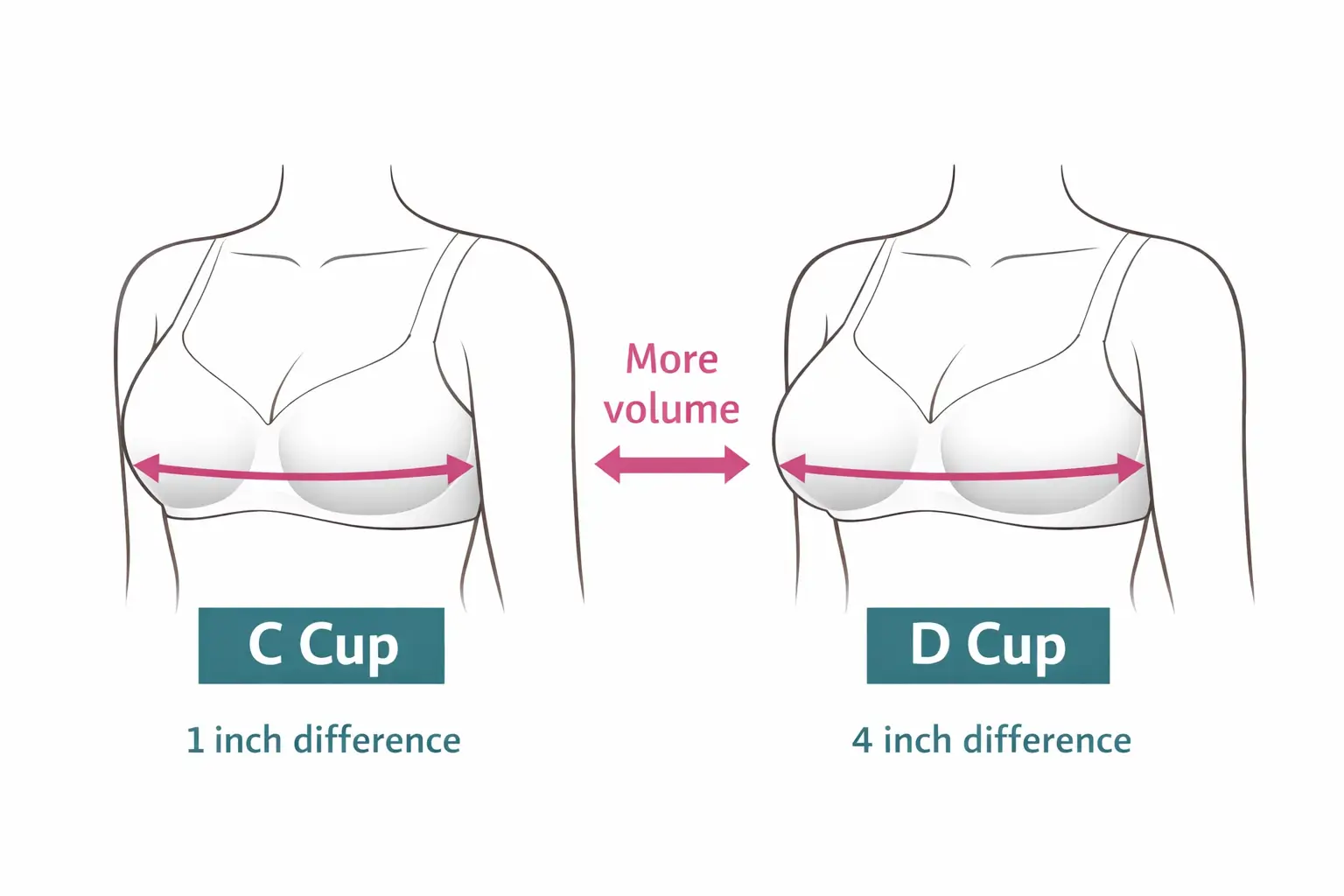
Finally, we come to understanding the difference between C cup and D cup sizes, and this c cup vs d cup sizes shift is more than a label change. A D cup or D cups are defined by a four-inch difference between the bust and band measurements, while C cups hold slightly less volume, making D cups slightly larger in the breasts. From hands-on fitting work, I’ve seen how this affects real wear: ample coverage, better support, enhanced shaping, and visible lift make a D cup feel more secure, especially for larger busts, while still delivering a flattering fit and a comfortable fit throughout the day. To find your correct fit, always measure the fullest part, compare it with your band size, determine the right cup size, and test the bra options that offer flexible support, such as the ComfortStretch Smoothing Wireless Bra, which many find ideal for daily comfort.
D Cup vs DD vs DDD vs E: Are They Really the Same?
If you’re choosing between sizes, understanding the difference between D and DD bras can prevent common fit mistakes.
When people see DD, DDD, E, or F, they often assume they’re the same thing, just different names, but that’s not true. These labels represent different volumes, and the meaning changes by country, brand, store, and even shopping experience. Every market uses its own terminology, which makes sizing feel tricky. Understanding the volume difference now makes things clearer for the future, because each increment in cup size equals approximately a 1-inch difference in bust measurements over the band measurement. A D cup equals a 4-inch difference, DD ( also called E in UK sizing) equals a 5-inch difference, and DDD or F (depending on region) equals a 6-inch difference.
For example, if your band size is 34 inches and your bust size is 39 inches, you’re likely a 34 DD. This matters because cup volume changes as band size increase happens. A 36 D actually has more volume than a 34 D, even though both are identically labelled, while a 34 D has less volume than a 34 DD. This is why bust, band, and sizing must always be looked at together, not in isolation.
So, who should wear a D cup? If you usually wear a C cup and notice your chest area is overflowing from the bra cups, sizing up to a D cup can help it fit more snugly than its DD counterpart. On the other hand, who should wear a DD cup includes those whose breasts are larger than D cup size, spilling out at the top or sides. If you’re wearing E cup styles and it doesn’t sit smoothly, you should consider opting to try DD instead, choosing the DD cup that matches your shape better.
Knowing when to size down to a D cup also matters. If you normally wear a DD bra but it feels too big, and the cups feel too big while the band fits well, it’s time to switch down. An appropriately-sized bra should encase all breast tissue, without gaps, keeping proper shape. Since 85-90% of support comes from the band, it must stay secure even when straps are taken off the shoulders. Likewise, when to size up to a D cup depends on experience—if you feel discomfort or breast tissue spillage in C cups or D cups, size up. Always focus on how the bra fits, instead of looking at tag details. Your size is a suggestion, not a fixed law—explore your comfort zone, discover something new, and let fit guide you, not fear.
Is a D Cup Big, Medium, or Small?
The answer is simple: it depends. A cup size is relative to the band size and band size number, so it’s not an absolute measurement and is fully changeable. The same D can feel different, fit different, even tremendously different, depending on what you use before it. For example, a 30D bra and a 38D bra are both considered D cup bras, but they are not the same. As band size gets larger, the cup volume goes up, because the cups must cover more space on a larger band size.
Think of it like this: a 30D is like frosting on a cupcake, with a tall, compact shape, while a 38D is the same amount of frosting, but thinly spread over a larger cake. It covers more area but does not mound up. Because of this, someone with a petite physique may appear to have a larger fuller bust than someone with a broad ribcage, even though the label size says D in both cases. That’s why the label is only part of the story—how it fits, how shapes, and how it looks on the body is where real differentiation takes place.
What a D Cup Looks Like on Different Body Types
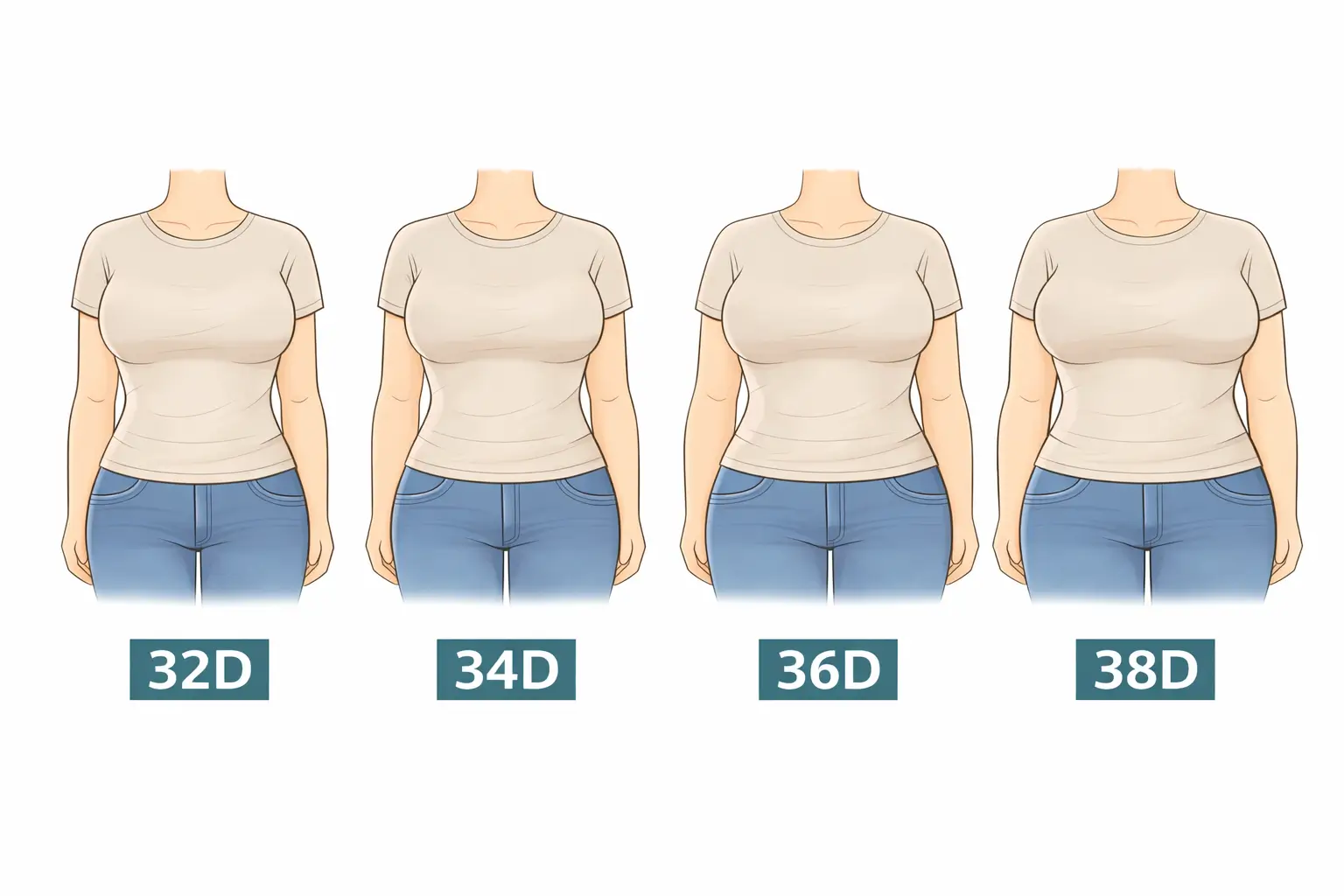
In Common Body Comparisons, a D cup can fit differently even when the cup size is the same, because the individual’s overall shape changes how it generally looks like. On a 32D, a slim, petite body with a narrow chest often creates a more projected bosom and round bosom that looks fuller overall. With 34D, an average build or athletic build usually shows a well rounded shape, moderate projection, and a curved bust that feels like a natural bust in everyday wear.
As sizes increase, the look continues to shift. A 36D on a somewhat curvier build with a wider ribcage can cause breast tissue to appear more distanced, giving a fuller look but a softer shape. On a 38D, a plus-size build or full-figure build often means the bosom looks wider, with an evenly distributed shape across the chest and less projection. From professional fittings, I’ve found that visual representations or pictures really help people better understand what to expect from the experience of bra wearing, especially when shopping online.
Not Sure If You’re Really a D Cup? Here’s How to Tell
If you’re questioning your size, start by noticing Signs You’re Wearing the Wrong Cup—many people experience these signs without realizing they’re wearing the wrong size. A wrong cup often shows up as spillage, the quad boob effect, underwire digging into breast tissue, or gaping at the top of the cup. At the same time, check Signs Your Band Is Off: when the band is off, the bra rides up your back, straps dig in too much, and you feel unsupported. I always recommend a simple Quick Fit Checklist—use the quick fit checklist idea by making sure the band snug sits on the loosest hook, the cups fully contain all breast tissue, and the center gore lies flat. One final Tip I share from fittings: always measure in front of a mirror and try multiple sizes, because small adjustments often reveal whether a D cup truly fits or not.
Common Problems Women Face With a D Cup
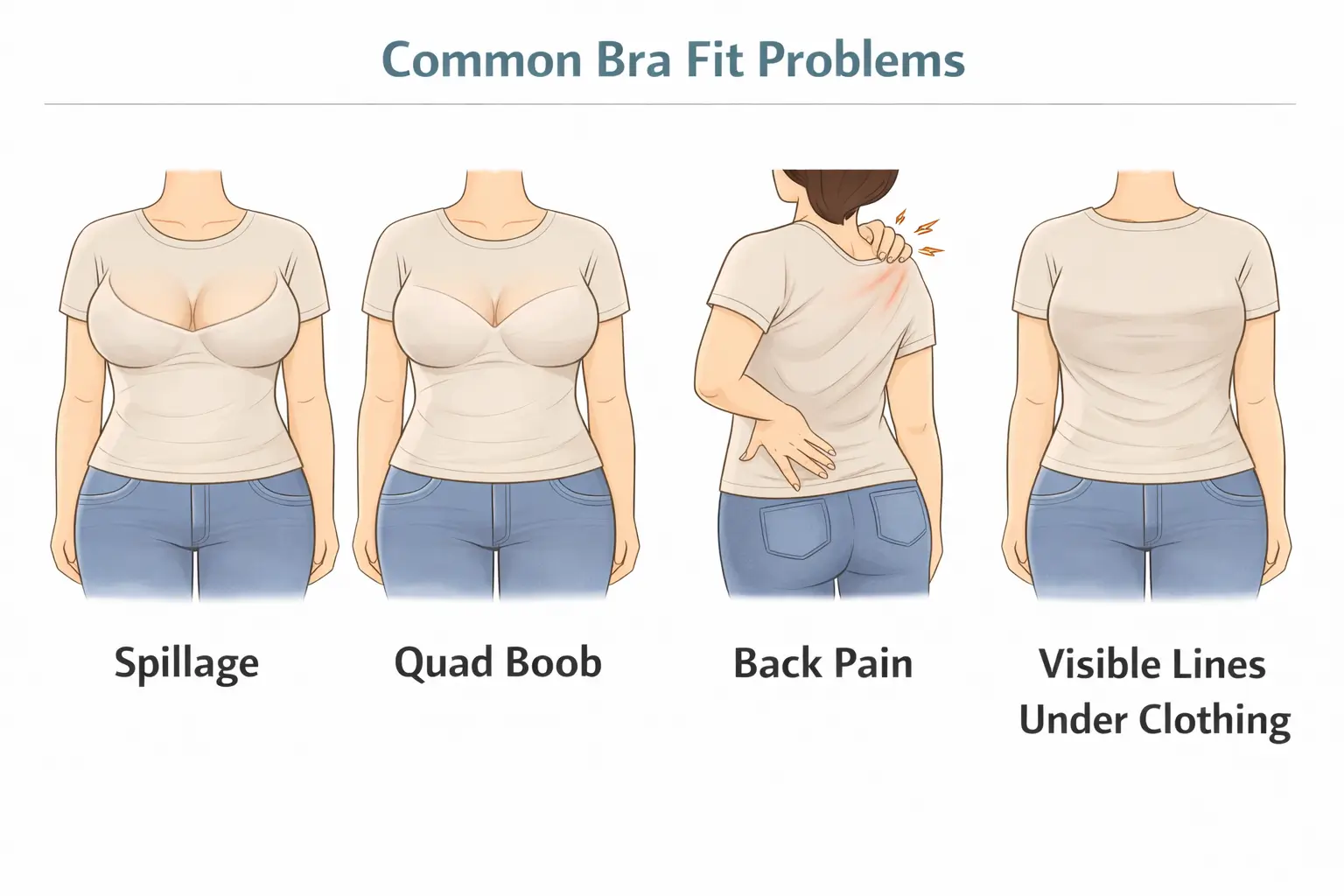
Many women with a D cup deal with daily issues that often come from a poor-fitting bra, which can lead to real discomfort like Back and Shoulder Pain. When the cup too small, Spillage or the Quad Boob effect happens as breast overflow pushes out of the bra, while Bra Digging In occurs due to an incorrect band size where wires and bands dig in. On top of fit problems, there’s often a Lack of Stylish Options, because many fashion bras aren’t designed for bigger cups, and Visible Lines show up when incorrect bra styles leave bulges or lines under clothing—issues I’ve repeatedly seen in fittings where the right size instantly changed both comfort and confidence.
Sister Sizes That Work With a D Cup
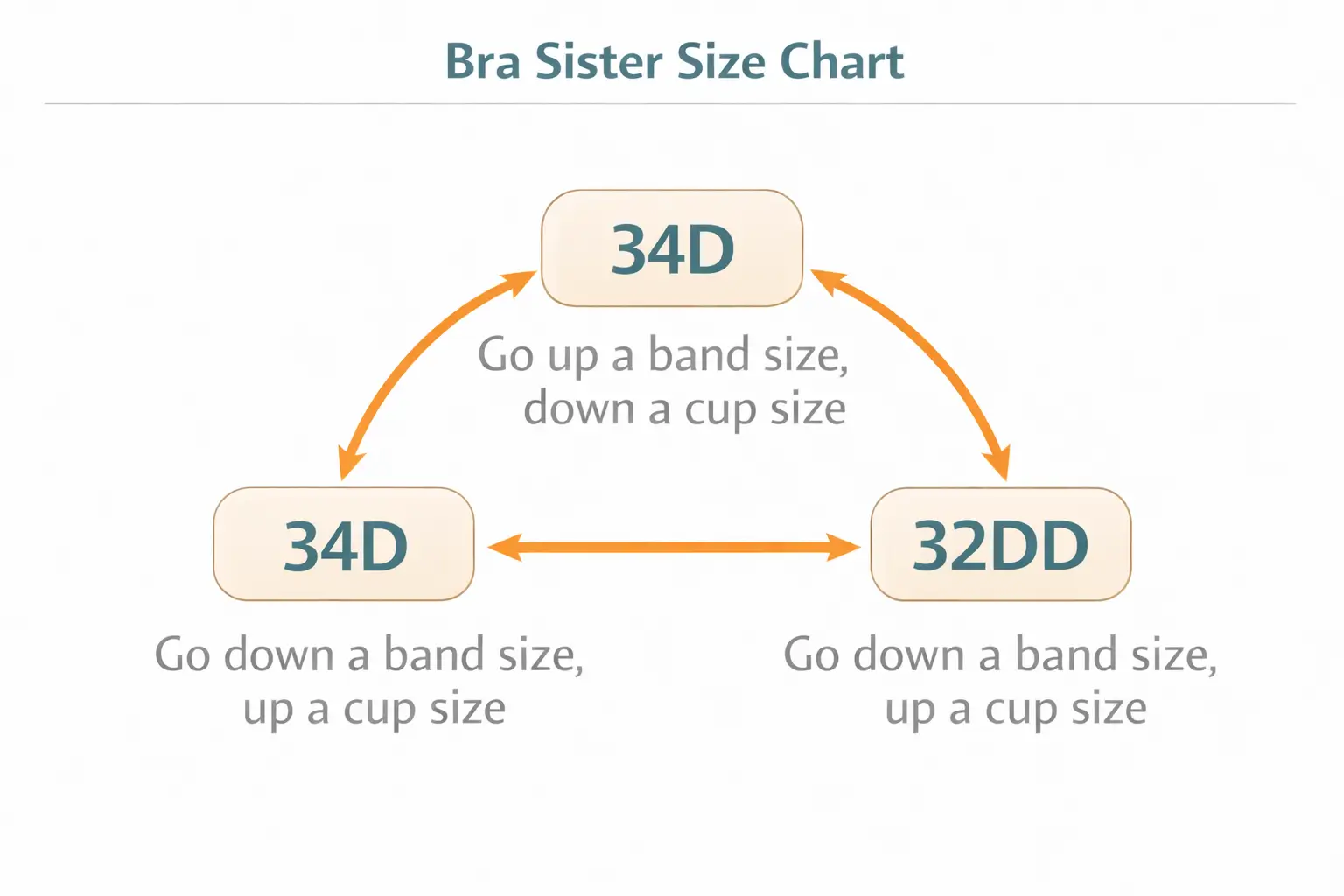
Sister Size Down is often the smarter move to understand first, because many people notice the band feels loose even when the cups fitting correctly, and in that case it’s a great fix to go down a band size and up a cup size while keeping the same cup volume. This is where sister sizes really help you find a comfortable alternative when your usual size isn’t available or feels somewhat off. For example, 36D can shift to 34DD, or 34D to 32DD, giving a tighter band without changing how the cups feel. From years of shopping for a bra, I’ve seen how knowing how to choose between sister sizes makes the process considerably easier, especially when a typical size is unavailable. On the flip side, Sister Size Up also works well when the band feels too tight but the cups fit well—you go up in band size and down in cup size, like 34D to 36C or 36D to 38C, ending with a slightly looser band while maintaining the same cup volume. These examples show how small adjustments can completely change comfort without changing support.
FAQs About D Cup Bra Size
A D cup bra size means there is a 4-inch difference between your bust and band size. For example, a 34D usually means a 34-inch band and a 38-inch bust. The actual fit and appearance depend heavily on band size.
A D breast can look very different from person to person. On a smaller frame, D cups often appear fuller and more projected, while on a wider ribcage they may look broader and softer. Shape depends on body type, not just cup letter.
A D cup is not automatically big. A 30D is much smaller than a 38D, even though both are D cups. Cup size scales with band size, so volume increases as the band number increases.
D cup breasts are not always heavy, but they can feel heavy without proper support. Breast weight depends on tissue density and size. Wearing a correctly fitted bra with a supportive band helps distribute weight and reduces shoulder and back strain.
No. A DD cup is one size larger than a D cup, usually representing a 5-inch difference between bust and band. However, sizing labels vary by brand and country, so fit is more important than the letter alone.
Yes, a D cup can look small on someone with a larger band size or wider ribcage. The same cup volume spreads over more surface area, making it appear flatter compared to a D cup on a smaller frame.
You’re likely a D cup if your bra cups fully contain breast tissue, the center gore lies flat, and the band stays snug without riding up. Spillage or gaping often means the cup or band size needs adjustment.
The best bra for a D cup depends on comfort and activity level. Full-coverage, balconette, T-shirt, and wireless support bras are popular because they provide lift, shaping, and everyday comfort without excessive pressure.
Yes. Weight changes can affect breast volume and band fit, which may change your cup size. Even small body changes can impact bra fit, so it’s a good idea to re-measure periodically for comfort and proper support.
If you shop internationally, this UK bra size guide explains how sizing labels differ from other regions.
Learn more about My Bra Size Converter and how we help women find accurate bra fits.
Still unsure? You can contact us for help with bra sizing anytime.